





Downtown asks 34% less than Long Beach as a whole.
Long Beach, California · Neighborhood guide
Downtown Long Beach
Where Long Beach started: apartment towers and old storefronts, with the harbor at the foot of Pine Avenue
Median askingDowntown$595K41 for sale
See homesDowntown Long Beach, in short.
Downtown Long Beach is the city's original core and its most urban neighborhood, running from Ocean Boulevard north to about 10th Street between the Los Angeles River and Alamitos Avenue. It's a renter's neighborhood: about 79% of households in ZIP 90802 rent, many of them in apartment towers like the 35-story Shoreline Gateway, the tallest building in Long Beach since 2021. Condos listed downtown asked about $360,000 to $1.08 million in September 2026. The Metro A Line starts here and runs to Downtown Los Angeles, Pasadena and Pomona, and the Aquarium, the harbor and the beach path are a walk away.
Downtown Long Beach by the numbers.
- 6,005Population
- 56%Bachelor's degree or higherage 25+
- $107,787Median household income
- 37.5Median age
- ~79%Households rentingZIP 90802, Census ACS 2020-2024
- 90802ZIP codeDowntown & Waterfront
Sources: U.S. Census Bureau, ACS 5-year 2019–2023; neighborhood facts compiled by The Slava House.
The original heart of Long Beach
A grid you can walk, from the harbor up to 10th Street.
Downtown is where Long Beach began and still its most urban neighborhood. The city's neighborhood map runs it from Ocean Boulevard north to about 10th Street, between the Los Angeles River and the 710 on the west and Alamitos Avenue on the east. Inside that are the Pine Avenue core, the East Village Arts District, the West End, the Civic Center and the Willmore City historic blocks.
Most people who live downtown rent. In ZIP 90802, about 79% of households are renters, and a run of new apartment towers has gone up over the last decade. The tallest is the 35-story Shoreline Gateway on Ocean Boulevard, finished in 2021 and now the tallest building in Long Beach. If you want an apartment in Long Beach, this is where the most choice is.
Buyers mostly shop condos and lofts. In September 2026, 41 of the 43 homes listed downtown were condos, in buildings from the 1920s to the 2000s, asking about $360,000 to $1.08 million. A condo here doesn't come with a yard. You buy the walk, and sometimes a view.
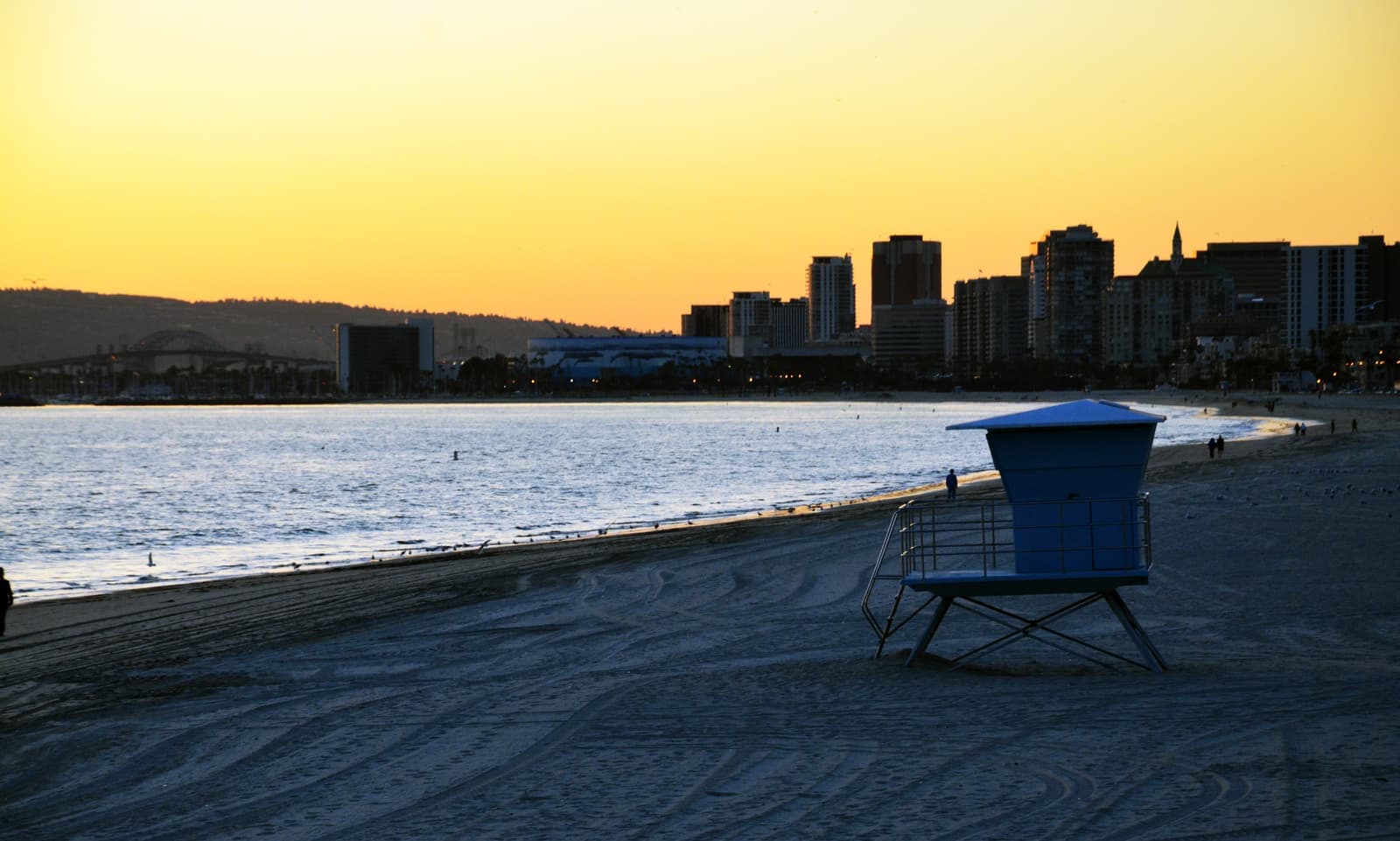
Rainbow Harbor, the Aquarium of the Pacific, Shoreline Village and The Pike are a short walk from most buildings, and the Acura Grand Prix of Long Beach turns the streets into a racetrack every April. In 2028 the Long Beach Arena and the Convention Center will host Olympic handball, shooting, water polo, artistic swimming and sport climbing.
The Metro A Line starts downtown and runs without a transfer to Downtown Los Angeles, Pasadena and Pomona, 57.7 miles in all, the longest modern light rail line in the world. Plenty of residents here keep one car or none.
Live from the MLS
Downtown Long Beach compared with all of Long Beach.
A square foot in Downtown costs 3% more than across Long Beach.
Downtown$622
All of Long Beach$606
Listings in Downtown have been on the market 30 days longer than across Long Beach.
What’s for sale
98% of the homes for sale in Downtown are condos.
- Condo98%40 homes
- Other2%1 home
Homes for sale in Downtown are 14% smaller than across Long Beach.
Downtown992 sq ft
All of Long Beach1,159 sq ft
Each card sets the median in Downtown against all of Long Beach. The arrow on a card lists every Long Beach neighborhood we cover. Asking prices for homes on the market right now inside each mapped area, not sale prices. Updated October 3, 2026, 5:00 PM PT
Homes for sale in Downtown Long Beach
41 active listings in the mapped area
$995,000
Condo2 bd2 ba1,080 sqft
700 E Ocean Boulevard 1206
$495,000
Condo1 bd1 ba680 sqft
388 E Ocean Boulevard 511
$529,000
Condo2 bd2 ba1,080 sqft
700 E Ocean Boulevard 1102
$485,000
Condo1 bd1 ba992 sqft
433 Pine Avenue 100
$388,000
Condo1 bd1 ba590 sqft
388 E Ocean Boulevard 709
$335,000
Studio1 ba347 sqft
360 W Ocean Blvd. 1105
$499,000
Condo1 bd2 ba880 sqft
700 E Ocean Boulevard 2703
$410,000
Condo1 bd1 ba777 sqft
360 W OCEAN BLVD 407
$799,000
Condo2 bd3 ba1,800 sqft
133 The Promenade N 118
$549,000
Condo2 bd2 ba1,080 sqft
700 E Ocean Boulevard 1902
$775,000
Condo3 bd2 ba1,260 sqft
700 E Ocean 808
$560,000
Condo1 bd1 ba900 sqft
411 W Seaside 601
$399,900
Condo1 bd1 ba702 sqft
488 E Ocean Boulevard 804
$925,000
Condo2 bd2 ba1,313 sqft
525 E Seaside Way 1109
$629,900
Condo2 bd2 ba960 sqft
388 E Ocean Boulevard 1401
$410,000
Condo1 bd1 ba704 sqft
525 E Seaside 710

Still deciding? Ask me.
I’m a Realtor right here in Long Beach and I know Downtown Long Beach inside out. Buying or selling, tell me what you’re after and I’ll help you get there.
Slava Ploshkin · DRE #02323623English and Russian · How I work in Long Beach
Where to eat, shop, and explore in Downtown Long Beach
The restaurants, cafes, shops, parks, and landmarks that give Downtown Long Beach its everyday character, most within a short walk.
8 places
Pick one and I’ll show you where it is.
Shopping5 min walk
Downtown's main dining and nightlife street, running north from the waterfront past historic storefronts like the 1903 Masonic Temple at 230 Pine.
Weeknights are the local sweet spot; weekends and event days get busy and parking tightens.
Restaurant5 min walk
A Mexican restaurant and tequila bar at 200 Pine Avenue, one of the anchors of the lower Pine blocks.
Park5 min walk
A small park on the pedestrian Promenade at 3rd Street, named for the gay rights leader and used for community events.
Landmark5 min walk
One of the largest aquariums in the country, opened on Rainbow Harbor on June 20, 1998, with about 12,000 animals. It drew 1.7 million visitors in 2018.
If you live downtown, price out an annual membership; it covers repeat visits.
Shopping5 min walk
The Pike, a waterfront center of shops, restaurants, a movie theater and a Ferris wheel, named for the amusement zone that stood here from 1902 to 1979.
Shopping · Nearby10 min walk
A boardwalk of shops, casual seafood and harbor cruises along the marina, with skyline views back toward the towers and the start of the beach bike path.
Landmark · Nearby5 min walk
The waterfront convention campus with the Terrace Theater and the Long Beach Arena. The Arena hosted Olympic volleyball in 1984 and will host handball in 2028, while a temporary stadium on the lot hosts water polo and artistic swimming.
Landmark · Nearby20 min walk
Founded in 1996, the only museum in the U.S. devoted to modern and contemporary Latin American and Latino art. From 1913 to 1918 the same site was the Balboa Amusement Producing Company, a silent-film studio.
Pine Avenue and the East Village
Pine has the restaurants and bars, and the galleries are in the East Village.
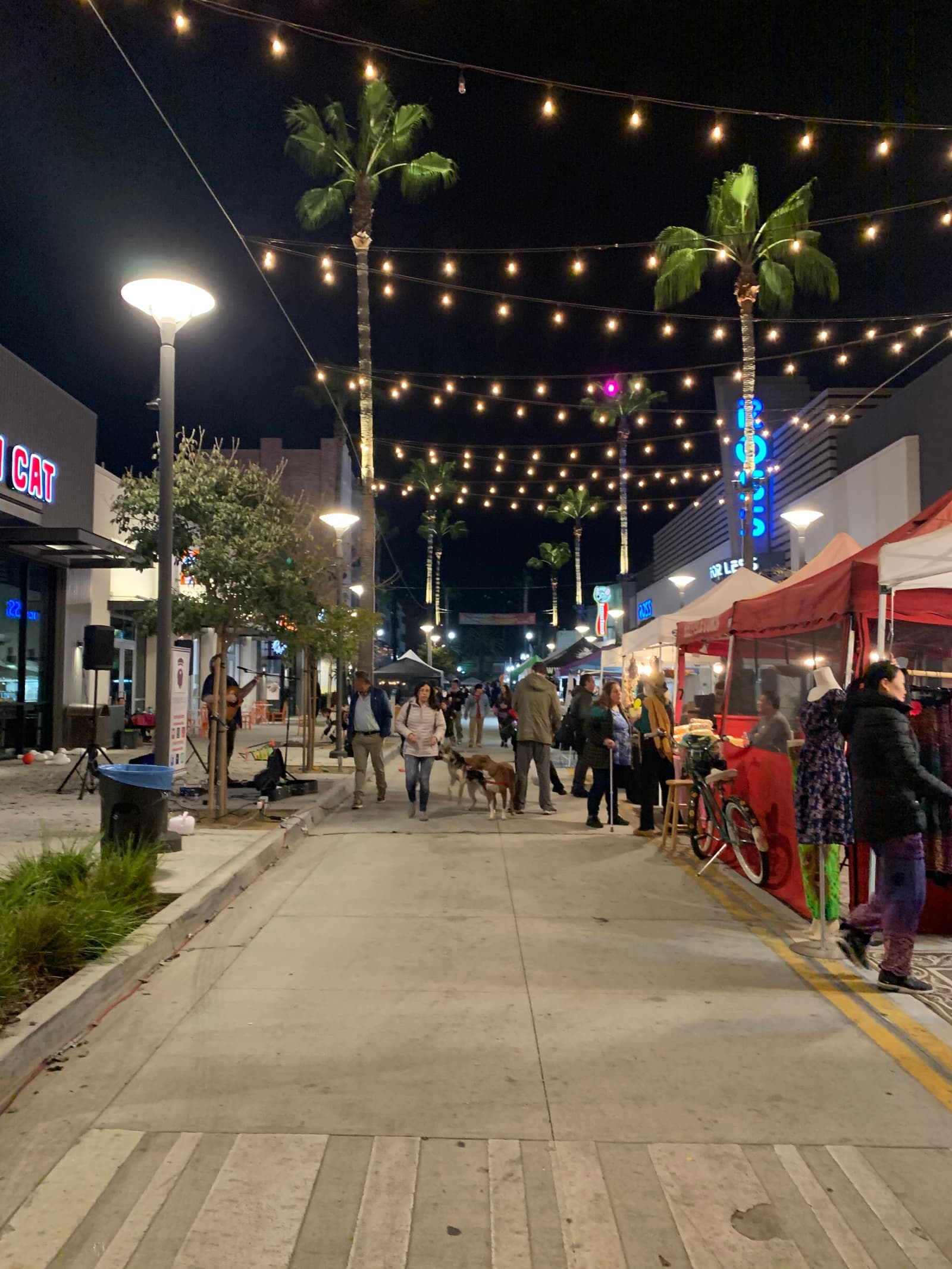
Pine Avenue is the front door, running north from the waterfront with the densest cluster of restaurants and bars in the city: Agaves at 200 Pine for Mexican food and tequila, rooftop bars, and craft beer and coffee at Altar Society, inside the 1903 Masonic Temple at 230 Pine. A certified farmers market sets up downtown on Fridays, and Harvey Milk Promenade Park sits on the pedestrian Promenade at 3rd Street.
The East Village Arts District, a few blocks east, has independent galleries, murals, coffee bars and small kitchens in old commercial buildings. The Museum of Latin American Art sits at its edge on a site that was a silent-film studio from 1913 to 1918.
Noise and crowds come with it. Streets carry traffic, weekends bring nightlife noise, and on event weekends (the Grand Prix, concerts, conventions) garages fill up and streets close. See your block on a Friday night, not just a Tuesday afternoon.
- Pine Avenue is the dining and nightlife spine
- The East Village is the walkable arts district
- Go see your block at night and on an event weekend
From Willmore City in 1881 to apartment towers
The Cyclone Racer ran on pilings over the water from 1930 to 1968.
Long Beach began here. In 1880 Jotham Bixby sold 4,000 acres of Rancho Los Cerritos to an Englishman, William E. Willmore, who laid out a colony called Willmore City; the city dates that original town plan to 1881. The venture failed, the land went to the Long Beach Land and Water Company in 1884, and the town took the name Long Beach. It first incorporated in 1888, briefly disincorporated in 1896, and reincorporated on December 13, 1897. The Willmore name lives on in the Drake Park/Willmore City Historic District on the northwest side, which the city says has the highest concentration of early 1900s housing in Long Beach.
Then came the Pike. A grand bathhouse opened on the sand on July 4, 1902, the same morning the first Pacific Electric Red Car arrived from Los Angeles, and an amusement zone grew around it. Its Cyclone Racer, a wooden dual-track roller coaster built on pilings over the water, ran from 1930 to 1968 and carried more than 30 million riders. The city declined to renew the Pike's leases in 1979, and the rides came down.
Modern Downtown came out of decades of waterfront redevelopment. The Grand Prix started in 1975, ran as a Formula One race from 1976 to 1983, and has been an Indy car race since 1984; it's the city's largest event, with weekend crowds around 200,000. The Aquarium opened on Rainbow Harbor in 1998, and a run of residential towers since then has turned an office core into a place people live.

- Willmore City plan of 1881; renamed Long Beach; incorporated 1888, reincorporated 1897
- The Pike ran from 1902 to 1979, with the Cyclone Racer from 1930 to 1968
- Grand Prix since 1975; Aquarium since 1998; residential towers since
Mostly rentals, and condos for sale
Long Beach's rental and condo neighborhood, plus a pocket of the city's oldest homes.
Most downtown housing is rental, from new high-rise apartment buildings with pools and gyms to older walk-ups. Large buildings usually lease directly, so the MLS shows only part of the rental market. In September 2026, the downtown units listed on the MLS asked about $1,650 for a studio to about $4,700 for a large one-bedroom, with most one- and two-bedrooms between $2,500 and $4,200.
For sale, it's condos. Along Ocean Boulevard and the waterfront, towers from the 1960s to the 2000s have one- to three-bedroom units looking at the ocean, the harbor or the skyline. Floor, view and orientation count for as much as square footage. North of the towers are lofts in converted commercial buildings and condos in historic buildings like the 1922 Sovereign on West Ocean.
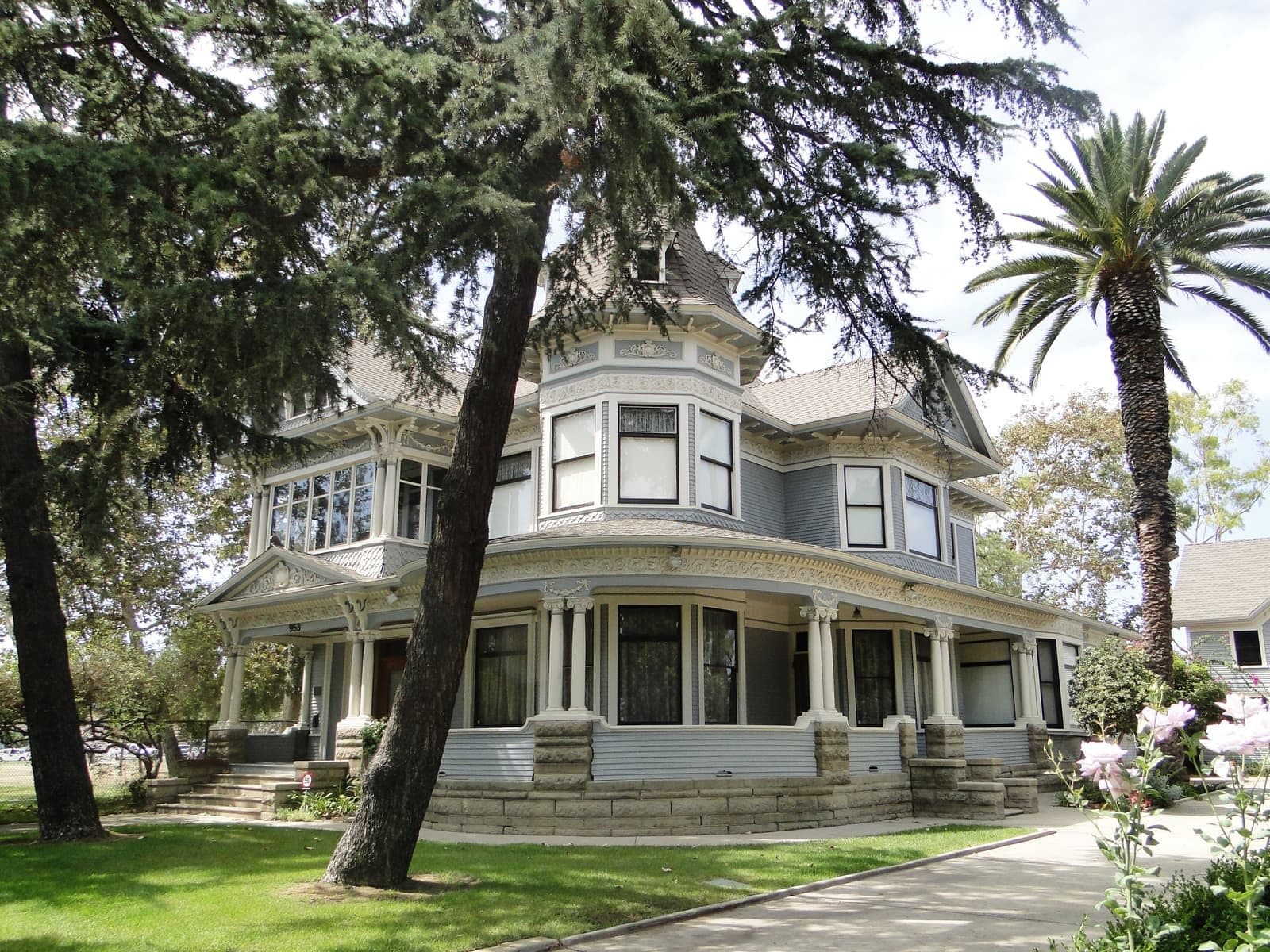
The exception is the Drake Park/Willmore City district on the northwest edge, with Victorian, Craftsman, Mission, Prairie and Spanish Colonial Revival houses and vintage apartments.
- Mostly rentals; big buildings often lease outside the MLS
- For sale: condos from about $360K to $1.08M (September 2026)
- Drake Park/Willmore City holds downtown's early 1900s houses
What Downtown condos cost
Below the city median, with a wide spread from building to building.
Downtown is almost all condos, so the building sets the price: which floor, what view, the HOA dues and reserves, amenities, parking. In September 2026, one-bedrooms asked from about $360,000 and two-bedrooms mostly $550,000 to $950,000, with a middle asking price around $630,000 across all condos, below the citywide middle of about $899,000 for all home types.
That makes it a common first purchase for people who want to own near the water or ride the train to Los Angeles. Newer towers and view units sit at the top of the range, older buildings and studios at the bottom. For pricing, what sold recently in the same building matters most.
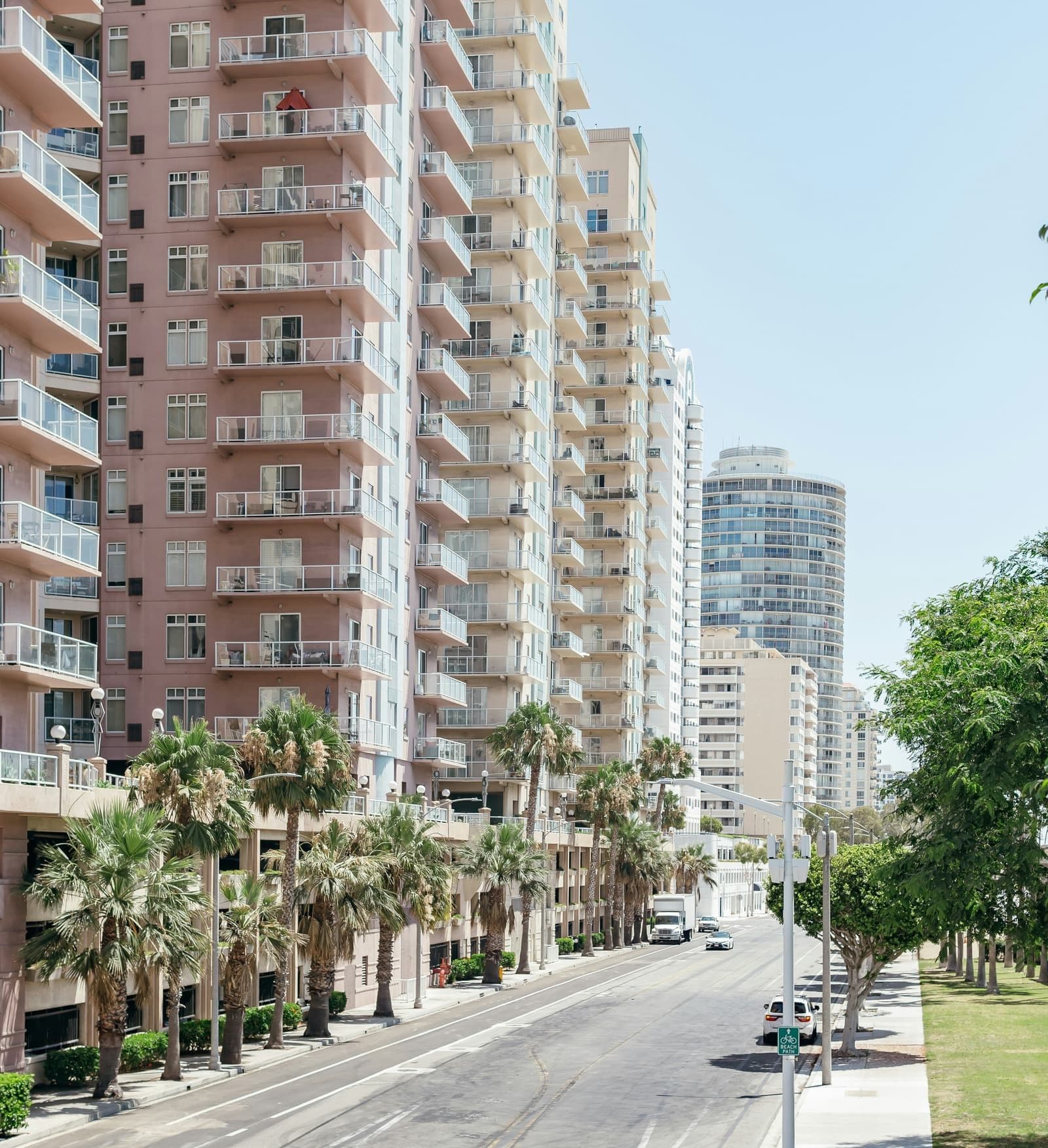
- Condo middle asking price around $630K in September 2026
- The building, floor, view and HOA drive value
- Look at what sold in the same building
What to check about the building before you buy
Noise changes block to block, and parking building to building.
Ask the HOA for its budget, reserve study, monthly dues and any pending special assessments. An older high-rise can face big bills for elevators, facades, plumbing and seismic work, and when the reserve can't cover them, the owners pay the difference.
Find out how many deeded parking spaces come with the unit and whether they're tandem; some historic buildings have little or none. Then listen. Pine Avenue nightlife, Ocean Boulevard traffic, the A Line and the event venues change the noise level block to block, so go back on a weekend night.
Planning to rent it out? Read the HOA's rental rules first. Long Beach has no local rent control, but the state's AB 1482 caps many older units at 5% plus inflation a year, up to 10%, and the city's Just Cause ordinance limits evictions. Parts of downtown near the water are in the Coastal Zone; before a remodel, the city's coastal map tells you whether yours is.

- Read the HOA budget, reserves, dues and any special assessments
- Count the deeded parking spaces; visit on a weekend night
- Landlords: HOA rental rules, AB 1482 and Just Cause
On foot and on the A Line
The most car-optional neighborhood in Long Beach.
From most buildings you can walk to groceries, dinner and the water, and the flat grid and the beach path make biking easy. The A Line runs from downtown to Downtown Los Angeles in one ride, and on to Pasadena and Pomona.
For driving, downtown sits at the end of the 710, with Ocean Boulevard and Shoreline Drive along the water and the 405 a short hop north. Expect paid garages, metered streets, and closures during the Grand Prix, concerts and conventions. LAX is usually 30 to 45 minutes by car.

- The easiest place in Long Beach to skip the car
- The A Line runs to Downtown Los Angeles, Pasadena and Pomona
- The 710, Ocean Blvd and the 405 handle driving; expect paid parking and event closures
More Downtown Long Beach facts
- 35 floorsTallest buildingShoreline Gateway, 2021
- 1998Aquarium opened1.7M visitors in 2018
- 1975Grand Prix sinceThe city's largest event
- 57.7 miMetro A LineLongest modern light rail line




Rentals in Downtown Long Beach
12 active rentals in the mapped area
$3,450/mo
Condo2 bd2 ba1,040 sqft
411 W Seaside Way 225
$2,876/mo
Condo1 bd1 ba650 sqft
250 E Broadway 815
$2,706/mo
Condo1 bd1 ba680 sqft
250 E Broadway 304
$5,200/mo
Condo2 bd2 ba1,080 sqft
700 E Ocean 2005
$2,495/mo
Condo1 bd1 ba680 sqft
388 E Ocean
$3,700/mo
Condo2 bd2 ba1,080 sqft
700 E Ocean Boulevard 1102
$1,575/mo
Condo1 ba347 sqft
360 W Ocean 205
$4,195/mo
Apartment2 bd2 ba1,313 sqft
525 E Seaside 809
$2,995/mo
Condo1 bd1 ba830 sqft
525 E Seaside 1806
$3,695/mo
Condo2 bd2 ba970 sqft
150 The Promenade N
$4,699/mo
Condo1 bd2 ba1,434 sqft
488 E Ocean P2
$3,700/mo
Condo1 bd2 ba880 sqft
700 E Ocean Blvd 3003
Renting in Downtown Long Beach
Most downtown one- and two-bedrooms listed on the MLS in September 2026 asked between about $2,500 and $4,200 a month, with a studio near $1,650. Big apartment buildings often lease directly, so also check their own sites and the 'For rent' block on this page.
Questions & answers
Its waterfront and its apartment towers. Around them are the Aquarium of the Pacific, Rainbow Harbor, Pine Avenue's restaurants, the East Village Arts District, and the Grand Prix every April. It's also where the Metro A Line to Los Angeles starts.
Explore near Downtown Long Beach
1.1 mi awayAlamitos BeachOld apartment blocks east of Downtown, with Broadway through the middle and the sand at the end of the streetRead the guide ›2.1 mi awayBluff ParkA 1982 historic district of big pre-war houses on the ocean bluff, facing a 13-acre strip of lawn above the beachRead the guide ›2.9 mi awayBelmont HeightsCraftsman bungalows on the rise above Belmont Shore, with a local main street on BroadwayRead the guide ›3.3 mi awayBelmont ShoreSmall old houses around Second Street, a few minutes' walk from flat waterRead the guide ›3.7 mi awayCalifornia HeightsLong Beach's largest historic district: nearly 1,500 homes, most of them Spanish Colonial Revival, on streets with vintage lamppostsRead the guide ›3.9 mi awayPark EstatesCustom mid-century and traditional houses, started in 1948, on curving streets between Recreation Park and Cal State Long BeachRead the guide ›

Where we check the facts
The facts in this guide (districts, zones, rules) come from the official records below. We re-check them before property tours.
- U.S. Census Bureau — ACS 2020-2024, table B25003data.census.govtenure: 17,702 of 22,421 households in ZCTA 90802 rent
- Wikipedia — List of tallest buildings in Long Beachen.wikipedia.orgShoreline Gateway, 35 floors, 2021, tallest in Long Beach
- Wikipedia — A Line (Los Angeles Metro)en.wikipedia.org57.7 miles, opened 1990, extended to Pomona in 2025
- City of Long Beach — Historic Districtslongbeach.govDrake Park/Willmore City: 1881 plan, early 1900s housing, 1998 ordinance
- Wikipedia — Willmore, Long Beachen.wikipedia.org4,000 acres, 1884 transfer to the Long Beach Land and Water Company
- Wikipedia — Long Beach, California (history)en.wikipedia.org1880 sale to Willmore; 1888 incorporation; 1897 reincorporation
Show all 17 sourcesShow fewer
- Wikipedia — The Pikeen.wikipedia.orgJuly 4, 1902 opening; Cyclone Racer 1930 to 1968; 1979 closure
- Wikipedia — Aquarium of the Pacificen.wikipedia.orgopened June 20, 1998; 12,000 animals; 1.7 million visitors in 2018
- Wikipedia — Grand Prix of Long Beachen.wikipedia.org1975 start, Formula One 1976 to 1983, ~200,000 weekend attendance
- LA28 — Long Beach Arenala28.orghandball and sitting volleyball; volleyball in 1984
- LA28 — Long Beach Aquatics Centerla28.orgwater polo and artistic swimming in the Convention Center lot
- Wikipedia — Museum of Latin American Arten.wikipedia.orgfounded 1996; Balboa film studio site 1913 to 1918
- Wikipedia — Masonic Temple (Long Beach)en.wikipedia.org1903 building at 230 Pine; Altar Society Brewing
- City of Long Beach — Tenant and landlord resourceslongbeach.govno local rent control; Just Cause ordinance
- California Civil Code §1947.12 (AB 1482)leginfo.legislature.ca.gov5% plus inflation cap, 10% maximum, 15-year new-construction exemption
- CRMLSgo.crmls.orgactive listings, asking prices and rents, September 2026
- City of Long Beach — Coastal zone maplongbeach.govwhich blocks are in the Coastal Zone
Photo credits (8)
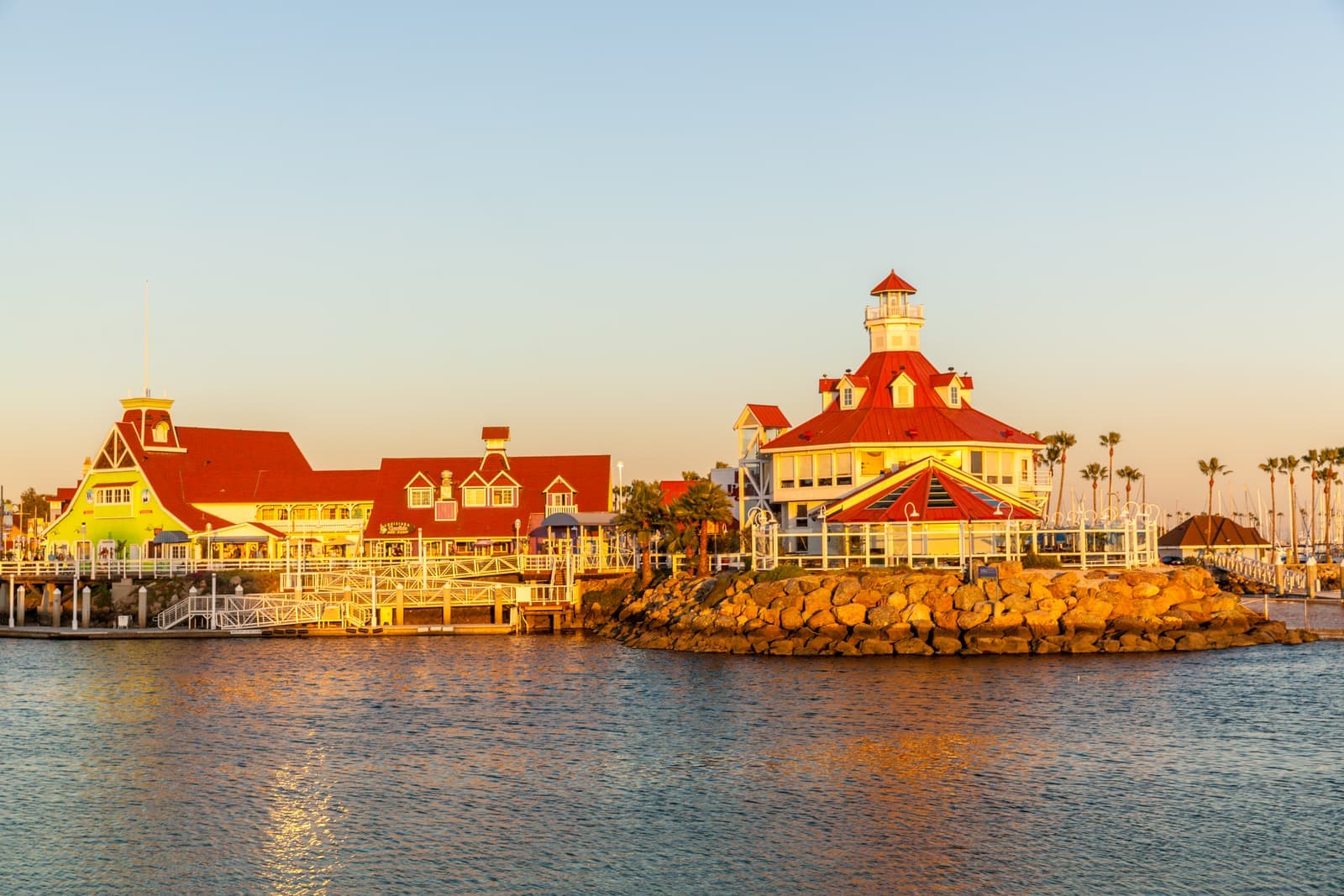
- Evening sun on Shoreline Village, on the harbor a short walk from Pine Avenuerussellstreet, CC BY-SA 2.0
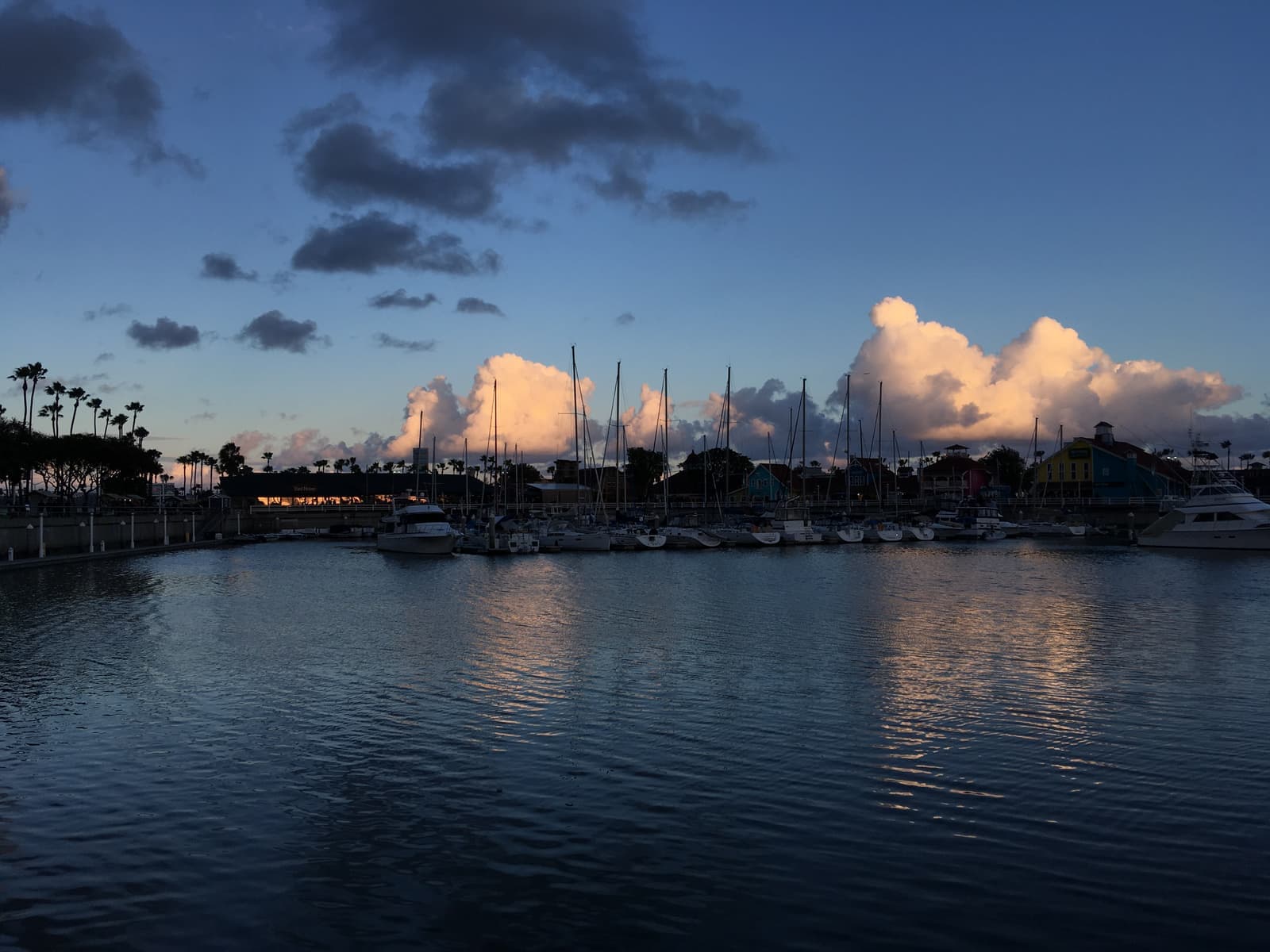
- Clouds catch the last light over the boats in Rainbow HarborSergei Gussev, CC BY 2.0
- String lights and market stalls on the Promenade on a January eveningdianaconnolly101, CC BY 2.0
- People relax on the lawn by Lions Lighthouse in Shoreline Aquatic ParkEric Kilby, CC BY-SA 2.0
- The Bembridge House, a Queen Anne Victorian in the Drake Park/Willmore City districtLos Angeles (Wikimedia Commons user), CC BY-SA 3.0
- Condo towers at the east end of Downtown, with the round International Tower aheadAlex S., Unsplash License, cropped
- The 1922 Sovereign on West Ocean Boulevard, one of Downtown's historic condo buildingsLos Angeles (Wikimedia Commons user), CC BY-SA 3.0
- Bike share bikes docked on Ocean Boulevard under a row of palmsAlex S., Unsplash License