





Naples asks 3.4 times as much as Long Beach does as a whole.
Long Beach, California · Neighborhood guide
Naples
Three canal islands in Alamitos Bay, built from 1905, and some of the priciest homes in Long Beach
Median askingNaples$3M17 for sale
See homesNaples, in short.
Naples is a neighborhood of three man-made islands in Alamitos Bay in southeast Long Beach, cut by canals and named for the Italian city, with streets like Rivo Alto, Toledo and Napoli. Developer Arthur M. Parsons started building it in August 1905, with 13,000 feet of concrete seawall and 300,000 cubic yards of dredging and fill. Gondola Getaway has rowed the canals since 1982, and the Christmas boat parade dates to 1946. As of September 2026, houses listed on the islands asked about $1.5 million to $10.25 million, with a middle near $3.1 million. The aging seawall is the big open question for buyers.
Naples by the numbers.
- 3,333Population
- 62%Bachelor's degree or higherage 25+
- $131,765Median household income
- 57.1Median age
- 1905Construction beganAugust, on bay marsh
- 90803ZIP codeBelmont Shore & Naples
Sources: U.S. Census Bureau, ACS 5-year 2019–2023; neighborhood facts compiled by The Slava House.
A canal neighborhood inside Long Beach
Some of the priciest waterfront in the city, on islands dredged out of a marsh.
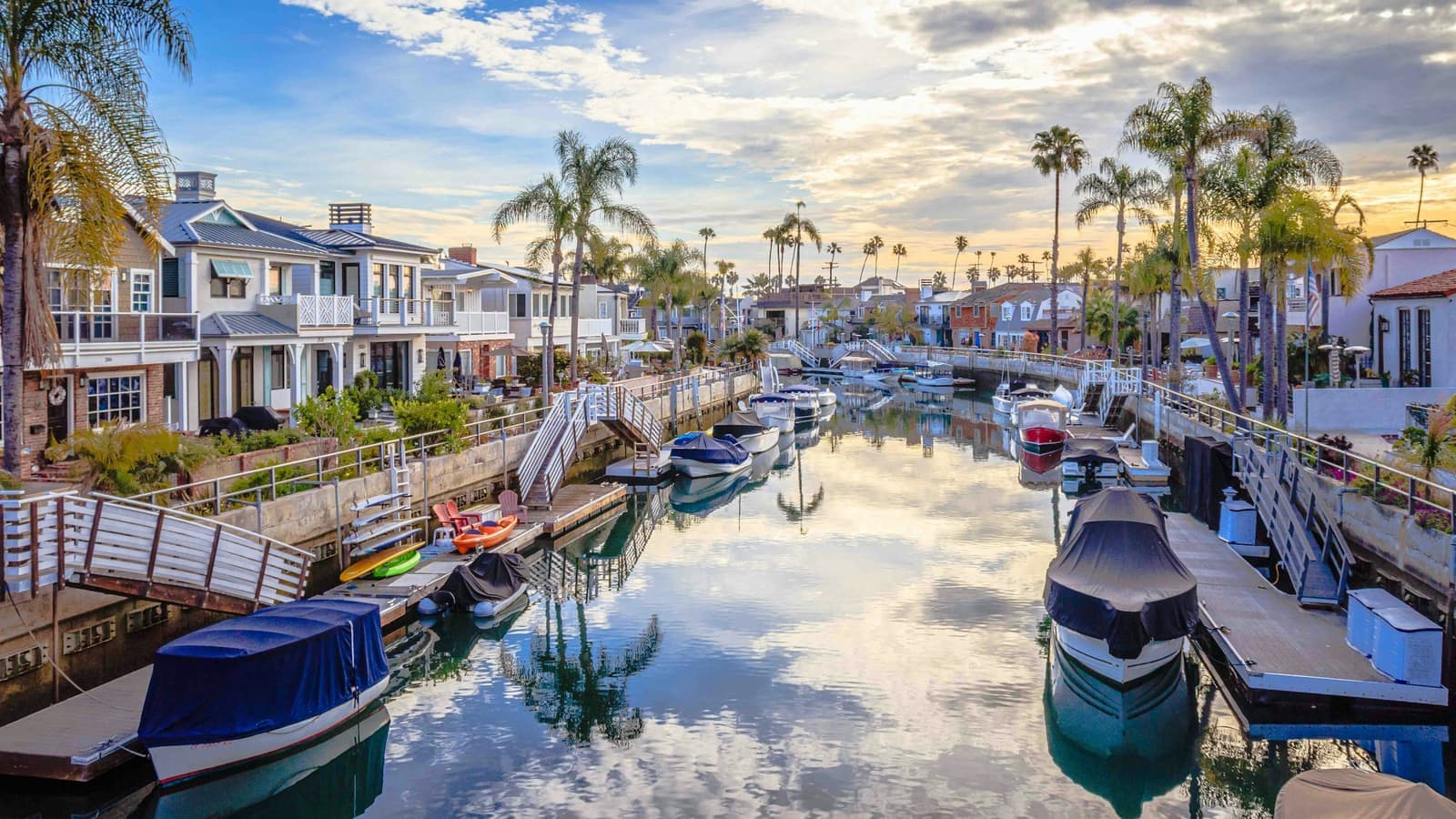
Naples is three man-made islands in Alamitos Bay, divided by canals that open into the bay and crossed by footbridges. The Rivo Alto Canal runs through the middle, and the houses along it back right onto the water. Most streets carry Italian names like Toledo, Ravenna, Napoli and Corso di Napoli. It's flat and quiet, and you can walk the whole thing, a different pace from Belmont Shore across the bridge.
Around 1903 Arthur M. Parsons raised $500,000 from investors and bought tidal marsh at the mouth of the San Gabriel River from the Alamitos Land Company. Construction began in August 1905: the contract called for 13,000 linear feet of concrete bulkhead and 300,000 cubic yards of dredging and fill, which raised three islands to an even height. His Naples Land Company sold it as the 'Dreamland of Southern California,' and the islands were finished in the 1920s.
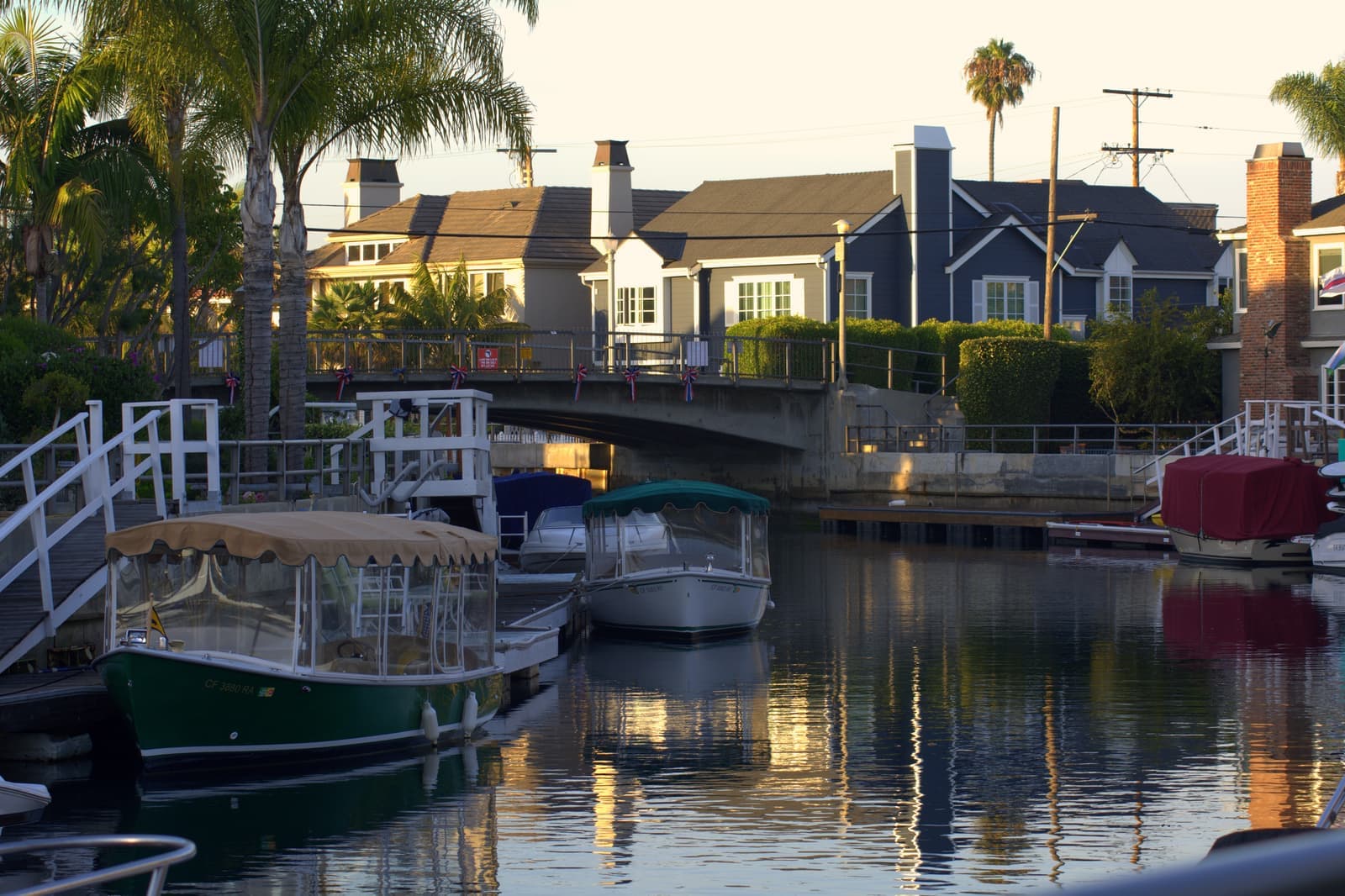
Life here runs around the water. People paddle off their back docks, and the gondolas go out at dusk. Gondola Getaway has rowed these canals since 1982, and every December since 1946 the Naples Island Christmas Boat Parade takes decorated boats through the canals while residents light up their houses. The lighted 'Trees in the Bay' have floated in the water since 1949.
The islands aren't cut off. Second Street's shops and the 2nd & PCH center are a short walk or ride, and Mother's Beach, the Alamitos Bay Marina and Marine Stadium are all close. Prices reflect it: in September 2026 the 18 houses listed on the islands had a middle asking price near $3.1 million.
The big buyer issue is the seawall. The 1930s seawall is being replaced in sections; as of the Long Beach Post's December 2024 report, two of six sections were done at a cost of $32 million, the rest was estimated at $125 million in total, and the city had floated options including a property-owner assessment. Ask about its status before you buy.
Live from the MLS
Naples compared with all of Long Beach.
A square foot in Naples costs 2.1 times as much as across Long Beach.
Naples$1,299
All of Long Beach$606
Listings in Naples have been on the market 33 days longer than across Long Beach.
What’s for sale
76% of the homes for sale in Naples are single-family houses.
- Single-family76%13 homes
- Multi-unit18%3 homes
- Condo6%1 home
Homes for sale in Naples are 2.9 times the size of those across Long Beach.
Naples3,335 sq ft
All of Long Beach1,159 sq ft
Each card sets the median in Naples against all of Long Beach. The arrow on a card lists every Long Beach neighborhood we cover. Asking prices for homes on the market right now inside each mapped area, not sale prices. Updated October 3, 2026, 5:00 PM PT
Homes for sale in Naples
17 active listings in the mapped area
$3,285,000
Single-Family4 bd3 ba2,529 sqft
171 Savona Walk
$2,799,800
Single-Family4 bd5 ba3,389 sqft
215 The Toledo
$1,475,000
Single-Family2 bd1 ba1,114 sqft
5928 E The Toledo
$2,799,000
Single-Family4 bd3 ba2,758 sqft
5776 Campo Walk
$1,475,000
Single-Family3 bd2 ba1,575 sqft
5796 Campo Walk
$2,795,000
Apartment
5711 E 2nd
$1,665,000
Duplex4 bd3 ba1,953 sqft
5829 E 2nd
$8,495,000
Single-Family5 bd4 ba5,557 sqft
5455 E Sorrento Drive
$5,349,000
Single-Family4 bd4 ba3,083 sqft
5590 E The Toledo
$7,500,000
Single-Family4 bd4 ba4,246 sqft
6048 Lido
$7,300,000
Single-Family6 bd9 ba7,607 sqft
93 Giralda
$6,200,000
Single-Family5 bd6 ba4,165 sqft
55 Rivo Alto Canal
$1,650,000
Duplex
5653 E 2nd
$7,900,000
Condo3 bd5 ba4,100 sqft
5400 E The Toledo 701
$2,795,000
Single-Family5 bd4 ba2,531 sqft
89 Rivo Alto Canal
$2,999,000
Single-Family3 bd3 ba3,335 sqft
159 Angelo Walk

Still deciding? Ask me.
I’m a Realtor right here in Long Beach and I know Naples inside out. Buying or selling, tell me what you’re after and I’ll help you get there.
Slava Ploshkin · DRE #02323623English and Russian · How I work in Long Beach
Where to eat, shop, and explore in Naples
The restaurants, cafes, shops, parks, and landmarks that give Naples its everyday character, most within a short walk.
11 places
Pick one and I’ll show you where it is.
Recreation15 min walk
Hand-rowed gondola rides through the Naples canals since 1982, from a company that calls its fleet the oldest and largest in America. Boats leave from 5437 East Ocean Boulevard.
Sunset rides, weekends and December book up first.
Landmark5 min walk
A small park with a column-ringed plaza in the middle of Naples, near the three-tiered fountain the city named La Bella Fontana di Napoli in 1971.
Restaurant5 min walk
A barbecue restaurant at 5800 East 2nd Street, a short walk from the canals.
Reserve on weekends.
Shopping15 min walk
The open-air center at 2nd Street and Pacific Coast Highway, east of the island, with Whole Foods, Lululemon, Sephora, Shake Shack and Ola Mexican Kitchen.
The marina-facing patios are the best seats.
Beach5 min walk
Officially Marine Park, at 5839 Appian Way on the northeast side of the island: shallow, wave-free bay water with a playground, showers and lifeguards at busy times.
Restaurant5 min walk
A steak and seafood restaurant on 2nd Street in Naples.
Restaurant5 min walk
A Mediterranean restaurant at 5854 East Naples Plaza, by the small bay-front park locals call Naples Plaza.
Restaurant5 min walk
A Neapolitan pizzeria and wine bar at 5616 East 2nd Street, new in 2026, run by sommelier Massimo Aronne.
Coffee5 min walk
A small coffee stop at 5790 East 2nd Street, the island's morning espresso.
Landmark5 min walk
The main canal through the islands, with docks along the edges and footbridges overhead. The Christmas boat parade has come through here since 1946.
Recreation · Nearby15 min walk
The 1932 Olympic rowing course north of the island, still used by rowers and paddlers, and the rowing and canoe sprint venue for 2028.
Living on the water
Canal frontage and docks shape both daily life and prices here.
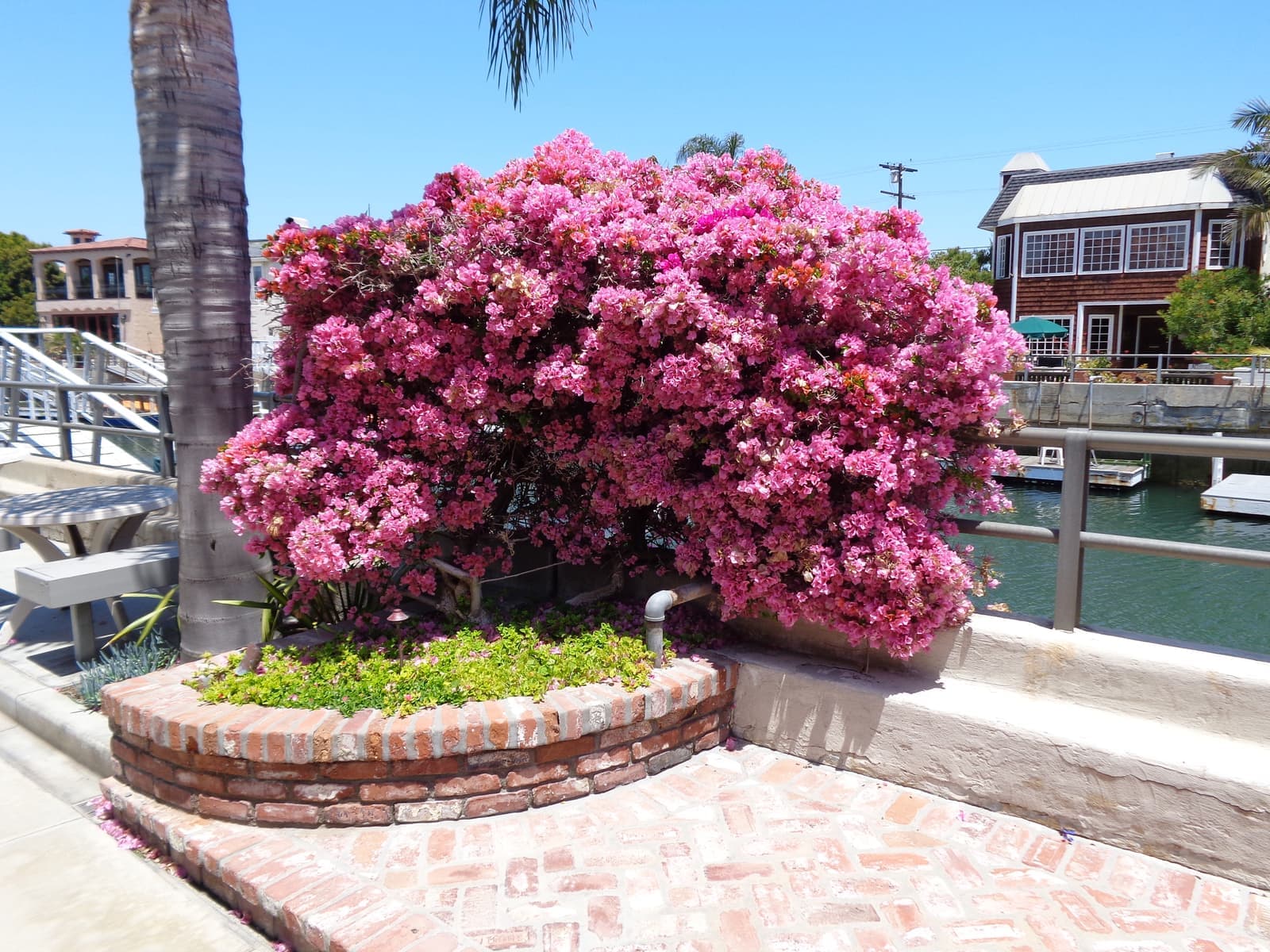
The Rivo Alto Canal runs through the islands under arched footbridges, and many canal-front homes have a private dock or direct water access at the back. Walkways run along the canals, and they make one of the best evening walks in the city.
On the water you'll see paddleboards, kayaks, small electric boats and the gondolas that have worked these canals since 1982. Water frontage moves the price more than anything else: a canal-front lot with a usable dock, or a bay-front home with a wide view, sells for far more than an interior house a block away.
So the water side of a house needs as much checking as the house: the dock's condition and permits, who is responsible for the seawall and bulkhead, tidal access, and exactly what water rights convey.
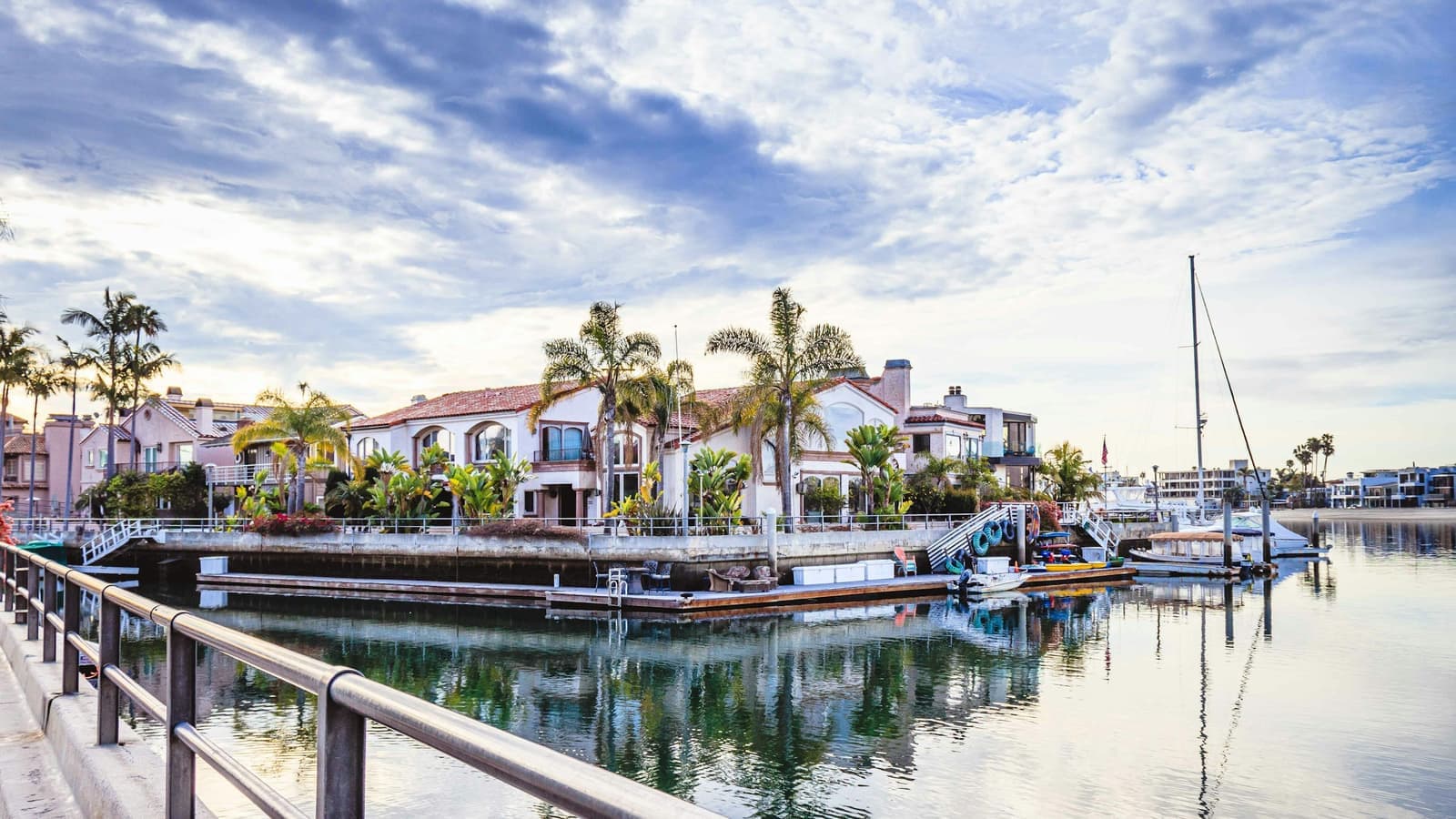
- The Rivo Alto Canal runs through the islands under footbridges
- Canal- and bay-front homes with docks carry a large premium
- Dock permits and water rights go house by house
How Naples was dredged out of a marsh
Work began in August 1905, and the three islands weren't finished until the 1920s.
A little over a century ago this corner of Alamitos Bay was tidal marsh at the mouth of the San Gabriel River, underwater at high tide. The plan, drawn by the firm Mayberry & Parker, echoed Abbot Kinney's canals-and-gondolas Venice of America up the coast. The Naples Land Company promised that gondoliers would glide 'under the high arching bridges' as in Italy.
Getting there was easier than the marsh suggests: by 1906 Henry Huntington had routed a streetcar line through the area, and the Pacific Electric served Naples until 1950. Progress was slow, and the islands weren't finished until the 1920s. After the 1933 Long Beach earthquake, the seawall was rebuilt in 1938, and that is the wall being replaced today.
The Italian theme stuck, from the street names to La Bella Fontana di Napoli, the three-tiered fountain park in the middle of the island, first called Circle Park in 1933 and given its current name in 1971. Mid-century architects left their mark too: Killingsworth, Brady & Smith's Case Study House #25, the Frank House, sits on a Naples canal, and their 1957 Opdahl House is a few blocks away.
- Built on former marsh; construction began in August 1905, finished in the 1920s
- Inspired by Abbot Kinney's Venice of America and sold as the 'Dreamland of Southern California'
- Seawall rebuilt in 1938; gondolas since 1982; boat parade since 1946
The houses on the islands
A century of Southern California waterfront design on a few small islands.
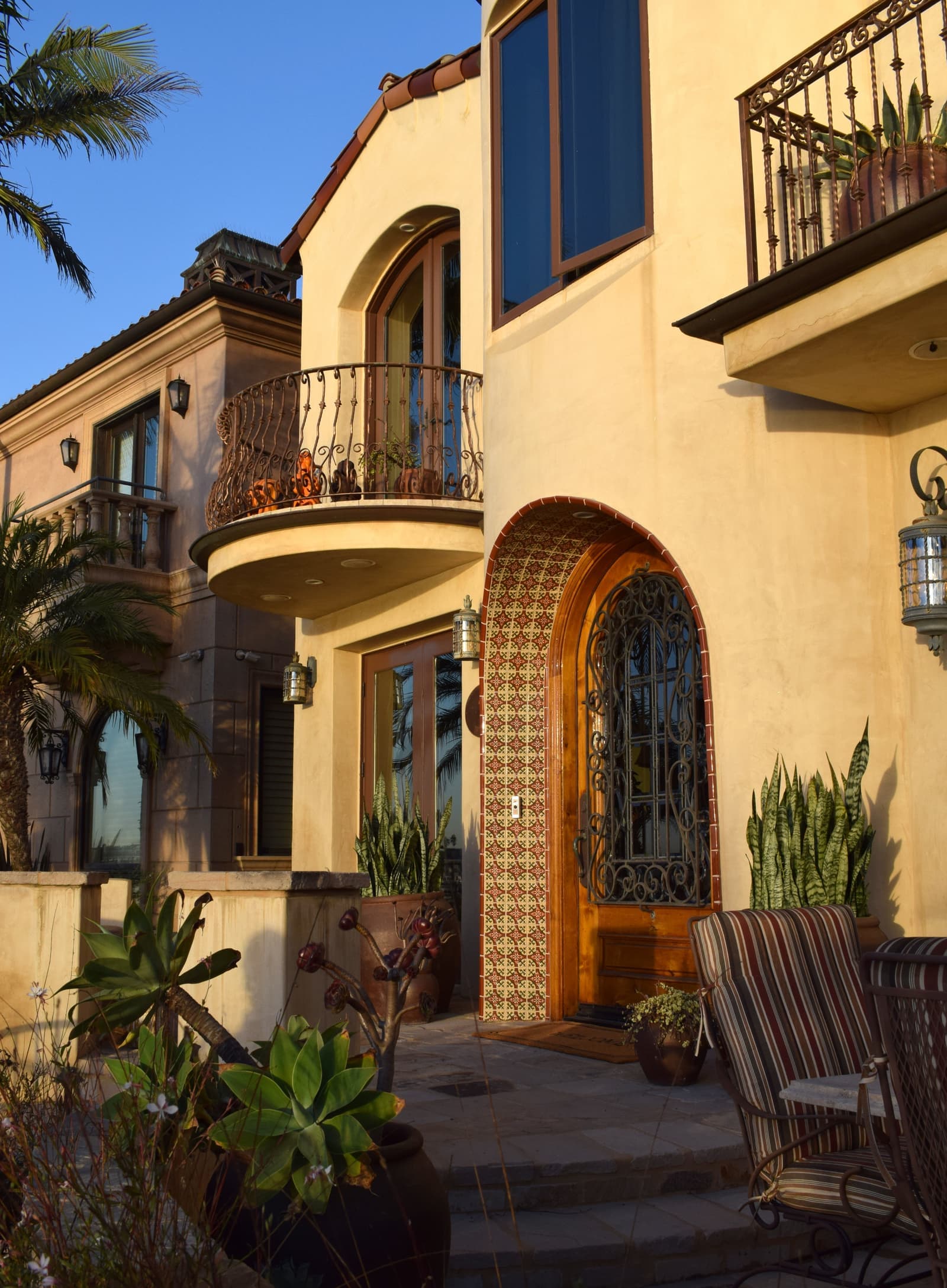
The oldest streets still show the 1920s to 1940s: Spanish Colonial and Mediterranean houses with tile roofs and arched windows, plus smaller cottages on narrow interior lots. Over the last few decades many waterfront homes have been rebuilt as large modern houses, and a few mid-century landmarks, like Case Study House #25, are still here.
Lots are small and the islands are dense, so outdoor space is usually a patio, a roof deck or the dock. Interior homes are the cheaper way in; canal- and bay-front homes are priced for the water.
Condition and permitted work vary a lot from house to house. Good water frontage matters most, then updated systems, legal additions and off-street parking. Square footage comes after all of that.

- Common styles: Spanish, Mediterranean, cottages, modern rebuilds
- Small lots; the dock often doubles as the yard
- Water frontage first, then the dock, condition, permits and parking
Why Naples sits at the top of the Long Beach market
You're paying for the water, on a fixed number of lots.
As of September 2026, the 18 houses listed on the islands asked about $1.5 million to $10.25 million, with a middle near $3.1 million, compared with about $899,000 for all home types citywide. The same floor plan is worth very different money facing a canal, the bay or an interior street.
Bay- and canal-front homes with docks sit at the top. Interior homes and the occasional duplex, listed around $1.65 million in September 2026, are the lower-cost way in. Budget for what runs higher on the water: insurance, dock and seawall upkeep, permitted remodels, and any future seawall assessment.
Price a house against recent sales on the same canal or street, not the island as a whole.

- Houses asked about $1.5M to $10.25M in September 2026
- Interior homes and duplexes are the lower-cost way in
- Budget for insurance, dock and seawall upkeep, and possible assessments
What to check about the seawall and the dock
The water side of the house has its own paperwork.
Start with the seawall. The city has been replacing the 1938 wall in sections since 2015; as of December 2024, four of six sections were still waiting for money, and an assessment on property owners was one option discussed. Ask the listing agent and the city for the current status, and read any disclosures about it.
Then the dock. If one conveys, find out whether it's permitted, what shape it's in, and whether the seawall or bulkhead behind it is yours to maintain. That's a recurring cost the list price doesn't show.
Parking is tight too. Many older island homes have one space or alley access, and street parking near the bridges is hard on summer weekends. Parts of Naples are in FEMA flood zones and the California Coastal Zone, which affect insurance and how long it takes to permit a remodel, a dock or seawall work. Both are mapped by address.

- Ask about the seawall replacement and any proposed assessment
- Confirm dock permits and seawall responsibility
- Many older homes have one parking space or alley access
Over the bridges on foot
Dinner on 2nd Street is a short walk.
The islands are flat, the canal walks connect the blocks, and Second Street's restaurants and the 2nd & PCH center are a short walk or bike ride over the bridges. Plenty of people here get coffee, eat out and go paddling without starting the car.
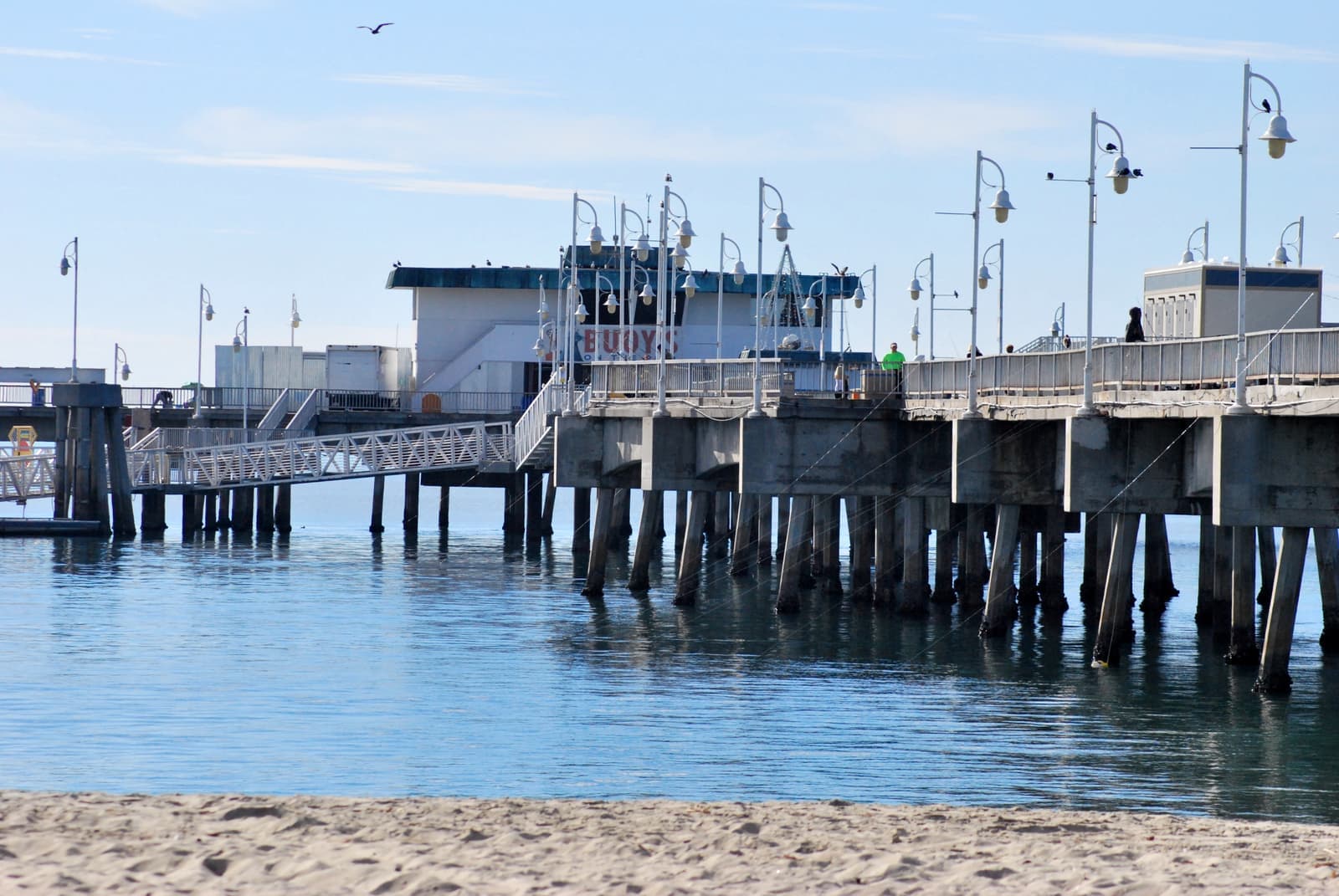
For everything beyond the island, 2nd Street, Pacific Coast Highway and the 405 handle regional trips. Downtown Long Beach is about 12 to 18 minutes by car in light traffic, and LAX usually 30 to 45 minutes. Orange County starts just across the San Gabriel River in Seal Beach.
- Flat and walkable, with canal paths linking the blocks
- Out of town: 2nd St or PCH to the 405
- Downtown is 12 to 18 min by car, LAX usually 30 to 45
More Naples facts
- 13,000 ftSeawall builtConcrete bulkhead, 1905 contract
- 4 of 6Seawall work leftSections unreplaced (Dec 2024)
- ~300k yd³Land dredgedTo raise three islands
- 1982Gondolas sinceHand-rowed on the canals




Rentals in Naples
5 active rentals in the mapped area
$8,500/mo
Single-Family4 bd3 ba2,124 sqft
219 Rivo Alto Canal
$19,000/mo
Single-Family5 bd8 ba7,294 sqft
6020 Lido Lane
$20,000/mo
Single-Family5 bd4 ba5,557 sqft
5455 E Sorrento Drive
$10,000/mo
Single-Family5 bd4 ba2,531 sqft
89 Rivo Alto Canal
$8,400/mo
Single-Family2 bd3 ba2,050 sqft
87 Rivo Alto Canal
Questions & answers
Yes, if you want a quiet, walkable life on the water and can pay for it. You get the canals and maybe a private dock, with Second Street and 2nd & PCH minutes away. The costs are high prices, tight parking, waterfront upkeep, and the open question of the unfinished seawall replacement.
Explore near Naples
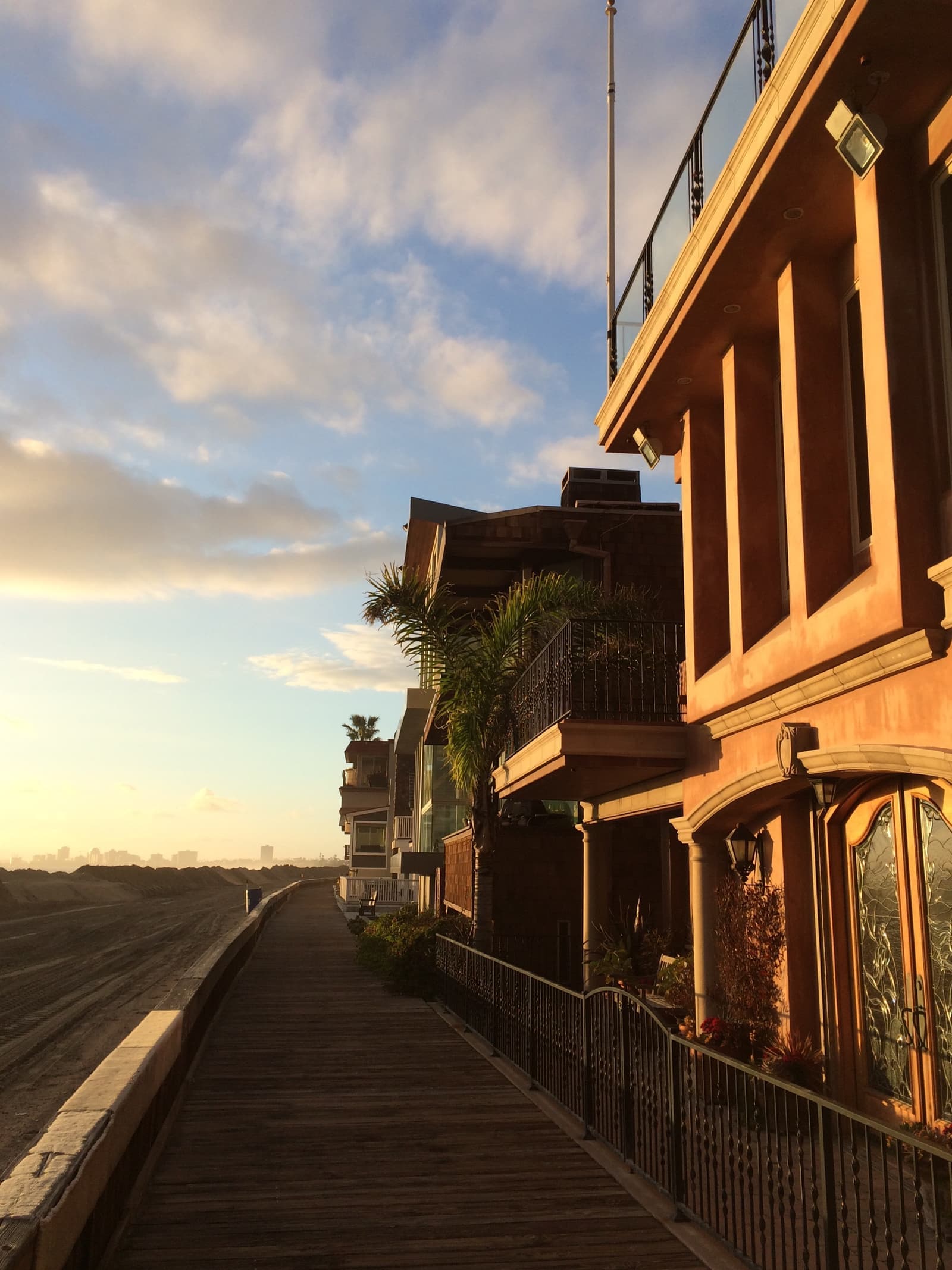
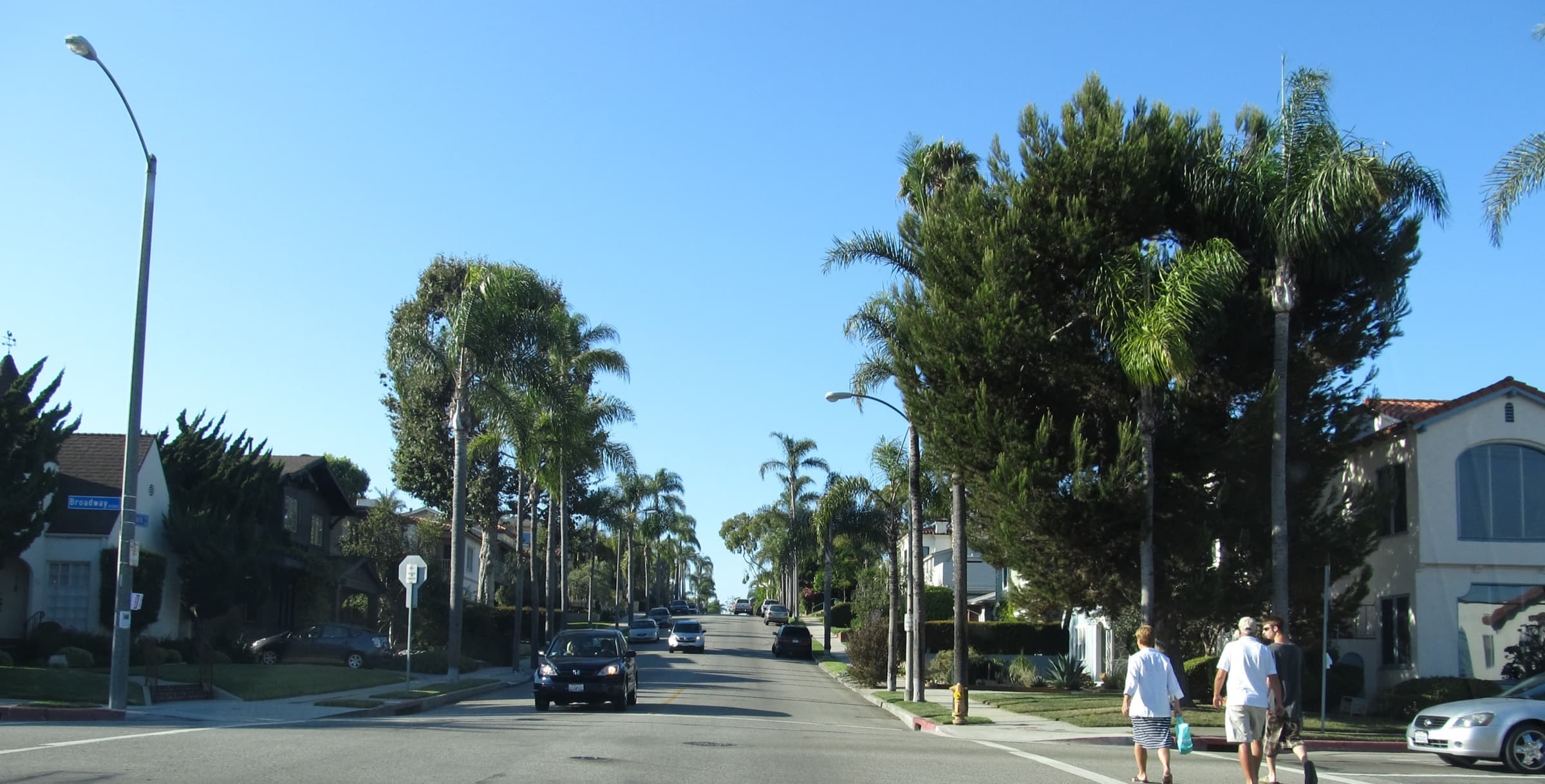
0.5 mi awayThe PeninsulaA mile-long sandspit between the ocean and Alamitos Bay, where front doors open onto a 1920s boardwalk instead of a streetRead the guide ›0.9 mi awayBelmont ShoreSmall old houses around Second Street, a few minutes' walk from flat waterRead the guide ›1.5 mi awayBelmont HeightsCraftsman bungalows on the rise above Belmont Shore, with a local main street on BroadwayRead the guide ›1.9 mi awayPark EstatesCustom mid-century and traditional houses, started in 1948, on curving streets between Recreation Park and Cal State Long BeachRead the guide ›2.2 mi awayBluff ParkA 1982 historic district of big pre-war houses on the ocean bluff, facing a 13-acre strip of lawn above the beachRead the guide ›3.1 mi awayAlamitos BeachOld apartment blocks east of Downtown, with Broadway through the middle and the sand at the end of the streetRead the guide ›


Where we check the facts
The facts in this guide (districts, zones, rules) come from the official records below. We re-check them before property tours.
- Wikipedia — Naples, Long Beachen.wikipedia.org1903 purchase, Aug 1905 start, 13,000 ft bulkhead, Mayberry & Parker, 1938 seawall, parade 1946, fountain
- PBS SoCal (KCET) — The creation of Naples, Long Beachpbssocal.orgArthur M. Parsons, $500,000, August 23, 1905, streetcar by 1906
- Long Beach Post — Naples seawall replacement (Dec 2024)lbpost.comtwo of six sections done, $32M spent, $125M total, assessment options
- Long Beach Post — Trees in the Baylbpost.comfloating Christmas trees since 1949
- Gondola Getawaygondolagetawayinc.comrides since 1982; departure point
- City of Long Beach — Mother's Beach (Marine Park)longbeach.gov5839 Appian Way, northeast side of Naples Island
Show all 13 sourcesShow fewer
- 2nd & PCH — Shop and Dine2ndandpch.comtenants
- Wikipedia — Edward Killingsworthen.wikipedia.orgCase Study House #25 and the Opdahl House in Naples
- LA28 — Marine Stadiumla28.org1932 rowing course; rowing and canoe sprint in 2028
- Naples Bayside Academy (LBUSD)naples.lbschools.netthe island's elementary school
- CRMLSgo.crmls.orgactive listings and asking prices, September 2026
- FEMA Flood Map Service Centermsc.fema.govflood zones by address
- California Coastal Commissioncoastal.ca.govcoastal development permits
Photo credits (8)
- Palms and clouds reflected in a Naples canal lined with private docksDaniel Stiel, Unsplash License
- Evening light on a Naples canal, with electric boats tied up by a footbridgeTracie Hall (Flickr: tracie7779), CC BY-SA 2.0
- Waterfront homes and private docks along the water in NaplesDaniel Stiel, Unsplash License
- Bougainvillea in bloom on a brick patio along the Rivo Alto CanalTracie Hall (Flickr: tracie7779), CC BY-SA 2.0
- A paddleboarder crosses glassy Alamitos Bay at dawn, seen from NaplesTracie Hall (Flickr: tracie7779), CC BY-SA 2.0
- Morning sun on a walkway lined with patios and palms on Naples IslandTracie Hall (Flickr: tracie7779), CC BY-SA 2.0
- Clear, calm water at Mother's Beach on Alamitos Bay, next to NaplesTracie Hall (Flickr: tracie7779), CC BY-SA 2.0
- A Spanish Revival home on Naples Island, with a tiled arch and iron balconiesTracie Hall (Flickr: tracie7779), CC BY-SA 2.0