
All of Malibu$5.3M
- The Colony$12.12M
- All of Malibu$5.3M
- Point Dume$4.12M
What it takes to buy in Malibu: insurance, fire history, and permits
Buying in Malibu in 2026 comes down to three questions that have nothing to do with the view. First, can you insure the specific address, and at what annual cost: conventional carriers have pulled back from coastal hillside markets and many homes now rely on the California FAIR Plan, which was approved for an average rate increase of 29.1% taking effect 15 October 2026. Second, what is the property's fire and rebuild history: the 2018 Woolsey Fire destroyed 465 homes inside the city, and seven years on only 45% had a certificate of occupancy. Third, what can you legally change: much of Malibu sits in the California Coastal Zone, where additions and remodels face review well beyond a normal city permit. Get written answers on all three before you write an offer, not after.
Twenty-one miles of coast where the same budget buys completely different things.
The most common mistake out-of-area buyers make is treating Malibu as a single place. It is a 21-mile strip of coastline that only became a city in 1991, and the markets inside it barely resemble each other. Along the western end near Broad Beach and Trancas, active asking prices run far above the city median. On the Point Dume terraces, the median sits well below that, because you are buying land above the water rather than sand in front of it. Canyon and inland parcels are different again.
In practice this means a citywide median tells you almost nothing about what you will pay. Two homes of similar size a few miles apart can differ by many millions depending on whether the property is beachfront, bluff-top, terrace, or canyon, and whether it holds an unobstructed view.
So the first question is not "what does Malibu cost" but "which Malibu". The live snapshot on this page shows the whole city's active inventory. Narrowing to a specific stretch is where the real answer is, and it is worth doing before you tour anything.
Getting ready

Start with the life the home is for: who'll live there, where you work, the schools, how much room you need. Then we pick a few parts of town that fit.

Cash or a loan? If it's a loan, get preapproved first. A lender looks at your income and savings and tells you how much they're ready to lend, and sellers take an offer with that letter more seriously.

Call or write, and we'll go through your plans together. Before we tour homes, we sign a short buyer agreement, as the rules ask, so it's clear how we'll work together.

I send you the homes that fit, and the new ones as they come up. Before you fall for one, we check its fire, flood and earthquake zones.
The offer and escrow

We see the homes you like in person, or on video if you're not in town yet.

When you find the one, we write the offer together: the price, the deposit, the time you'll need to check the home, and the closing date.

Once the seller says yes, your deposit usually goes to escrow within 3 business days. Escrow is a neutral company that holds the money and the papers until everything's done.

The seller gives you everything they know about the home, usually within 7 days. You get 17 days by default to inspect it and make sure it can be insured.
Closing

With a loan, the lender orders an appraisal and finishes the paperwork. A cash purchase usually skips this step.

When the inspections, the loan and the appraisal check out, you remove the contingencies in writing. I keep the calendar so no deadline slips by.

In the last days before closing you walk through the home once more and sign the loan and escrow papers. Your lender sends the final loan terms at least 3 business days before.

The county records the deed and the home is yours. Watch the mail after that: the supplemental tax bill comes to you, not to your lender.
Asking prices for homes on the market right now inside each mapped area, not sale prices. Updated October 17, 2026
326 active listings in the mapped area
I’m a Long Beach Realtor and I work Malibu too. Tell me what you’re after and I’ll help you get there.
Slava Ploshkin · DRE #02323623English and Russian
The question that ends more Malibu deals than price does.
Insurance is now the gate that a Malibu purchase passes through or does not. Conventional carriers had already been retreating from coastal hillside markets before the January 2025 Palisades Fire, and they have not returned at scale since. That pushes a large share of Malibu properties onto the California FAIR Plan, the state's insurer of last resort.
The FAIR Plan is not a cheap fallback. The California Department of Insurance approved an average rate increase of 29.1% on its dwelling policy, effective for new and renewal business from 15 October 2026, and the increase is not uniform: homes in high wildfire-risk areas see larger jumps than the average while lower-risk addresses can see less. Buyers here routinely underwrite annual premiums in the tens of thousands of dollars, and the FAIR Plan covers less than a standard policy, so most owners pair it with a separate wrap policy for liability and other perils.
What this means practically: a home that looks affordable on list price can stop working once the real carrying cost is in the spreadsheet. And insurability is address-specific, not neighborhood-specific. Two houses on the same street can quote very differently depending on defensible space, roof and vent construction, and claim history.
The right sequence is to get a written quote for the specific address early, ideally before you are emotionally committed and certainly before you remove contingencies. If a listing agent cannot tell you who currently insures the property and at what cost, that is itself information.
Recent fire history is now part of a property's paperwork, not just its story.
Two separate fires shape Malibu today, and their figures should never be combined. The most recent is the Palisades Fire of January 2025. The older one, whose recovery is now well documented, is the Woolsey Fire of November 2018, which destroyed 465 homes inside the City of Malibu. Woolsey matters to a buyer less as history than as the only complete answer we have to the question of how long rebuilding on this coast actually takes. What followed matters more to a buyer than the fire itself: three years afterward only 55 homes had been rebuilt, and by late 2025, seven years on, 45% of the destroyed homes had a certificate of occupancy while 81% of parcels were at least in process. Owners were held up by insurance disputes, contractor availability, and permitting, including cases where widening a driveway to meet fire code would have pushed the footprint into an environmentally sensitive area and triggered further review.
Then the January 2025 Palisades Fire burned 23,448 acres between Pacific Palisades and Malibu and destroyed 6,837 structures. That count covers the whole fire area, most of it outside Malibu, and no separate Malibu-only figure has been published; what is documented is that beachfront properties along the city's eastern stretch were among those lost. Investors have since taken a large share of available lots in Malibu, which is part of why vacant parcels can look temptingly cheap.
For a buyer this creates a specific set of questions to ask about any property, not vague caution. Was this home affected by either fire? If it was rebuilt, under which permits, and were they finaled? If it is a lot, what is the actual approved plan and how far along is it? An open permit or an unfinished rebuild can carry more cost and delay than the discount on the price.
None of this argues against buying in Malibu. People have lived here through fires for generations. It argues for buying with the paperwork in front of you, which is a very different transaction from the one most people imagine.
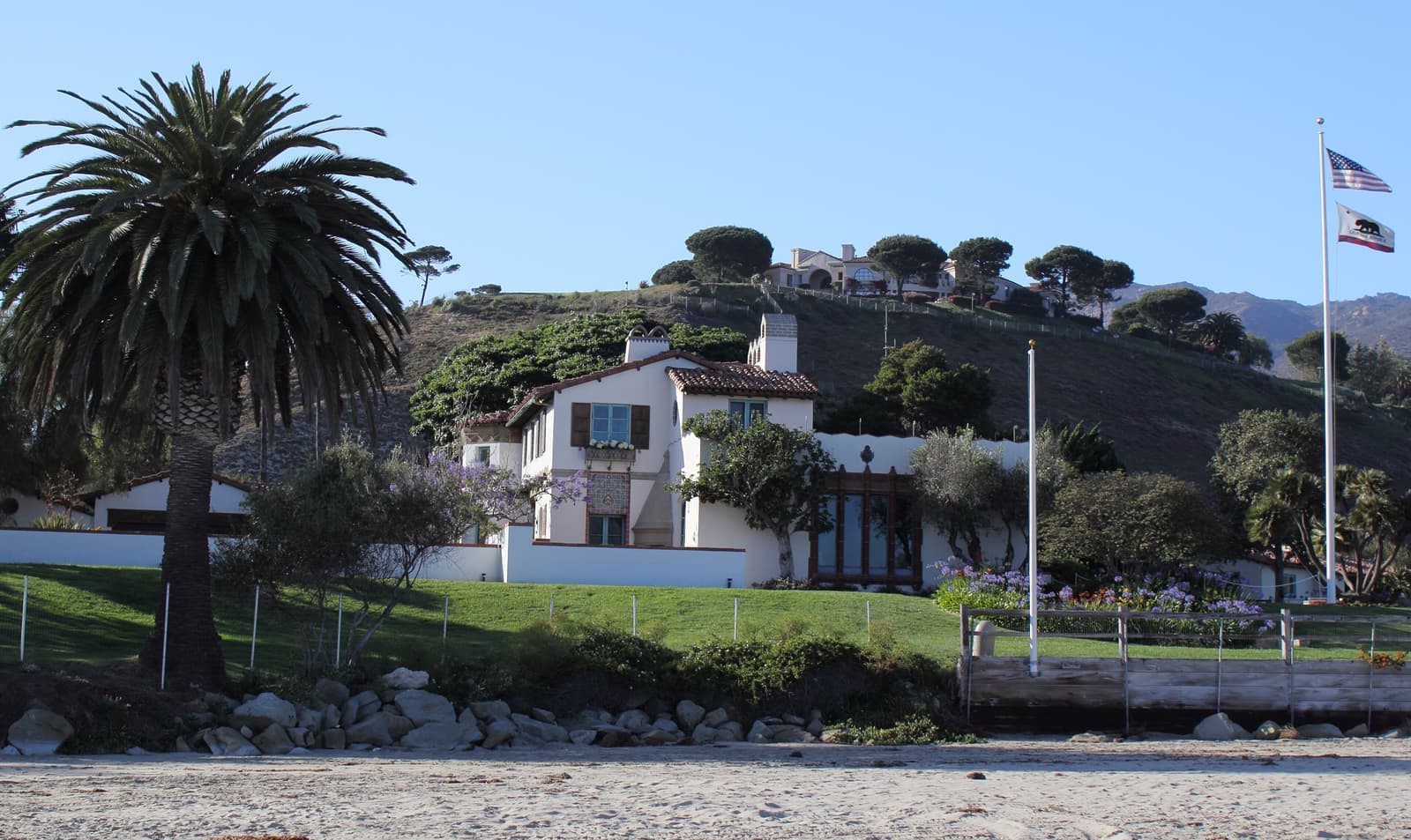
Coastal Zone review is the reason Malibu remodels run on a different clock.
Much of Malibu sits inside the California Coastal Zone. That means additions, remodels, and sometimes even significant landscaping can require review beyond an ordinary city building permit. Timelines are measured in months and sometimes years rather than weeks, and environmentally sensitive habitat designations can restrict where a footprint may expand at all.
This matters most for the buyer whose plan depends on changing the house. If your offer price assumes you will add a second story, expand the primary suite, or reconfigure the driveway, price the approval process and its risk before you commit, not after escrow closes.
It also cuts the other way, and this is the part buyers miss. A property that already holds approved plans, or a recently completed and finaled rebuild, carries real value precisely because someone else absorbed that timeline. In this market, permit-clean is a feature worth paying for.
The practical details that surface after the offer for people who have not lived here.
Everything regional depends on Pacific Coast Highway, which carries roughly 40,500 vehicles a day at summer peaks and is the only practical route in and out. Accidents, slides, and fire closures all land on that one road. Residents plan around it; visitors underestimate it.
Infrastructure varies parcel to parcel in ways that do not show up in photographs. Parts of Malibu are on septic systems rather than sewer. Some homes sit on private roads with shared maintenance agreements. Water pressure, easements, and driveway rights all need checking on the specific address rather than assumed from the neighborhood.
Beach access is its own category. Some properties carry rights to gated or private beach access and some do not, and the difference is worth real money. Access has also been a long-running source of dispute in Malibu, so confirm exactly what is deeded to the property in writing rather than relying on what a listing description implies.
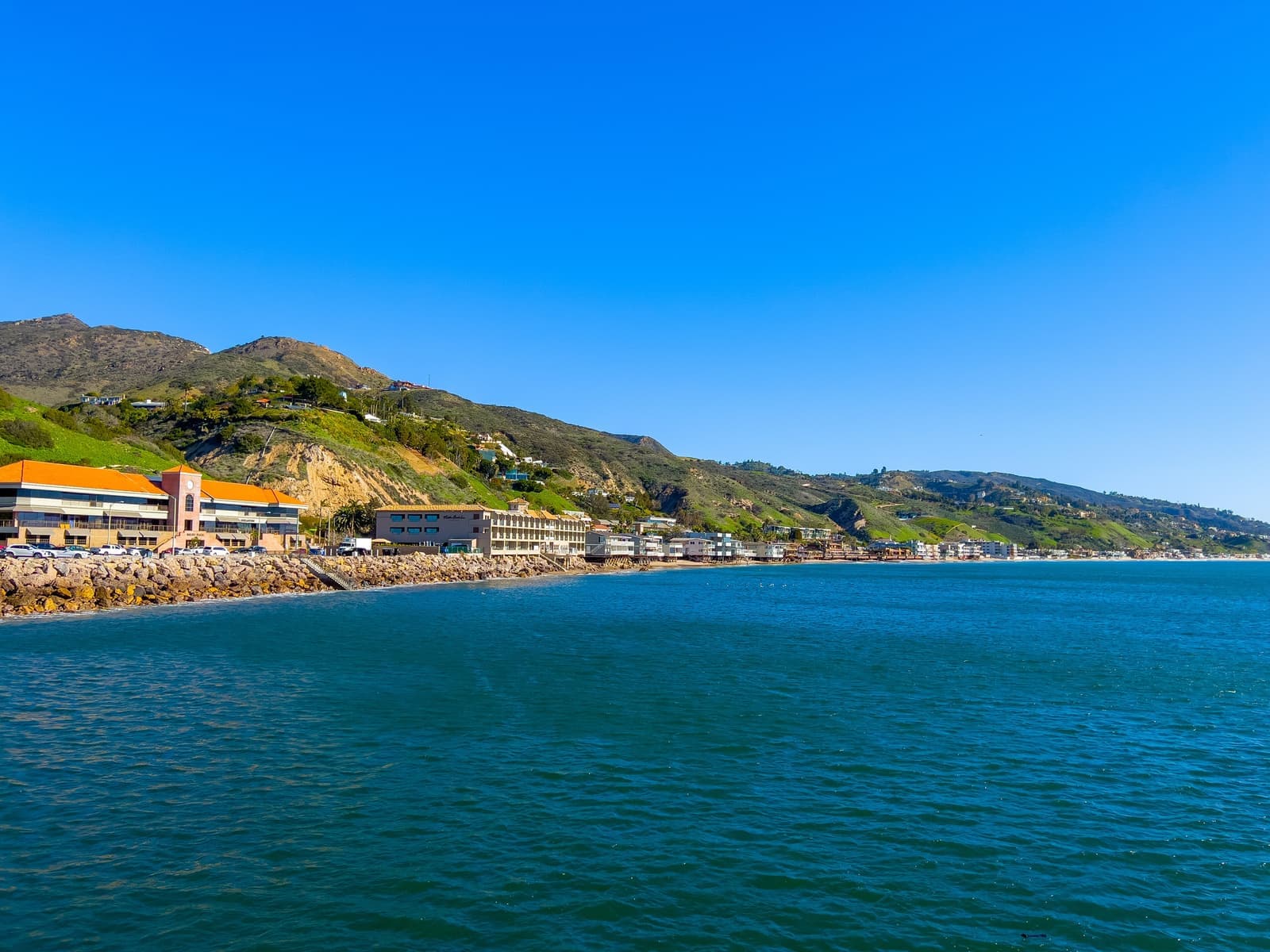
Why the view comes last in the process, even though it comes first in the brochure.
With buyers in Malibu I run the unglamorous checks first, because they are the ones that kill deals late. Insurance quote on the specific address. Fire and permit history from the city. Coastal Zone status and anything already approved or pending. Septic, road, water, and access. Only then do we talk seriously about which house.
It is a slower start and some buyers find it deflating. It is also why the offers we do write tend to survive escrow, and why nobody finds out in week five that the annual carrying cost is twice what they modelled.
If you are buying from out of state or from abroad, I do this work before you fly out, in English or Russian, so that your trip is spent seeing the two or three properties that actually clear the gates rather than twenty that do not.
Home insurance in Malibu is available but often expensive and limited. Conventional carriers had already pulled back from coastal hillside markets before the January 2025 Palisades Fire and have not returned at scale, so many Malibu properties rely on the California FAIR Plan, the state's insurer of last resort. The California Department of Insurance approved an average FAIR Plan rate increase of 29.1%, effective for new and renewal business from 15 October 2026, and high wildfire-risk addresses see more than the average. The FAIR Plan also covers less than a standard policy, so most owners add a separate wrap policy. Insurability is address-specific, so get a written quote for the exact property before removing contingencies.