




Malaga Cove asks 3% less than Palos Verdes Estates as a whole.
Malaga Cove$4.35M
All of Palos Verdes Estates$4.5M
The first streets the Olmsteds drew, still centered on a 1920s arcaded plaza
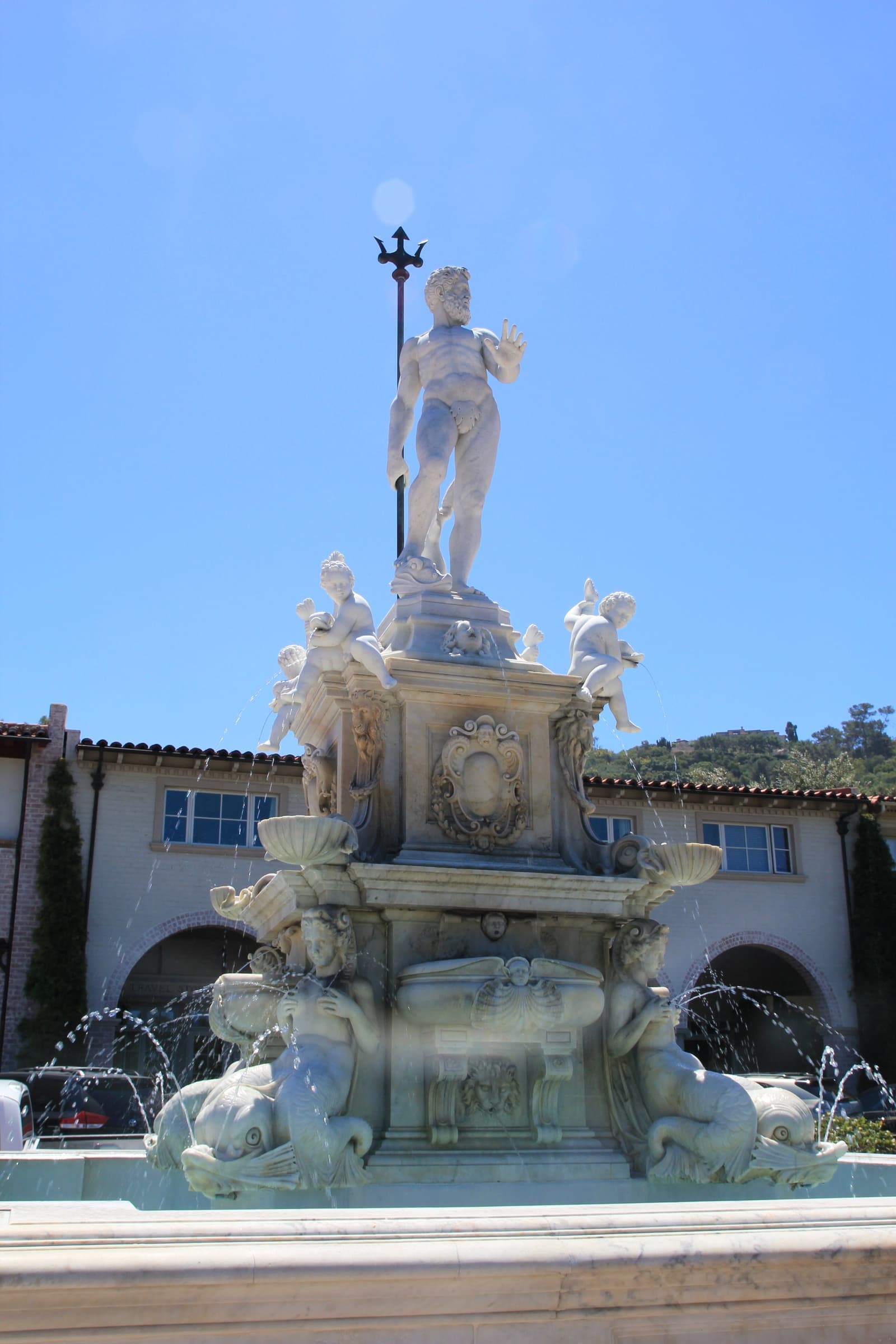
Malaga Cove is the northern corner of Palos Verdes Estates and the first piece of the Palos Verdes Project the Olmsted Brothers planned, with lots first sold in 1923. Its center is Malaga Cove Plaza, a 1920s Mediterranean arcade around a copy of Bologna's Neptune fountain unveiled in 1930, next to a 1930 library on the National Register. A path drops from the bluff to the beach, with RAT Beach running north and the Bluff Cove surf break just south. Homes run from 1920s Spanish houses to bluff-top estates; as of September 2026, nine houses were listed, asking about $2.25M to $14.5M, most between $3M and $8M.
Sources: U.S. Census Bureau, ACS 5-year 2019–2023; neighborhood facts compiled by The Slava House.
The first unit of the Palos Verdes Project, still organized around its 1920s plaza and bluff.
Malaga Cove is the northern gateway of Palos Verdes Estates, where the Peninsula meets Torrance and Redondo Beach, and it's where the whole Peninsula project started. In 1913 the New York banker Frank A. Vanderlip led the purchase of about 16,000 acres of ranch land on the Peninsula, and after the First World War his group hired the Olmsted Brothers, the landscape firm of Frederick Law Olmsted Jr., together with planner Charles H. Cheney, to design a garden city on the hills above the sea.
The first lots went on sale in 1923, and Malaga Cove was built first: an arcaded commercial plaza, a school, a golf course in the canyon, and residential streets that follow the terrain instead of a grid. A century later the plan still works. You run errands at the plaza, you walk Paseo Del Mar in the evening, and the streets behind it look much the way they were drawn.
That continuity is deliberate. The protective restrictions filed in 1923 made the developer set aside half the land for common use, roads and parks included, and sent every building plan to an art jury. In 1939 residents voted 213 to 206 to incorporate as a city, largely because the Homes Association could no longer carry the taxes on the parklands and people feared the land would be sold. Parkland still covers about 28% of the city, and that's why the bluffs here are a public path rather than a wall of private fences.
You won't find much like it in Los Angeles. It's a historic neighborhood above the ocean that was planned as one piece and then protected for a hundred years.
Malaga Cove asks 3% less than Palos Verdes Estates as a whole.
A square foot in Malaga Cove costs 14% more than across Palos Verdes Estates.
Listings in Malaga Cove have been on the market 40 days longer than across Palos Verdes Estates.
Homes for sale in Malaga Cove are 4% smaller than across Palos Verdes Estates.
Each card sets the median in Malaga Cove against all of Palos Verdes Estates. The arrow on a card lists every Palos Verdes Estates neighborhood we cover. Asking prices for homes on the market right now inside each mapped area, not sale prices. Updated October 17, 2026, 10:00 AM PT
6 active listings in the mapped area
I’m a Realtor based in Long Beach, and Palos Verdes Estates is one of the cities I work most. Tell me what you’re after in Malaga Cove and I’ll help you get there.
Slava Ploshkin · DRE #02323623English and Russian · How I work in Palos Verdes Estates
The restaurants, cafes, shops, parks, and landmarks that give Malaga Cove its everyday character, most within a short walk.
11 places
Pick one and I’ll show you where it is.
Shopping10 min walk
The arcaded Mediterranean plaza built in the 1920s as the commercial center of the Palos Verdes Project, with a copy of Bologna's 1563 Neptune fountain, unveiled in 1930, in the middle.
The shops here cover the basics. For a real choice of restaurants you go down the hill to Riviera Village.
Landmark10 min walk
The 1929-30 Mediterranean Revival library by Myron Hunt and Harold C. Chambers, on the National Register of Historic Places since 1995, with a walled garden people use as a neighborhood living room.
It's still a working branch of the Palos Verdes Library District, and the terraced garden is a favorite photo spot.
Landmark10 min walk
A clifftop church on Paseo Del Mar in a late-1920s Italian-style estate, with terraced gardens directly above the ocean.
It sits right on the Paseo Del Mar bluff walk, so you pass it on the evening loop.
Park10 min walk
The little stone gazebo on the bluff where Paseo Del Mar bends, the classic sunset stop on the Malaga Cove walking loop.
Beach10 min walk
The private club at the foot of the Malaga Cove bluff, next to the switchback path down from Paseo Del Mar.
RAT Beach runs north from here toward Torrance Beach; the parking lot above fills on summer weekends.
Recreation25 min walk
The rocky cove under the high bluffs south of Malaga Cove, home break of the Palos Verdes Surfing Club, founded in 1935, whose Doc Ball took some of the earliest California surf photographs here.
Access is a steep unpaved trail and the beach is cobble, not sand; come for surf or tidepools, not to lie on a towel.
Recreation30 min walk
The private course that opened in 1924, laid out by the Olmsted Brothers with George C. Thomas and William P. Bell on land the city still owns.
Landmark20 min walk
The 1923 hilltop villa built as the Palos Verdes Project's sales office, the first building in what became Palos Verdes Estates, now an event venue. Its first wedding was in May 1924.
Coffee10 min walk
A bakery-cafe on the plaza, with pastries, breakfast plates and outdoor tables.
Restaurant10 min walk
A family-run deli, bakery, market and wine bar for more than 25 years, with sandwiches eaten at tables over the plaza.
Landmark10 min walk
The Peninsula's first school, opened in 1926 with 35 students after the new district's first classes met above a drugstore in Malaga Cove Plaza. Its Allison & Allison building won an American Institute of Architects honor award and has housed the school district's offices since 2010.
A century of building, all of it through the same review.
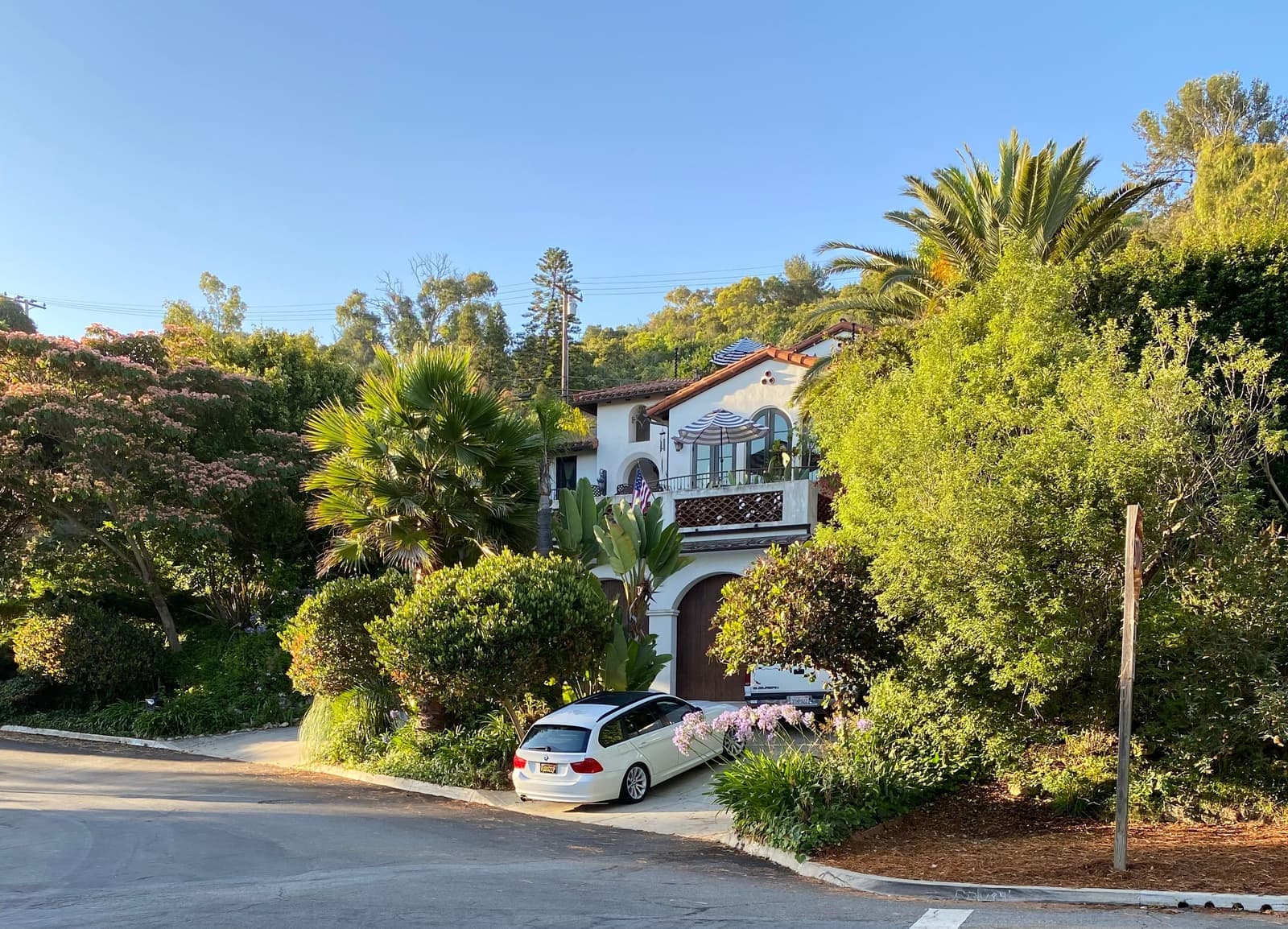
The signature Malaga Cove house is a 1920s or 1930s Spanish or Mediterranean home on a garden street within a short walk of the plaza: white walls, red tile, courtyards, and trees older than anyone living under them. A lot of them are still close to original, because the review nudged decades of remodels toward keeping things instead of tearing them out.
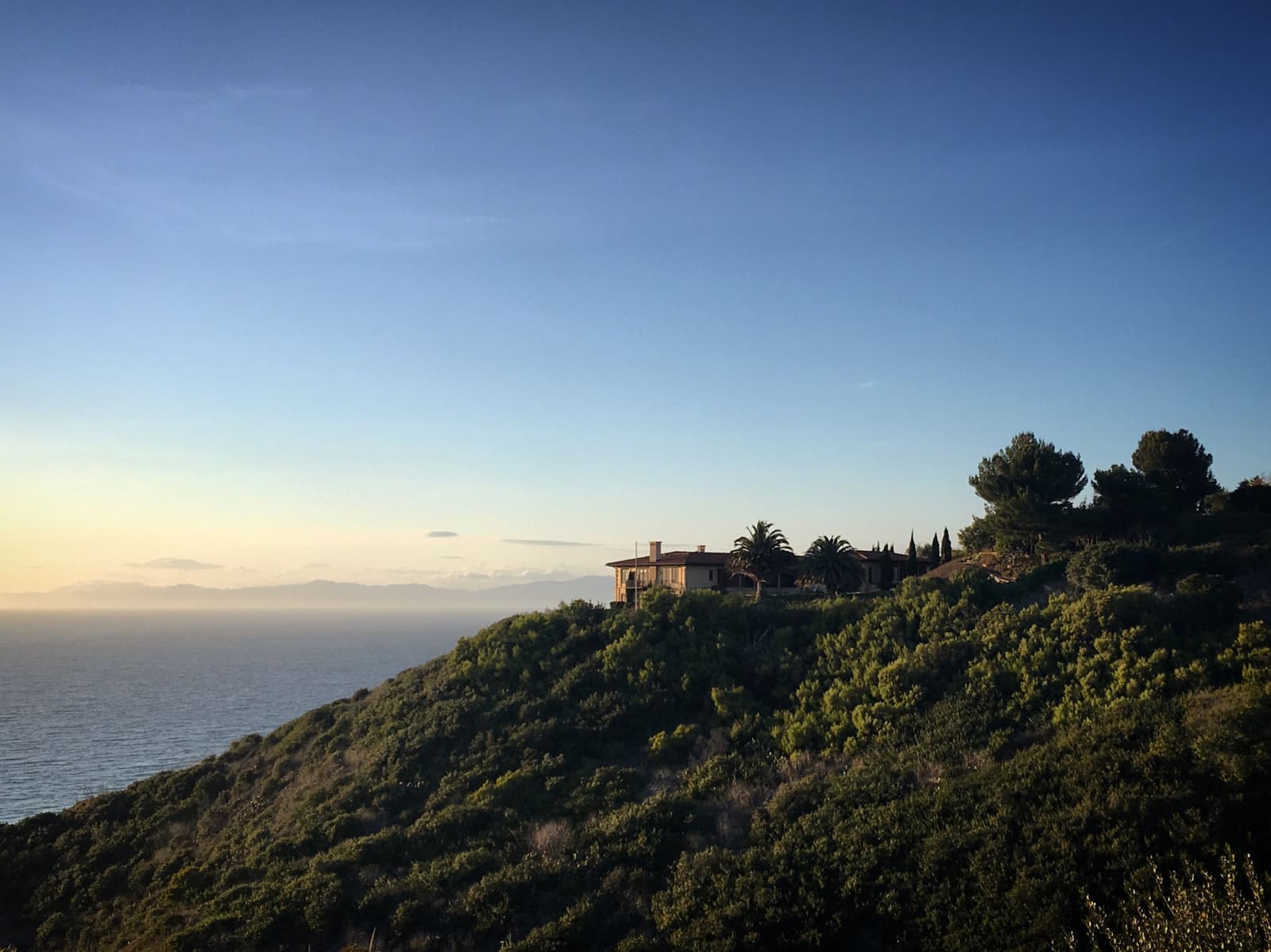
Along Paseo Del Mar and the streets that step up behind it, the market shifts from architecture to position. Bluff-side homes above the beach and homes that hold the full arc of Santa Monica Bay, the night view locals call the Queen's Necklace, price on their line of sight. Two houses of similar size a block apart can be far apart in price because one looks at the water and the other looks at a hillside.
The upper streets toward Via Campesina and the golf course have more postwar ranch homes, built in the 1940s and 1950s as the community filled in. They're the neighborhood's relative entry point, and many have been expanded or rebuilt, always through the same review.
Learn the review system before you write an offer. It protects the setting you're paying for, and it also means the Art Jury will look at your own remodel, addition or new build. Budget time for it, and look at what's been approved on lots like yours.
A 1920s commercial center that still does its job.
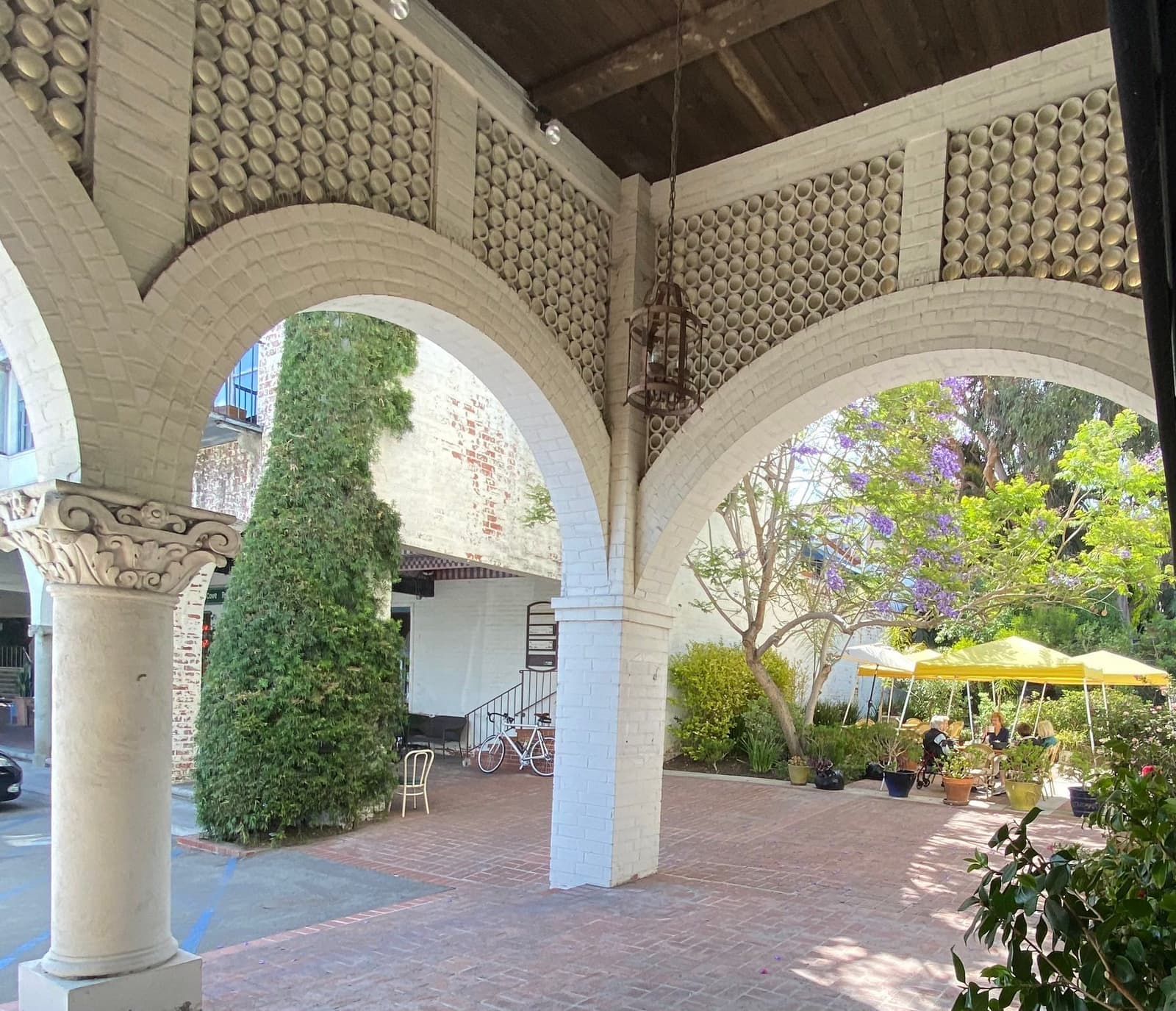
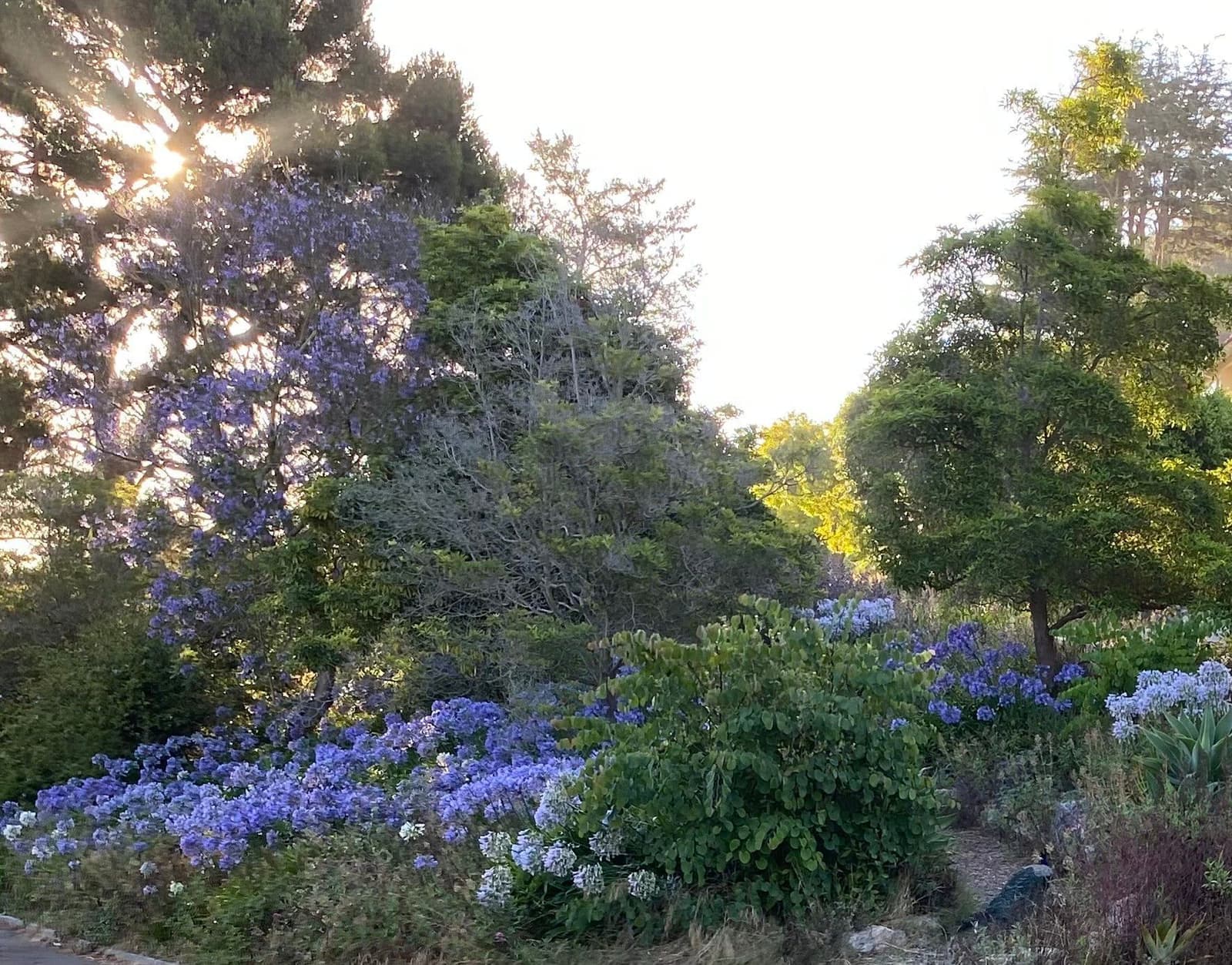
Malaga Cove Plaza is the commercial center the plan gave its first unit, designed in the early 1920s by the firm of Webber, Staunton and Spaulding: two stories of arcades in brick and tile that could pass for a small town square in Spain or Italy. At its center stands a copy of the Neptune fountain of Bologna, whose bronze original went up in 1563; the Palos Verdes Project's manager unveiled this one on February 16, 1930.
It works as a neighborhood center: offices, a market, services and a few places to eat. That's enough for daily life, and not enough to pull regional traffic up the hill. It's also where the local school district began. In 1925 the new Palos Verdes district taught its first 26 students in two rooms above a drugstore here, and the Malaga Cove School opened a few blocks away in 1926.
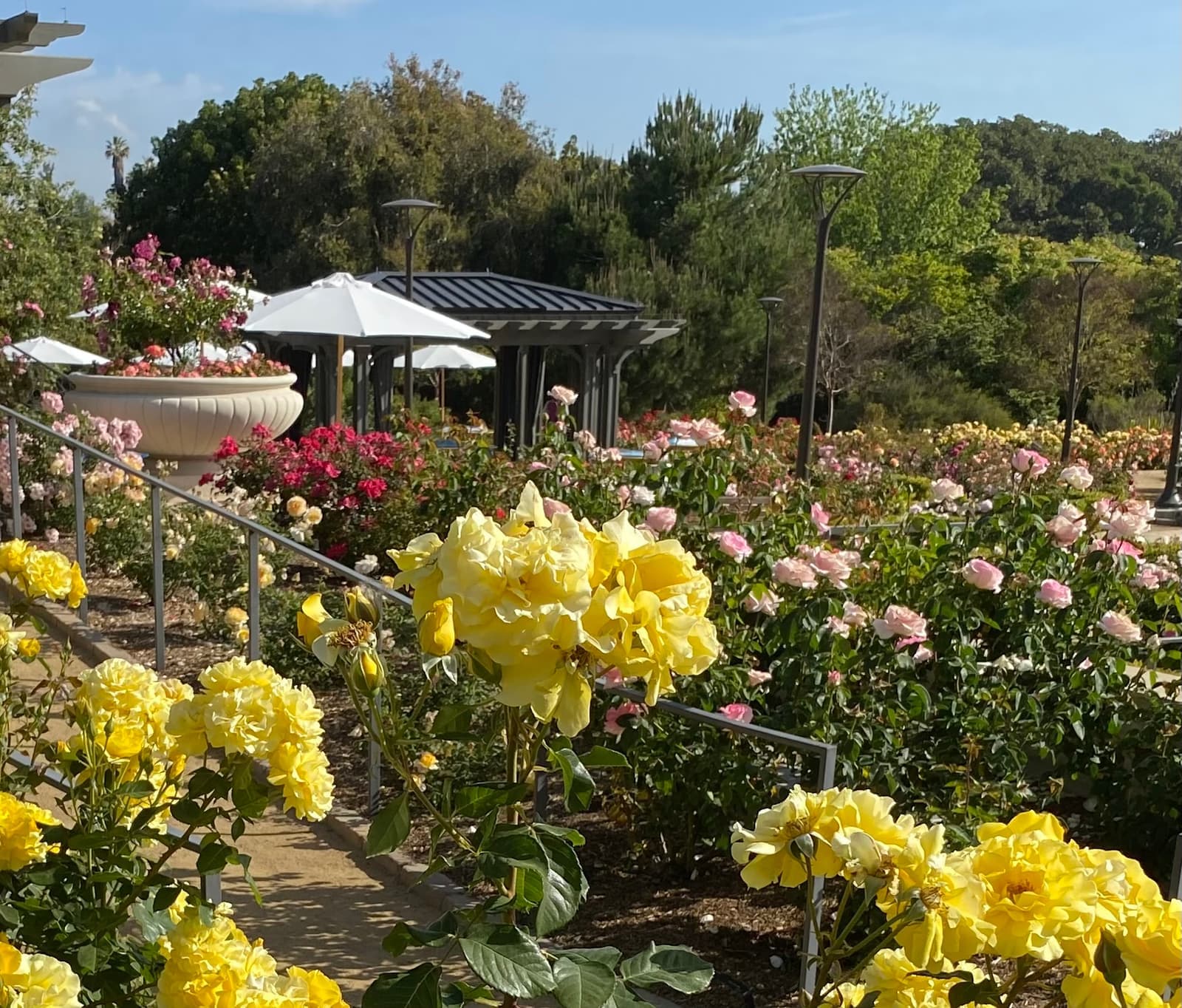
A block behind the plaza is the Malaga Cove Library, built in 1929-30 to designs by Myron Hunt and Harold C. Chambers in the same Mediterranean style and listed on the National Register of Historic Places in 1995. Its garden sits above the bay between stone walls and pines, and it's where people go to read or take pictures.
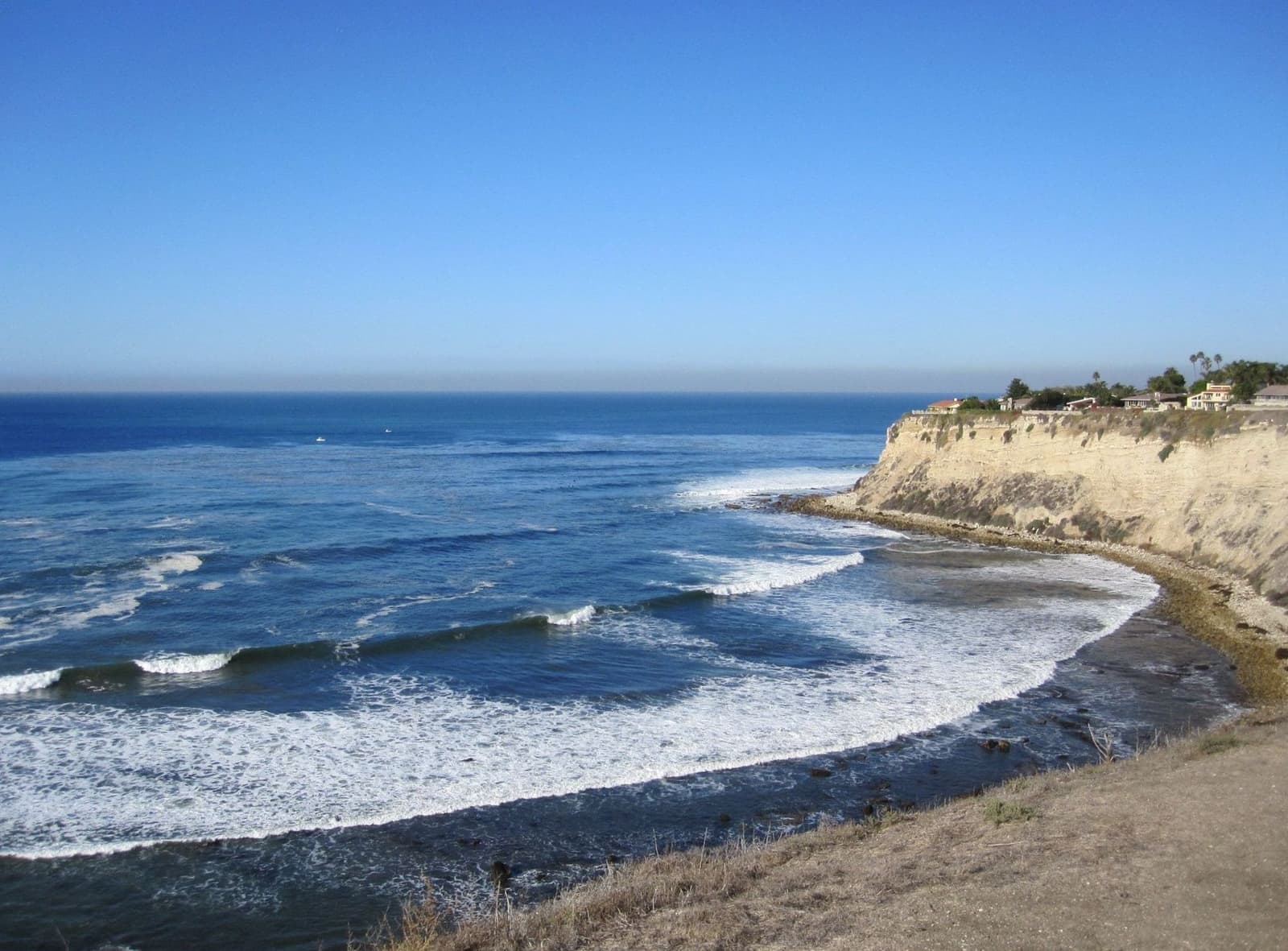
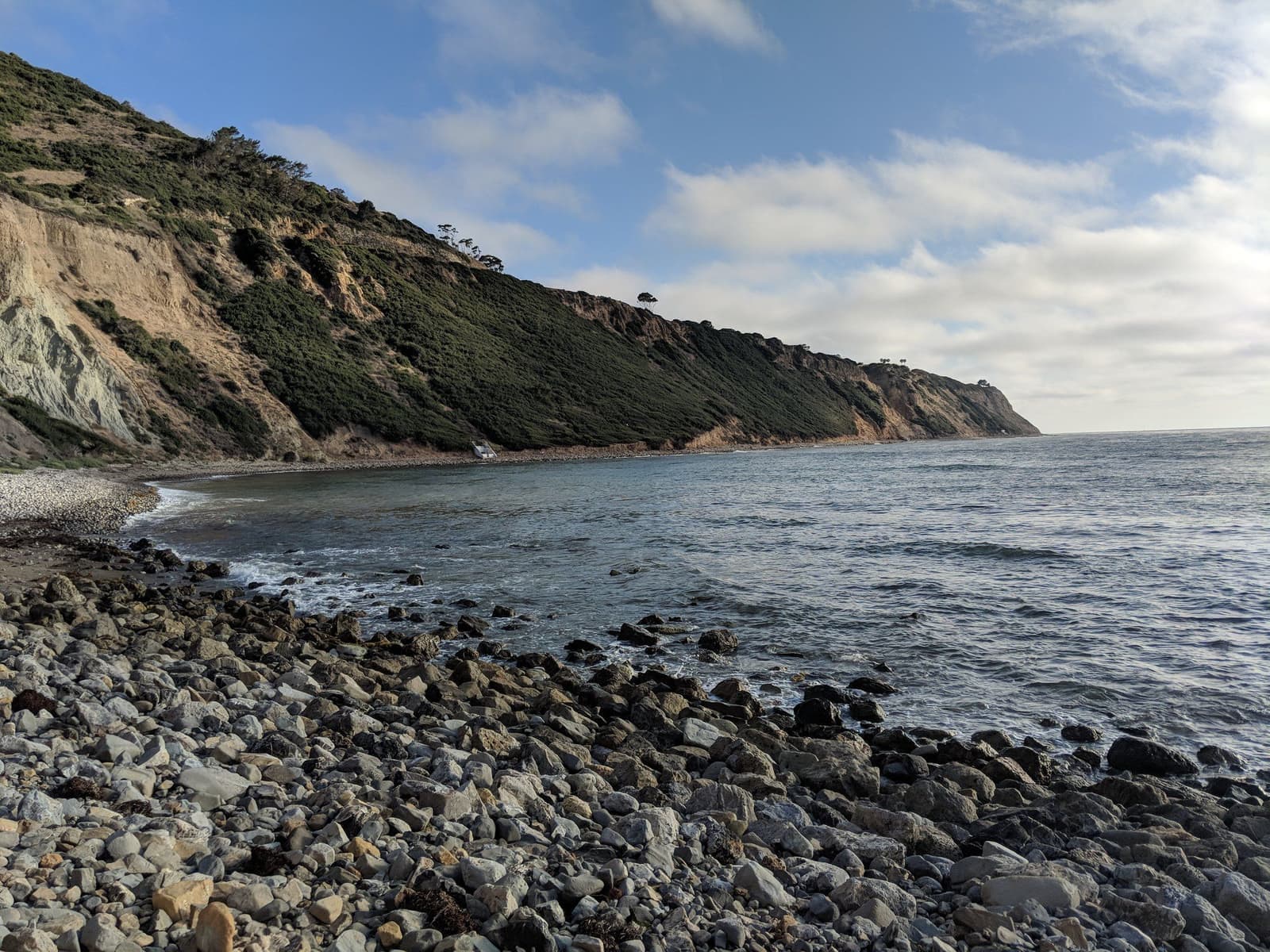
Paseo Del Mar is the daily walk, with RAT Beach to the north and Bluff Cove's surf to the south.
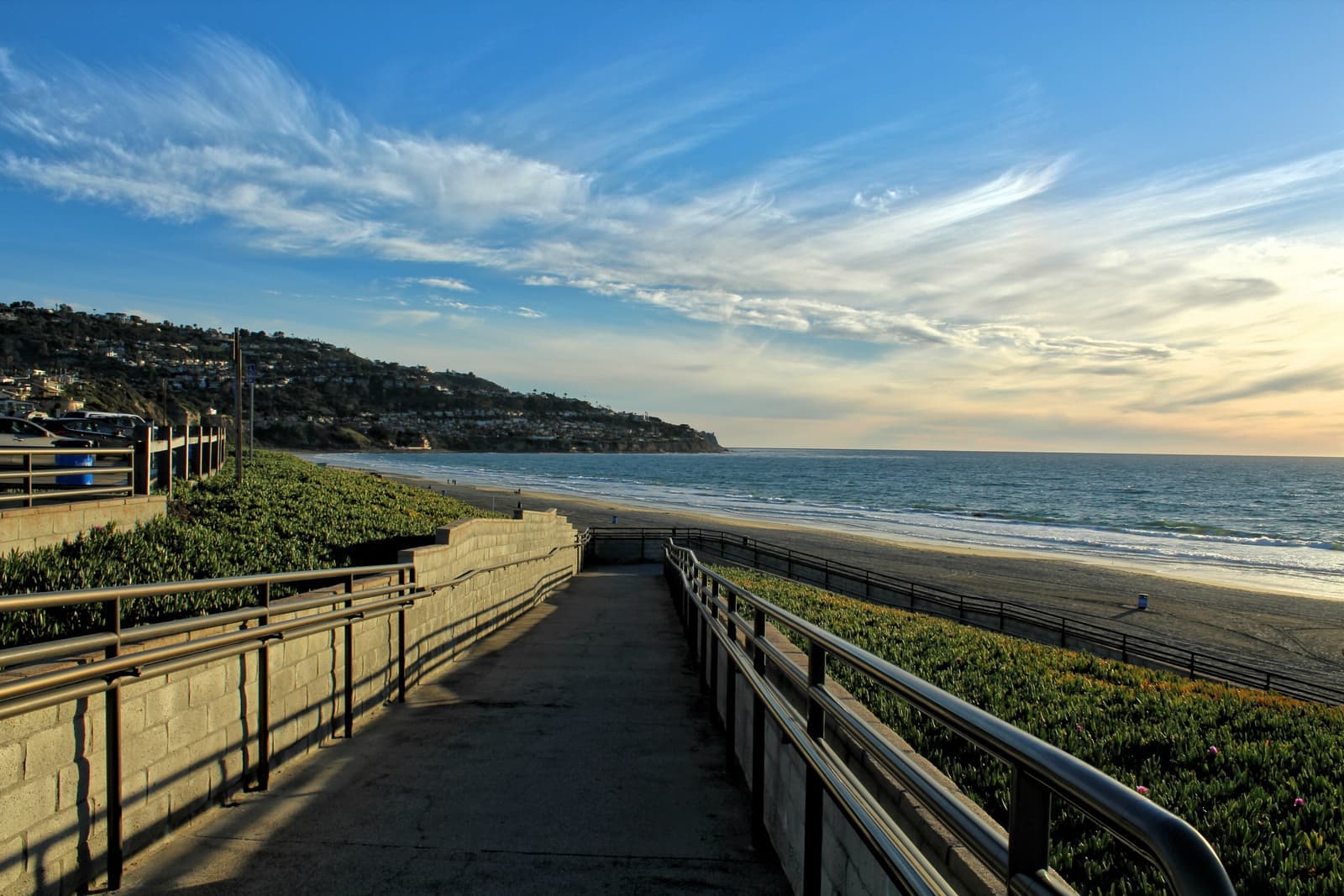
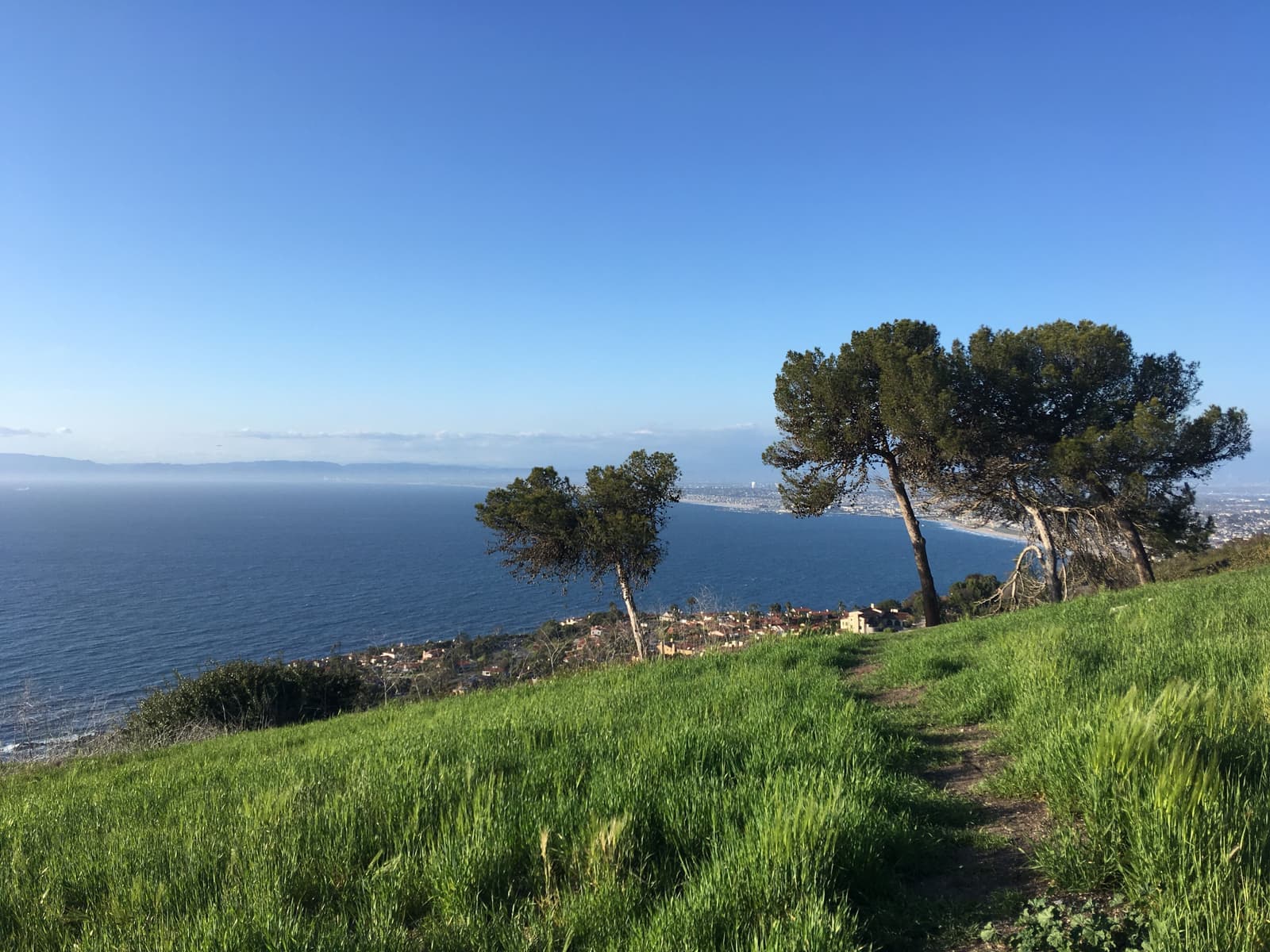
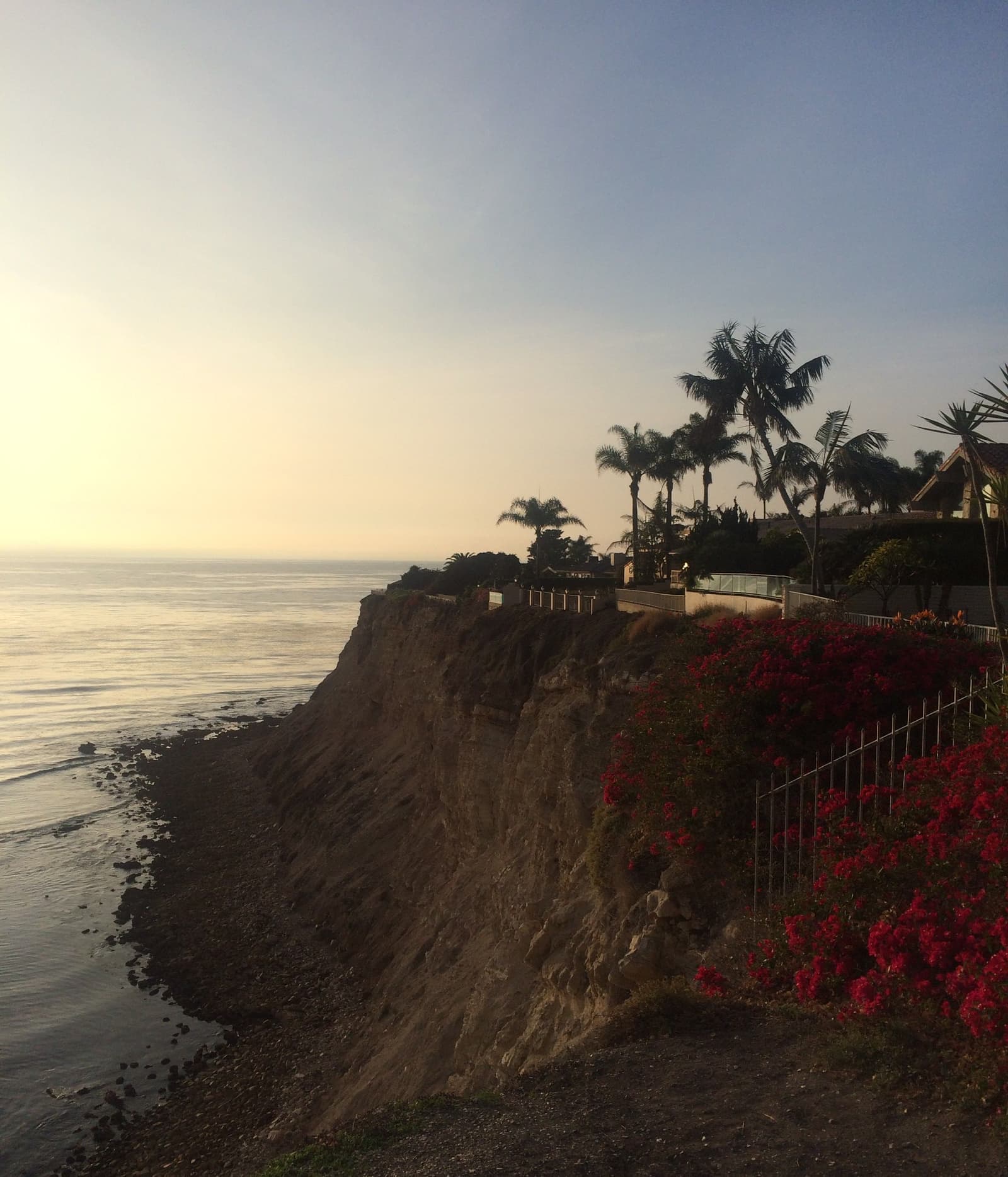
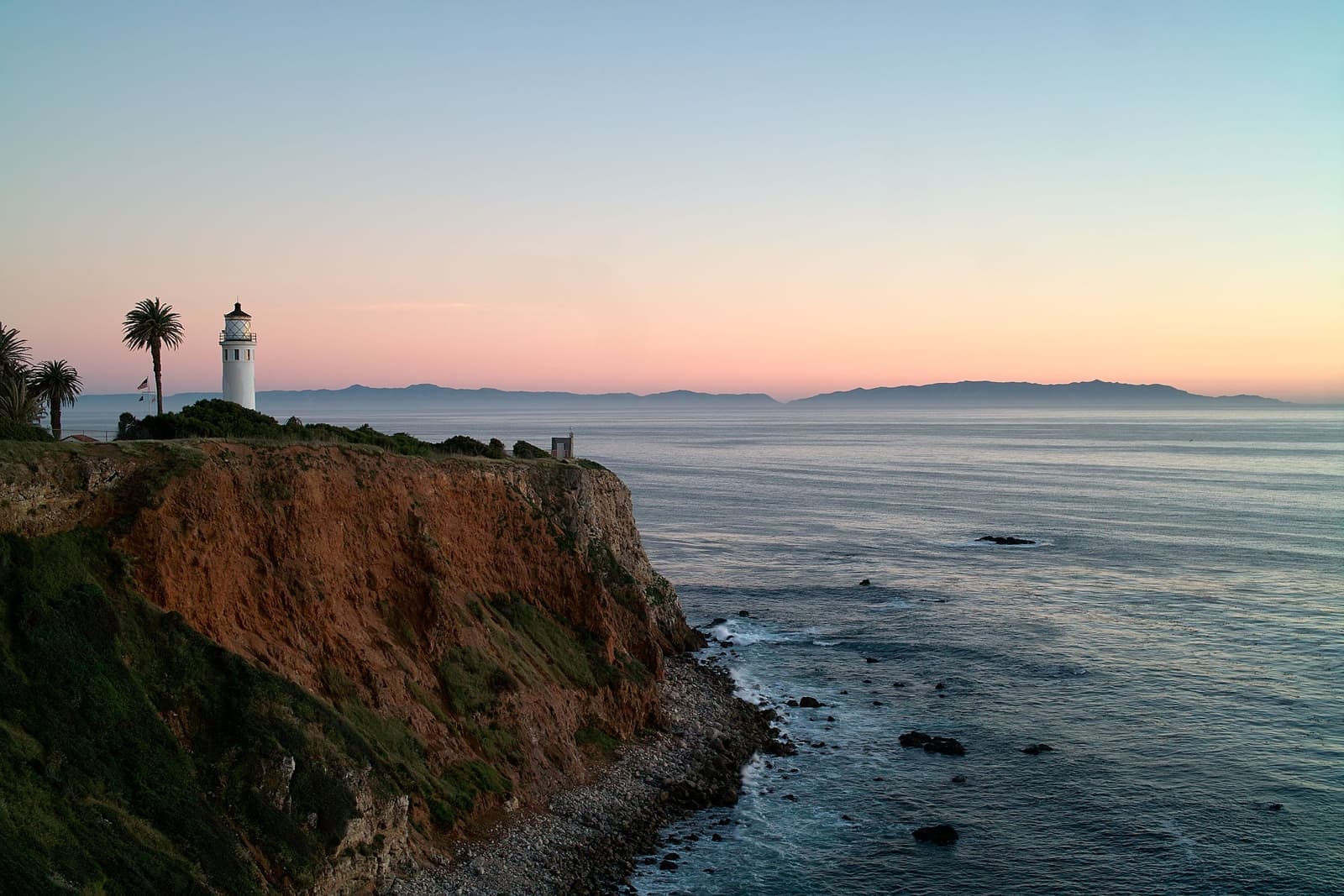
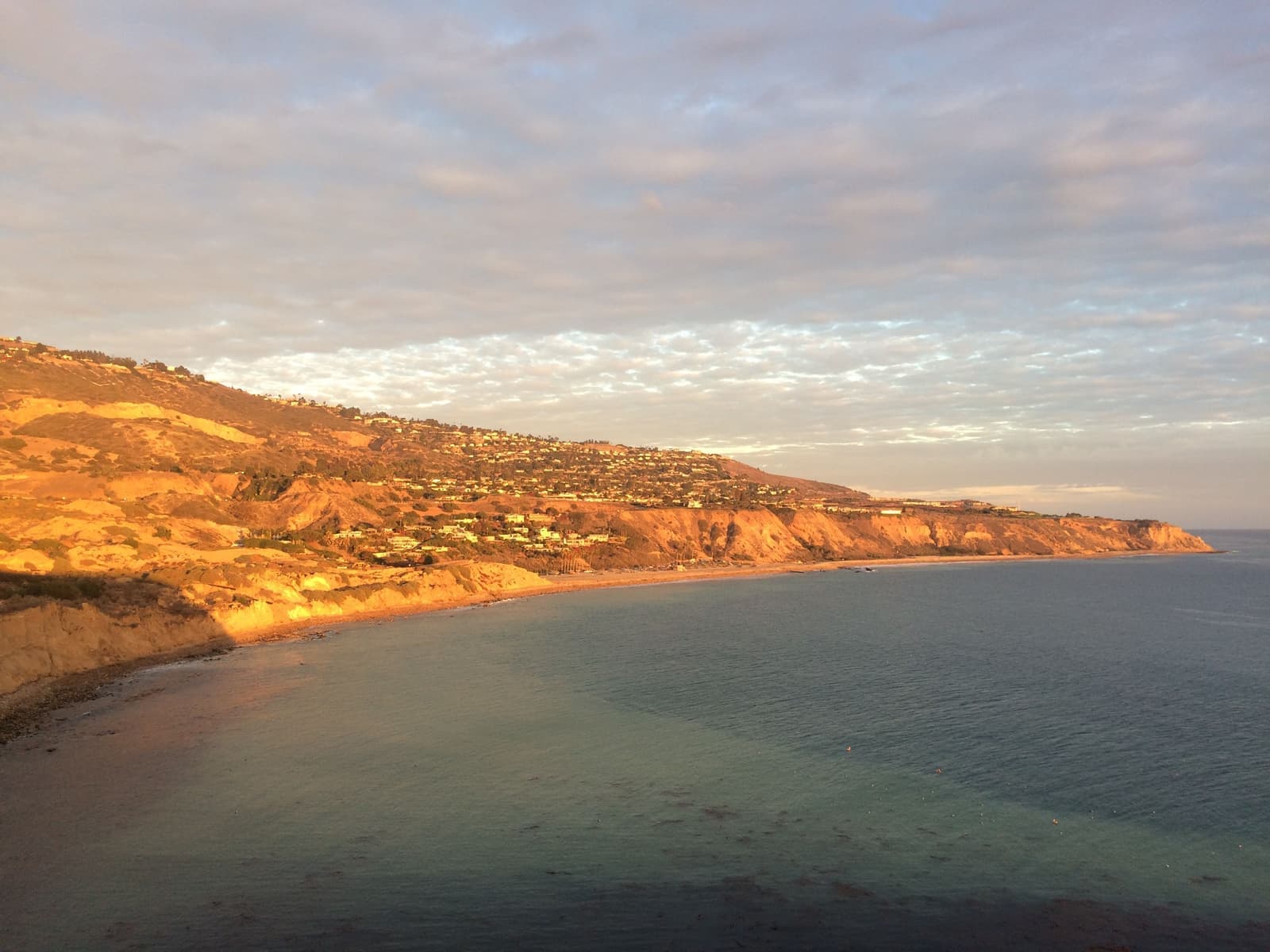
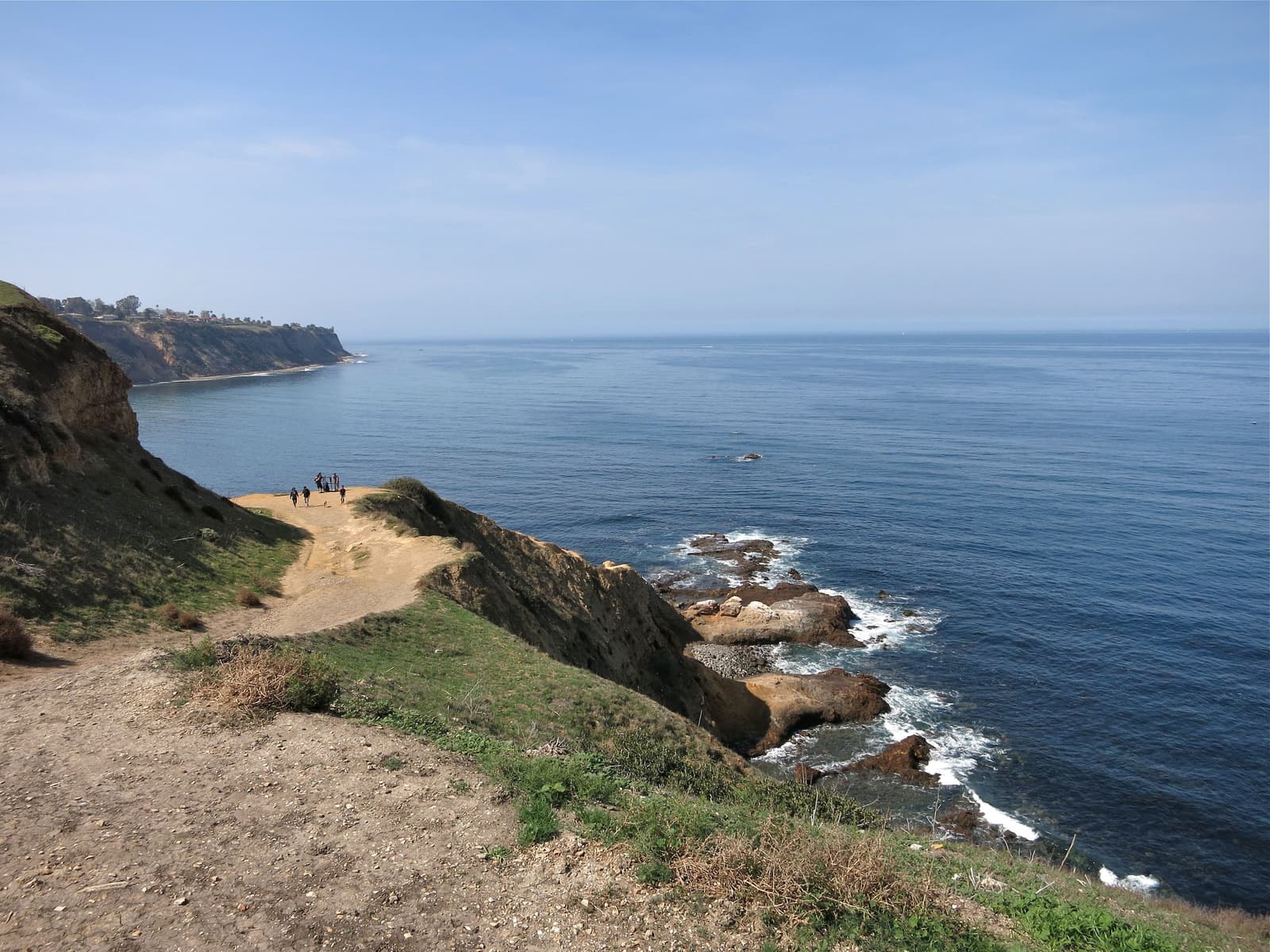
The best public space in Malaga Cove is the bluff. Paseo Del Mar runs along the edge with a walking path, a few overlooks and the small stone gazebo at Roessler Point. People really do walk it every day, and at sunset it's the neighborhood's main street.
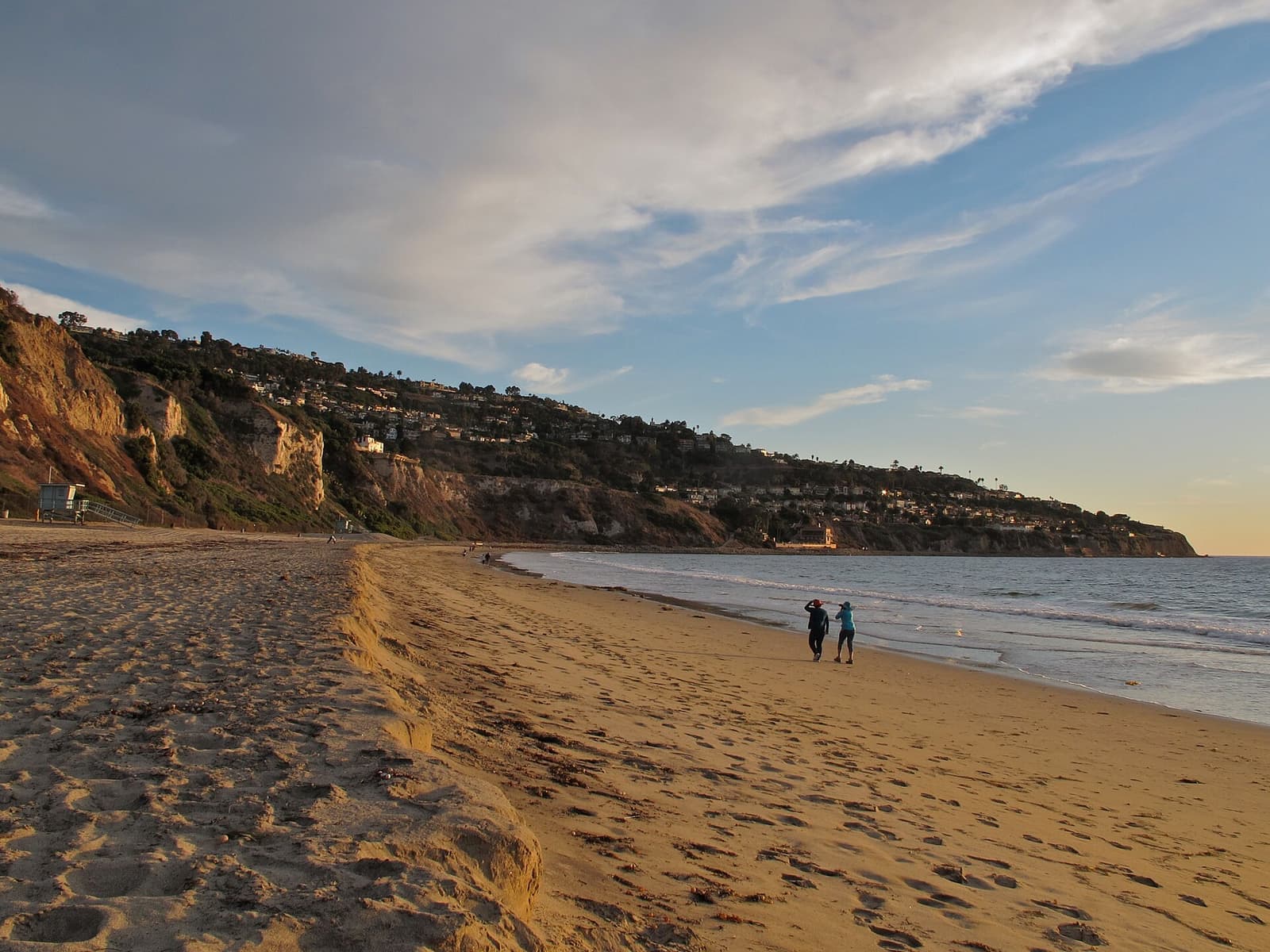
A switchback path near the Palos Verdes Beach & Athletic Club drops to the beach at the foot of the cove. North of it, RAT Beach runs about three-quarters of a mile to Torrance Beach; locals usually say the name means Right After Torrance. In the early 1920s, before the first lots sold, a former lawyer named Louis C. Dart built a two-story driftwood house on the rocks here, called it Flotsam Castle, and sold homemade pies to visitors. The library district's historians put his count at about 8,000 pies.
South around Flat Rock Point the shoreline turns wilder. Bluff Cove is a cobble cove under high bluffs where the Palos Verdes Surfing Club, founded in 1935, did its surfing, and club member Doc Ball's photographs of it helped put the Peninsula on the surf map. The cove still works on the right swell. Access is a steep dirt trail, which keeps the crowds down.
These are real coastal bluffs, and the city keeps repairing sections of path and roadway along them. If you buy near a bluff edge anywhere on the Peninsula, ask about geology, setbacks and the maintenance history of that stretch.
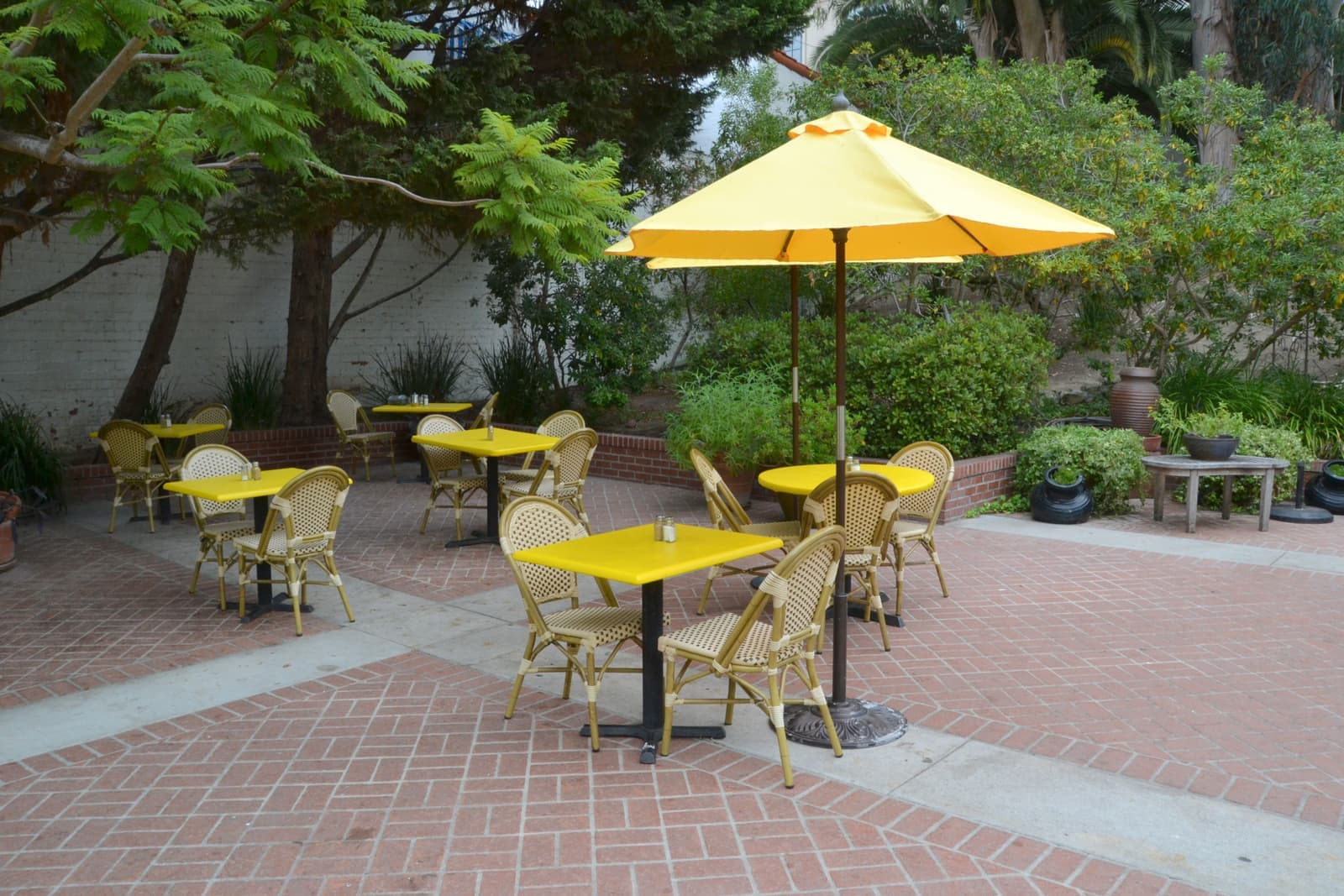
Errands at the plaza, dinner down the hill in Riviera Village.
Palos Verdes Estates is quiet by design, and most of the Peninsula gives up restaurant choice for that quiet. Malaga Cove gets both: the plaza covers basics, and Riviera Village, the walkable restaurant and shop district in south Redondo Beach, is a few minutes down the hill by car, or a real walk if you're up for it.
Schools are a main reason families look at the Peninsula at all. Malaga Cove addresses belong to the Palos Verdes Peninsula Unified School District, the same district that started in the plaza in 1925. Ask the district which schools a given house feeds, because the boundaries do shift.
Commuting is the catch. The Peninsula sits above the South Bay street grid, so most trips start with the drive down the hill toward Torrance or Redondo before any freeway. Malaga Cove, at the northern gateway, has the shortest version of that drive of any Peninsula neighborhood. Compared with addresses farther up the hill, you notice it every day.
You pay for the old houses and the view, not the lot.
Malaga Cove competes with Lunada Bay and Montemalaga for the top of the Palos Verdes Estates market, and its prices come from the architecture and the setting rather than lot size. Intact 1920s houses inside a protected plan, with a plaza and a bluff path you can walk to, are hard to find anywhere else in Los Angeles.
Within the neighborhood, the biggest premiums go to original Spanish homes with real integrity, anything on or near Paseo Del Mar, and streets that hold the Queen's Necklace view. Postwar homes on the upper streets trade at a clear discount to the same square footage nearer the plaza or the bluff.
As of September 2026, nine single-family homes were for sale in our Malaga Cove map area, asking about $2.25 million to $14.5 million, with most between $3 million and $8 million. Turnover is low, so a couple of sales can move the median a lot. Judge each house against sales on its own street.
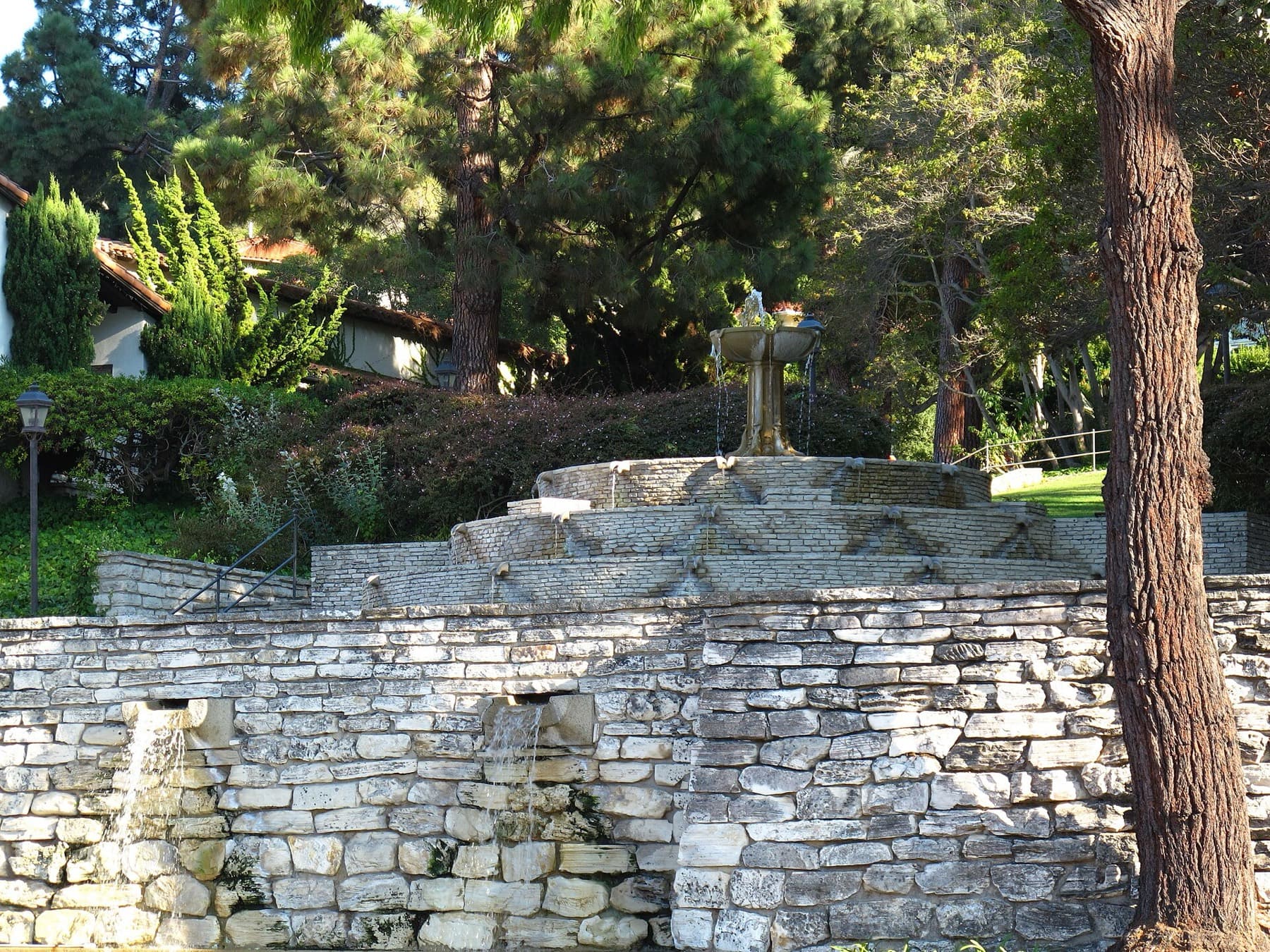
Three things to settle before escrow, starting with the 1923 rules.
Every property in Palos Verdes Estates comes with protective restrictions dating to 1923 and review by the Palos Verdes Homes Association's Art Jury, on top of the city's own permits. If you want a second story, a big addition or a new house, find out what approval takes before you commit. What passes on one street may not pass on the next, and the review takes real time.
The open space around the neighborhood is public parkland, which is why it stays open. It also means your lot line is exactly where the survey puts it. Landscaping or structures that creep into parkland are a known problem here and tend to come up in escrow, so get a survey and make sure everything near the edges is really on your lot.
Near the bluff, ask about geology and any slope or drainage work on that stretch, and have your inspector look at the history, not the view. Look up the fire zone for the exact parcel too. On CAL FIRE's 2025 map about 75% of the Palos Verdes Estates homes in our Malaga Cove map are in a Very High Fire Hazard Severity Zone, including most of Via del Monte, Via Campesina and Via La Selva, and nearly all the rest are High or Moderate.
2 active rentals in the mapped area
Malaga Cove is the northernmost neighborhood of Palos Verdes Estates, on the Palos Verdes Peninsula in Los Angeles County, where the Peninsula meets Torrance and Redondo Beach. It centers on Malaga Cove Plaza and the bluff along Paseo Del Mar, with the beach and RAT Beach below. Riviera Village's restaurants are a few minutes down the hill, and LAX is roughly half an hour away in normal traffic, longer at rush hour.
The facts in this guide (districts, zones, rules) come from the official records below. We re-check them before property tours.