Buying a home in California from abroad
For people who live in another country and are buying in Los Angeles or Orange County.
Buying from abroad, in short.
Yes, you can buy a home in California without US citizenship, a green card, or a visa, and you can do it while living abroad. Buying a home doesn't get you a visa or any status, though. Almost half of foreign buyers pay cash, because a standard mortgage is built for people who live in the US legally, and everyone else can only use separate programs from individual lenders. Your money goes to a neutral escrow company, and you confirm the wire instructions by calling a number you already know. You sign at a US embassy or consulate, or with a local notary and an apostille. Property tax starts at 1% of the assessed value, which usually equals the price after you buy, plus local add-ons. If you sell later, the buyer holds back up to 15% of the price for the IRS under FIRPTA.
Buying from abroad by the numbers.
- 48%Foreign buyers who paid all cashCompared with 28% of all buyers
- 29,500Homes bought by foreign buyers who live abroadUS, April 2025 through March 2026, per NAR
- $50Per seal at a US consulateTo notarize your signature abroad
- 1%Base property tax rateOf assessed value, plus local add-ons
- 17 daysDefault inspection periodIn the standard California contract
- 15%Withheld when you sellFIRPTA: the buyer sends it to the IRS

Who can buy, and what buying doesn't get you
You don't need US citizenship, a green card, or a visa to buy. The California Constitution says it directly: noncitizens have the same property rights as citizens. According to the National Association of Realtors (NAR), from April 2025 through March 2026 foreign buyers who live abroad bought 29,500 US homes, 44% of all purchases by foreign buyers.
A home won't get you a visa or a green card, though. The EB-5 investor green card requires an investment in a commercial enterprise that creates 10 permanent jobs, and a personal home doesn't qualify. An ITIN, the IRS taxpayer number, doesn't give you immigration status or the right to work either.
A separate point about sanctions. Every US bank, escrow company and title company has to follow OFAC sanctions. If you, your company, or the bank your money goes through is under US blocking sanctions, the US side won't process the payment. That's why we talk about where the money comes from, and through which bank, before we start looking at homes.
The purchase, step by step.
Before the search

Step 1: A call about your goal
We talk about what the home is for: living in, visiting, or renting out. We also go over the budget and how you'll pay.

Step 2: The money and where it came from
You move the money ahead of time into an account that can wire to the US, pull together the statements, and check that no sanctions apply.

Step 3: A loan, if you need one
You get preapproved by a lender that works with foreign buyers.

Step 4: How you'll hold title
With an attorney and a CPA you decide whether to buy in your own name, through a trust, or through a company. The buyer's name goes into the contract, so this has to be settled before the offer.
Finding and checking the home

Step 5: Video tours
I show you homes on video and check the fire and flood risk zones ahead of time.

Step 6: The offer
We send the offer with proof of funds. Once the seller accepts it, your deposit usually goes to escrow within three days.

Step 7: Escrow and title
The title company sends a preliminary report, the seller hands over the required disclosures, and I go through them with you.

Step 8: Inspections
By default you get 17 days for inspections, the HOA documents, and an insurance quote.
Signing and closing

Step 9: Signing
At a US embassy or consulate, or with a local notary and an apostille. The originals with your ink signature go back by courier.

Step 10: Wiring the money
You confirm the wire instructions by calling escrow at a number you already know, and only then send the money.

Step 11: Final walk-through and closing
In the last 5 days before closing I walk through the home on video, and then the sale is recorded with the county.

Step 12: After closing
We check where the tax bills will go, including the supplemental one, and set up the tax forms if you'll be renting the home out.

Still deciding? Ask me.
I'm a Realtor based in Long Beach and I work across Los Angeles and Orange County, including with buyers who still live in another country. Tell me what you're looking for and I'll help.
Slava Ploshkin · DRE #02323623English and Russian
Cash or a loan
In the same NAR report, 48% of foreign buyers paid all cash, compared with 28% of all buyers.
Fannie Mae buys loans made to non-citizens only when the borrower lives in the US legally. Since May 25, 2025, FHA loans have been open only to citizens and green card holders. If you live abroad, what's left are separate programs for foreign buyers, called foreign national loans. Every lender sets its own terms, so I compare actual offers.
For a rough idea: a 2024 Urban Institute study found that ITIN loans usually take 10 to 20% down, at a rate 0.5 to 2 percentage points higher than a standard loan. On top of that, on June 8, 2026 the Consumer Financial Protection Bureau (CFPB) reminded lenders that when they check whether a borrower can repay, they may, and sometimes must, take the borrower's immigration status into account.

How to wire the money without losing it
I tell buyers to get the money ready before they pick a home. The seller will want to see proof of funds, and the bank and escrow will ask where the money came from. It's easiest when the full amount is already sitting in an account that can send a wire to the US, and the statements for it are already pulled together.
The biggest risk at this stage is fraud. Scammers break into agents' and escrow officers' email and send the buyer a message with "new wire instructions." The CFPB suggests a few rules:

- Pick two trusted people ahead of time, for example me and your escrow officer, and write down their phone numbers.
- Never send money based on instructions in an email.
- Before you wire, call escrow at a number you already knew and confirm the recipient and the account number.
- Don't send financial information by email.
- If the money went to the wrong place, call your bank right away and ask them to recall the wire, then file a complaint with the FBI at ic3.gov.
Escrow and title insurance
In California, escrow holds the money and the documents for the deal. It's a neutral third party: it follows the written instructions of the buyer and the seller and releases the money only once every condition has been met. The escrow officer doesn't represent you or the seller and doesn't take part in negotiations. Joe and I are the ones who represent you in the deal.
At the same time, the title company searches the public records for who owns the home and what debts and liens are on it, and sends a preliminary title report. The lender's policy protects only the lender. To protect yourself you need an owner's policy. It covers you for as long as you own the home, and you pay for it once, at closing.

Inspections and contingencies
The standard California purchase contract gives the buyer time to investigate the property, 17 days by default unless the two sides agree on something else. In that time you need to check both the home itself and whether it can be insured. The seller hands over the required disclosures during those same days. If a disclosure arrives after the contract is signed, the buyer has 3 days after it's handed over in person, or 5 days after it's mailed, to back out of the deal.
I walk through the home with the inspector on video, send you the reports, and explain what in them is serious and what's normal wear. If it's a condo or a home in an HOA, we read the association's budget and rules. Contingencies are removed only in writing. In the last 5 days before closing I do a final walk-through on video to make sure the home is in the same condition and the promised repairs were done.
Insurance: the FAIR Plan and earthquakes
If you're buying with a loan, the lender will require homeowners insurance. I ask for a quote during the inspection period, because whether the home can be insured is part of that investigation. If regular insurers turn you down, there's the California FAIR Plan. It's a limited policy, mostly for fire, with a $3 million limit per residential property. Coverage for water damage, liability and theft is added with a separate Difference in Conditions (DIC) policy.
A standard homeowners policy doesn't cover earthquake damage, except for fire after a quake. The insurer has to offer you a separate earthquake policy, and whether you buy it is up to you.

How to sign the documents without flying in
A document that gets recorded with the county, like the deed of trust when you buy with a loan, has to be signed with a notarial acknowledgment. Outside the US, California law allows two main ways to do that.

- A US consul. You book a notary appointment at the US embassy or consulate in your country, and the fee is $50 per seal. Each embassy posts its own rules for the appointment, for example that the documents come complete and unsigned and the name on them matches your passport. I check those rules for your embassy, and we go through the whole package together before you go.
- A local notary and an apostille. The US is part of the Hague Apostille Convention, and so are many other countries, including Russia, Belarus, Ukraine, Kazakhstan and Israel. Before you go to the notary, I confirm with the title company what form of acknowledgment they'll accept.
Can you sign online?
Not with a California notary yet. Under SB 696, notaries in the state will be able to notarize over video once the California Secretary of State finishes its system for it, and no later than January 1, 2030. As of September 2026 the Secretary of State says plainly that a video call doesn't count as a personal appearance, and there's no launch announcement.
California does recognize an acknowledgment made under the laws of another place. But whether a particular title company will accept an online notarization from another state is up to that company, and I find out ahead of time. Another option is a power of attorney for someone in the US, which escrow and the lender also have to approve in advance.
Whose name goes on title: yours, a trust, or an LLC
The simplest way is to buy in your own name. The downside for a foreign buyer has to do with inheritance. If a foreigner dies with more than $60,000 in US assets, the home included, the heirs have to file a US estate tax return (Form 706-NA). If the home is in your name only and there's no trust, your heirs will most likely also have to go through probate court, and according to the California courts, even the fastest probate takes about 9 months.
A living trust helps pass the home to your heirs without probate. People usually pick an LLC to keep the home separate from their personal assets, but it costs money to run: an LLC registered or doing business in California pays at least $800 a year in tax. And if more than half of the LLC's interests pass to one new owner, the home gets reassessed for property tax the same way it would in a sale.
FinCEN's residential real estate rule required escrow or title companies to report all-cash home purchases by a company or a trust to FinCEN, along with the people behind them. Reporting was supposed to start March 1, 2026, but on March 19, 2026 a federal court in the Eastern District of Texas struck the rule down. FinCEN and the Department of Justice are appealing, and two other federal courts upheld the rule in February 2026. As of September 2026 no reports have to be filed, but the rule could come back after the appeal.
Taxes when you buy, while you own, and when you sell
This isn't legal or tax advice. The rules below were checked against official sources as of September 2026, and your decisions should be made with a CPA and an attorney.
Property tax under Proposition 13 is 1% of the assessed value plus rates for voter-approved debt, and those add-ons vary from area to area. After you buy, the assessed value usually equals the market value on the date of the sale, and from then on it goes up by no more than 2% a year. Newer areas can also carry a Mello-Roos special tax, for example CFD 2013-3 in the Great Park Neighborhoods in Irvine. That's why I always look at the last tax bill for the specific home.
The tax is paid in two installments: the first is due by December 10 and the second by April 10 to avoid a penalty. After you buy, you'll also get a supplemental tax bill for the difference between the old and the new assessed value. The Orange County Treasurer-Tax Collector warns that these bills usually aren't paid through the lender's impound account and aren't sent to the lender. If you're abroad, make sure the bills go somewhere you'll see them. The homeowners' exemption takes $7,000 off the assessed value, but only if the home is your main residence. Rentals and vacation homes don't get it.
If you rent the home out, the default federal tax for a nonresident is 30% of the gross rent (or a lower tax treaty rate, if the treaty provides one). You can instead elect under section 871(d) to pay tax on the income minus expenses at the regular rates, by filing Form 1040-NR. California also requires the property manager or another payer to withhold 7% from payments to nonresidents, rent included, once they add up to more than $1,500 in a year. You'll need an ITIN for the returns. The W-7 application is usually filed with your first return.
When you sell, FIRPTA applies. The buyer has to withhold 15% of the price and send it to the IRS. If the buyer is buying the home to live in, the rate is 10% for a price up to $1 million and zero up to $300,000. The withholding counts toward the tax the seller works out on their return, and with Form 8288-B you can ask the IRS ahead of time to reduce it. The IRS usually answers within 90 days. California separately withholds 3⅓% of the price (or an amount under an alternative calculation) unless the seller certifies an exemption on Form 593.
How Joe and I run a deal like this remotely
I moved to the US at 20 with almost no English, and I passed the California license exam in English on the first try. So I remember well what it's like to read American documents for the first time. That's why I show homes on video and tell you what I actually see, street noise and a creaky floor included. Every document, from the contract to the inspector's report, I go through with you, in English or Russian, before you sign it.
I coordinate with escrow, the title company, the lender and the inspectors, keep the calendar of deadlines, and book the signing at the consulate or with a notary ahead of time. My broker, Joe Goodman of Hayden & Bach, has worked on California deals for more than 25 years and runs them together with me. You can check my license (DRE #02323623), like any agent's, on the California Department of Real Estate website.

Questions & answers
Yes. In California it's written right into the state constitution: noncitizens have the same property rights as citizens. You don't need a green card, a visa, or a Social Security number to buy.
Neighborhood guides by city.
All guides




Where we check the facts
The facts in this guide come from the official sources below. Rules change, so we check them again before every deal.
- California Constitution, Article I, Section 20leginfo.legislature.ca.govNoncitizens have the same property rights as citizens
- NAR: Foreign Buyers Purchased $45.3 Billion Worth of U.S. Homes (July 29, 2026)nar.realtor29,500 homes (44%) bought by foreign buyers living abroad; 48% paid all cash vs 28% of all buyers
- USCIS: EB-5 Immigrant Investor Programuscis.govEB-5: investment in a commercial enterprise and 10 permanent jobs
- IRS: Individual Taxpayer Identification Number (ITIN)irs.govWhat an ITIN is; no immigration status or work authorization; Form W-7
- IRS: Instructions for Form W-7irs.govW-7 is filed with a tax return, with exceptions (mortgage, FIRPTA sale)
- OFAC: Basic Information on OFAC and Sanctions, FAQ 11ofac.treasury.govEvery US person and company must comply; blocked property
Show all 42 sourcesShow fewer
- OFAC: Russian Harmful Foreign Activities Sanctionsofac.treasury.govThe Russia sanctions program is active; licenses amended in 2026
- Fannie Mae Selling Guide B2-2-02, Non-U.S. Citizen Borrower Eligibilityselling-guide.fanniemae.comLoans to non-citizens only for lawful US residents
- HUD Mortgagee Letter 2025-09 (March 26, 2025)hud.govFHA open only to citizens and green card holders from May 25, 2025
- Urban Institute: ITIN Mortgages (February 2024)urban.orgITIN loans: 10 to 20% down, rates 50 to 200 basis points higher
- CFPB: Statement on Ability To Repay and Immigration Status (Federal Register, June 8, 2026)federalregister.govLenders may, and sometimes must, consider immigration status
- CFPB: Mortgage closing scams, how to protect yourself and your closing fundsconsumerfinance.govRules against wire fraud; wire recall and a complaint at ic3.gov
- FBI Internet Crime Complaint Center (IC3)ic3.govWhere to report a fraudulent wire
- CA DRE: Surviving the Real Estate Escrow Process in Californiadre.ca.govEscrow is a neutral third party and doesn't negotiate
- California Department of Insurance: Title Insuranceinsurance.ca.govPreliminary title report; the lender's policy doesn't protect you; one-time premium at closing
- CA DRE Reference Book, Chapter 20: Contract Provisions and Disclosuresdre.ca.gov3 days for the deposit, 17 days to investigate, 3 or 5 days to cancel after late disclosures, final walk-through within 5 days
- California Department of Insurance: California FAIR Planinsurance.ca.govFor owners turned down by regular insurers; limited fire policy; $3 million limit; DIC
- California Department of Insurance: Earthquake Insuranceinsurance.ca.govRequired with a mortgage; earthquakes not covered; insurers must offer a quake policy
- California Government Code § 27287leginfo.legislature.ca.govA document must be acknowledged before it can be recorded
- California Civil Code § 1183leginfo.legislature.ca.govOutside the US: a US consul, or a notary with an apostille
- California Civil Code § 1189leginfo.legislature.ca.govAn acknowledgment made under another place's laws is valid in California
- 22 CFR 22.1: Schedule of fees for consular servicesecfr.govItem 41: notarial service, $50 per seal
- U.S. Embassy & Consulates in Russia: Notarialsru.usembassy.govAn example of one embassy's appointment rules: unsigned documents, matching name
- HCCH: Apostille Convention status tablehcch.netThe countries in the Hague Apostille Convention
- California Secretary of State: Notary Public FAQssos.ca.govVideo isn't a personal appearance; SB 696 starts with the state's system or on January 1, 2030
- IRS: Some nonresidents with U.S. assets must file estate tax returnsirs.gov$60,000 threshold for a foreigner's US assets; Form 706-NA
- California Courts Self-Help: Wills, estates, and advance care planningselfhelp.courts.ca.govLiving trusts and probate (about 9 months at the fastest)
- California Franchise Tax Board: Limited liability companyftb.ca.govThe $800 annual LLC tax
- California BOE: Legal Entity Ownership Program, change in ownershipboe.ca.govMore than 50% of an entity changing hands triggers reassessment
- FinCEN: Residential Real Estate Rulefincen.govStruck down by a court on March 19, 2026, under appeal; no reports required for now
- FinCEN: Residential Real Estate FAQsfincen.govWhich transfers the rule covered; no reports while the court order stands
- Holland & Knight: What Is Going on with FinCEN's Residential Real Estate Rule? (June 2026)hklaw.comThe Florida and Northern Texas rulings (February 2026) and the Fifth Circuit appeal
- California BOE: Publication 29, California Property Tax, An Overview (March 2025)boe.ca.gov1% plus voter-approved debt; 2% cap; supplemental bill; December 10 and April 10; $7,000 exemption
- Orange County Assessor: Proposition 13ocassessor.govThe new assessed value is usually the market value at the sale
- OC Treasurer-Tax Collector: Supplemental Property Taxesoctreasurer.govSupplemental bills aren't paid from impound and aren't sent to the lender
- City of Irvine: Great Park Community Facilities Districtscityofirvine.govCFD 2013-3 (Mello-Roos) in the Great Park Neighborhoods
- IRS: Nonresident aliens, real property located in the U.S.irs.gov30% of gross rent, or the 871(d) election; Form 1040-NR
- California Franchise Tax Board: Withholding on nonresidentsftb.ca.gov7% withheld from payments to nonresidents, rent included, over $1,500 a year
- IRS: FIRPTA withholdingirs.gov15% withheld by the buyer; Form 8288-B and the 90-day answer
- IRS: Instructions for Form 8288irs.gov10% for a home up to $1 million, none up to $300,000
- California Franchise Tax Board: 2026 Instructions for Form 593ftb.ca.govCalifornia withholding of 3⅓% of the price or an alternative calculation; exemptions
- California DRE: License lookupdre.ca.govCheck any agent's license
Photo credits (11)
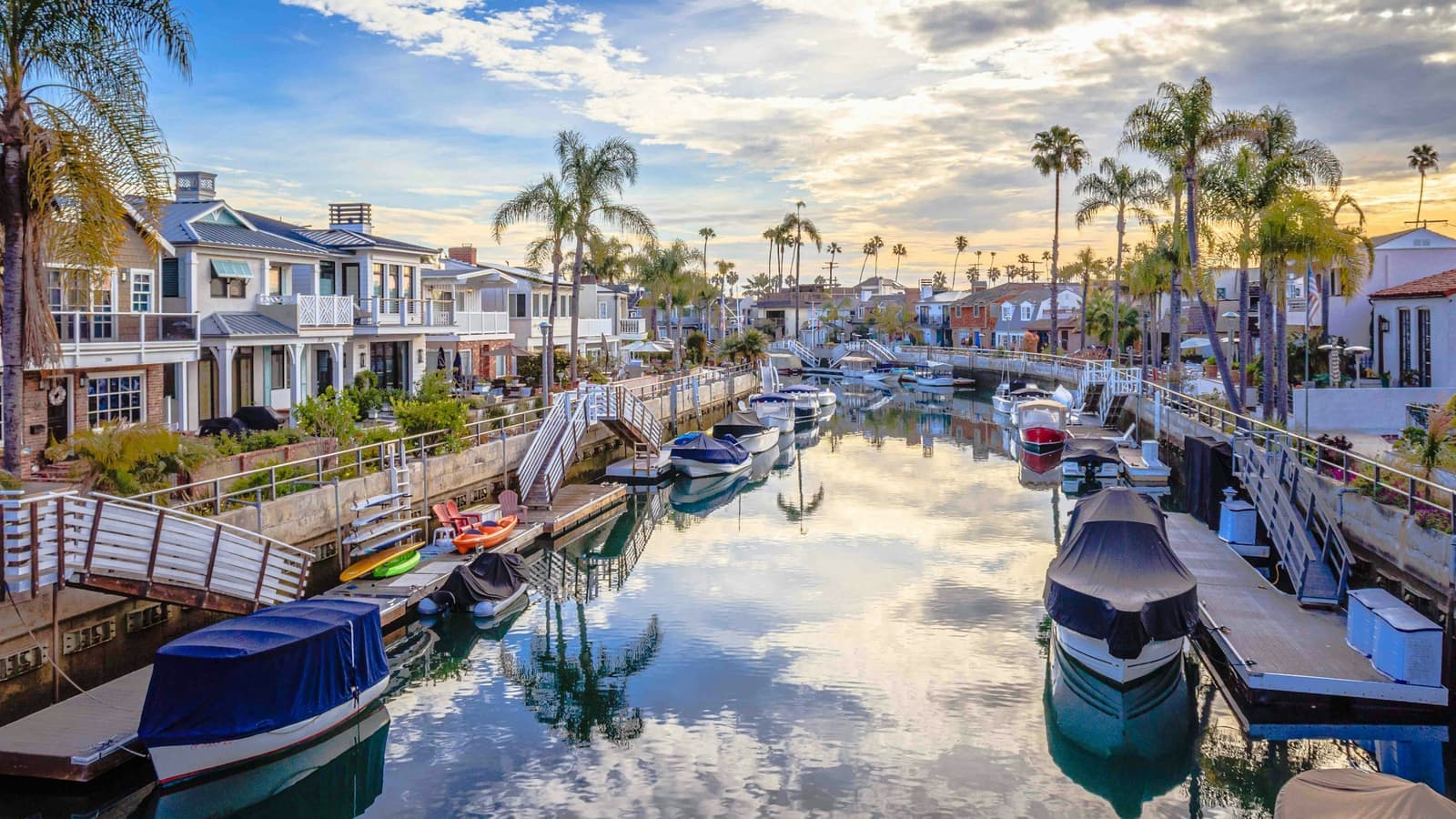
- Palms and clouds reflected in a Naples canal lined with private docksDaniel Stiel, Unsplash License
- Low winter sun lights the Peninsula's beach houses under dark storm cloudsSergei Gussev, CC BY 2.0
- Evening sun on Shoreline Village, on the harbor a short walk from Pine Avenuerussellstreet, CC BY-SA 2.0
- Sunset on the city beach, looking west toward the Villa Riviera and DowntownFloris M. Oosterveld, CC BY 2.0
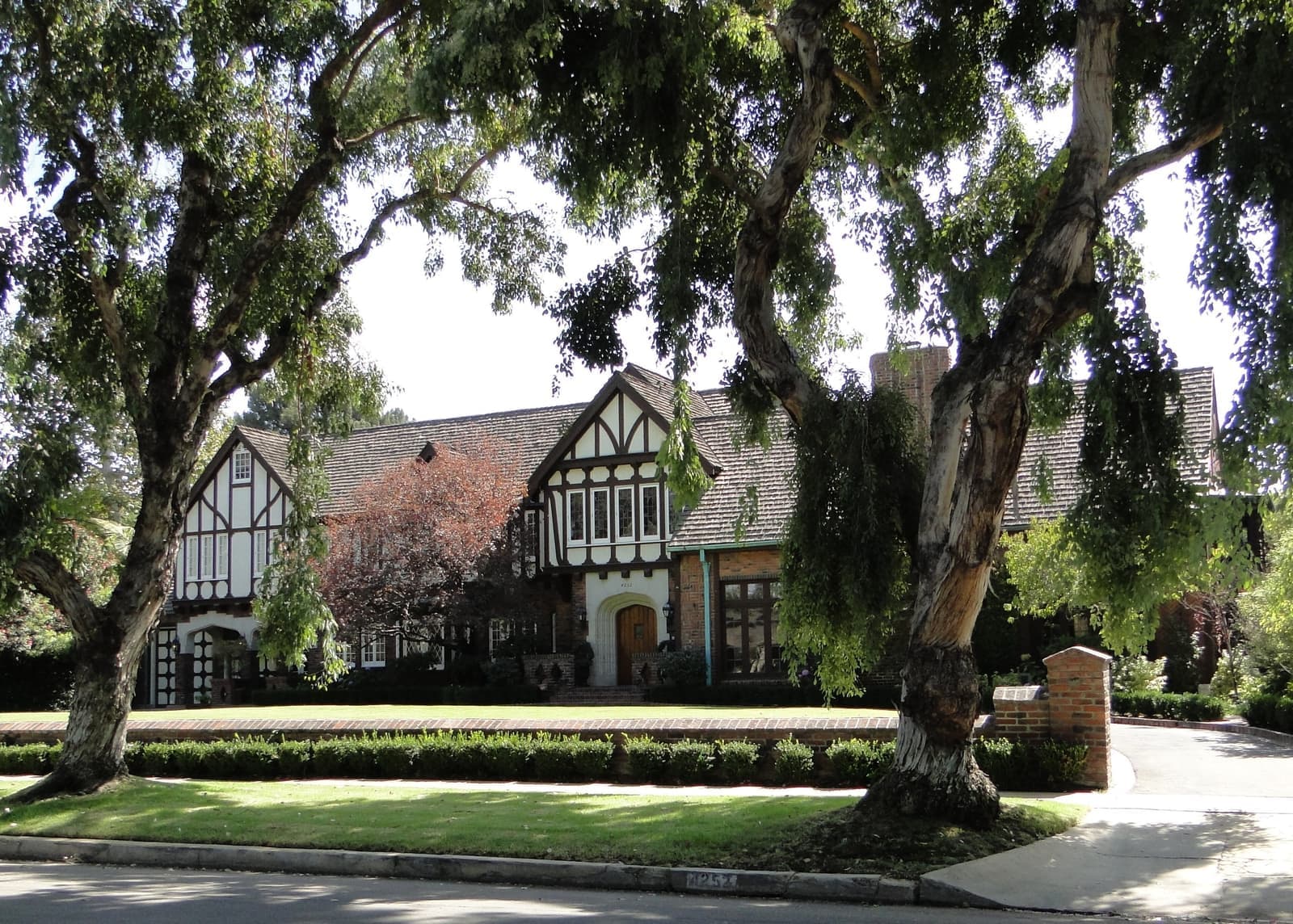
- A Tudor Revival home under old shade trees on Country Club Drive in Los CerritosLos Angeles (Wikimedia Commons user), CC BY-SA 3.0
- A shingled cottage with bougainvillea across from Colorado Lagoon parkTracie Hall (Flickr: tracie7779), CC BY-SA 2.0
- Lantana in bloom in front of a Spanish Revival cottage in the Los Angeles areaJack Prommel, Unsplash License
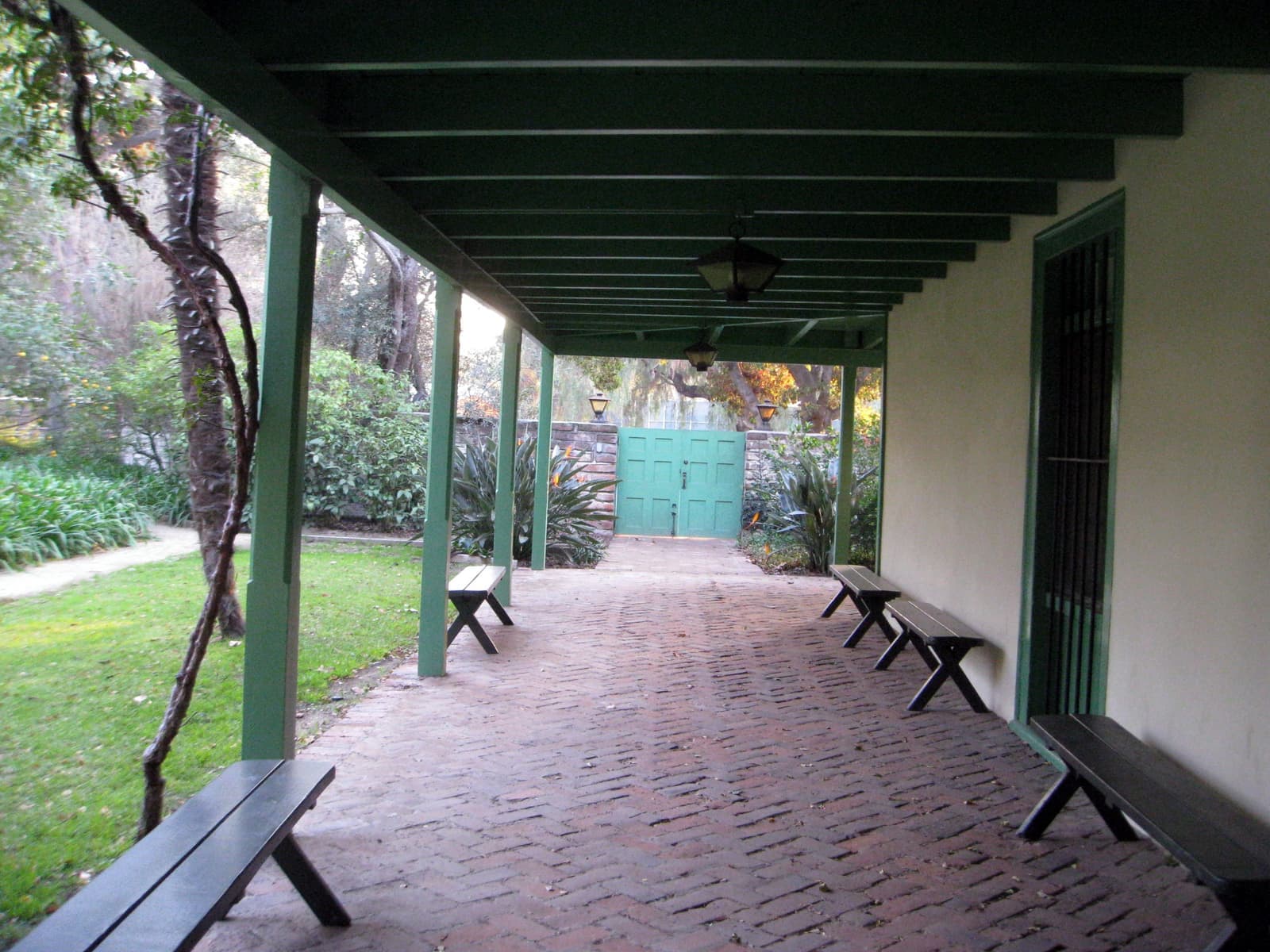
- The covered brick walk along the 1844 adobe at Rancho Los CerritosVanesser III, CC BY-SA 2.0
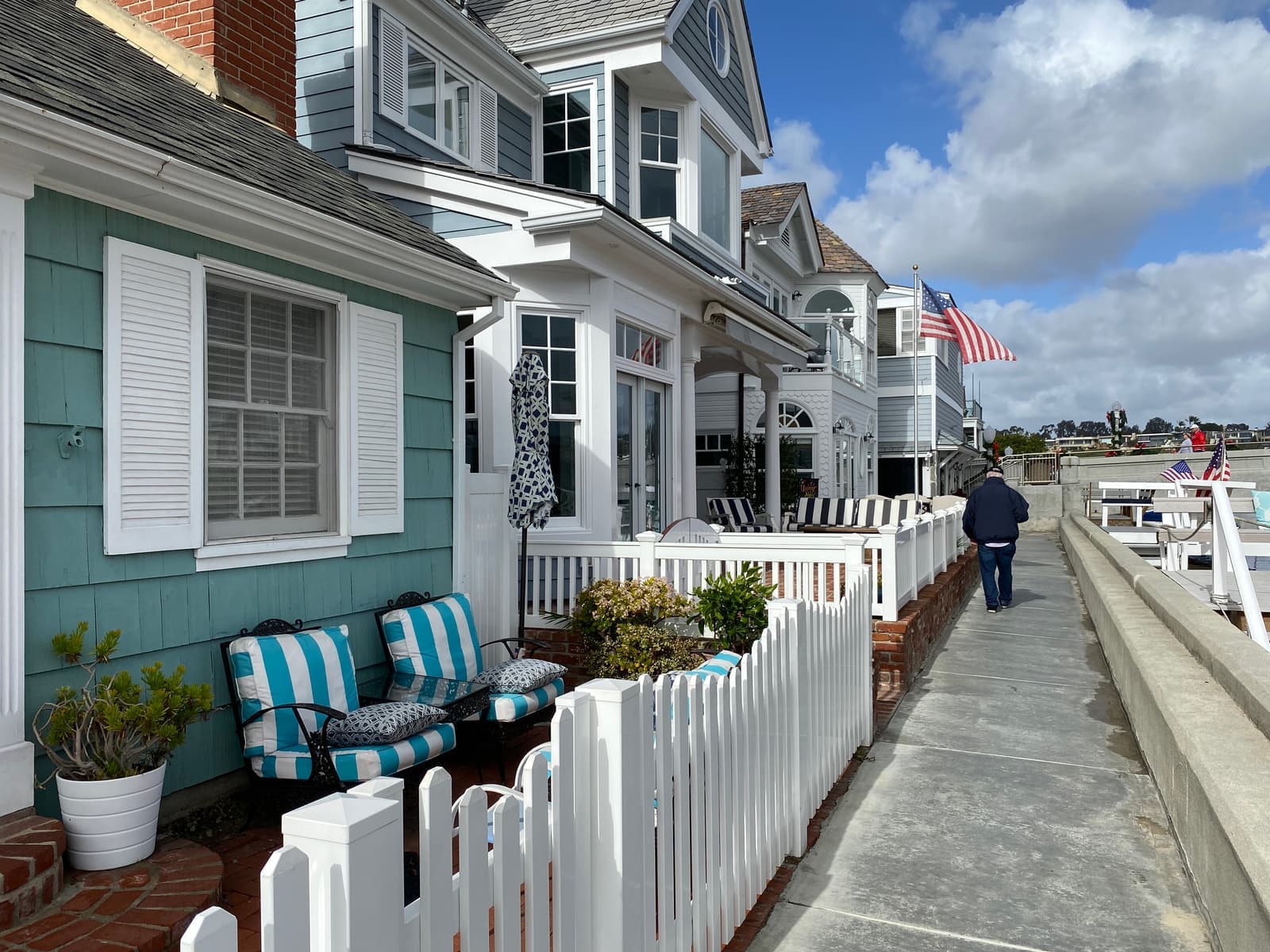
- Cottages and picket fences along the Grand Canal walk on Balboa IslandTracie Hall, CC BY-SA 2.0
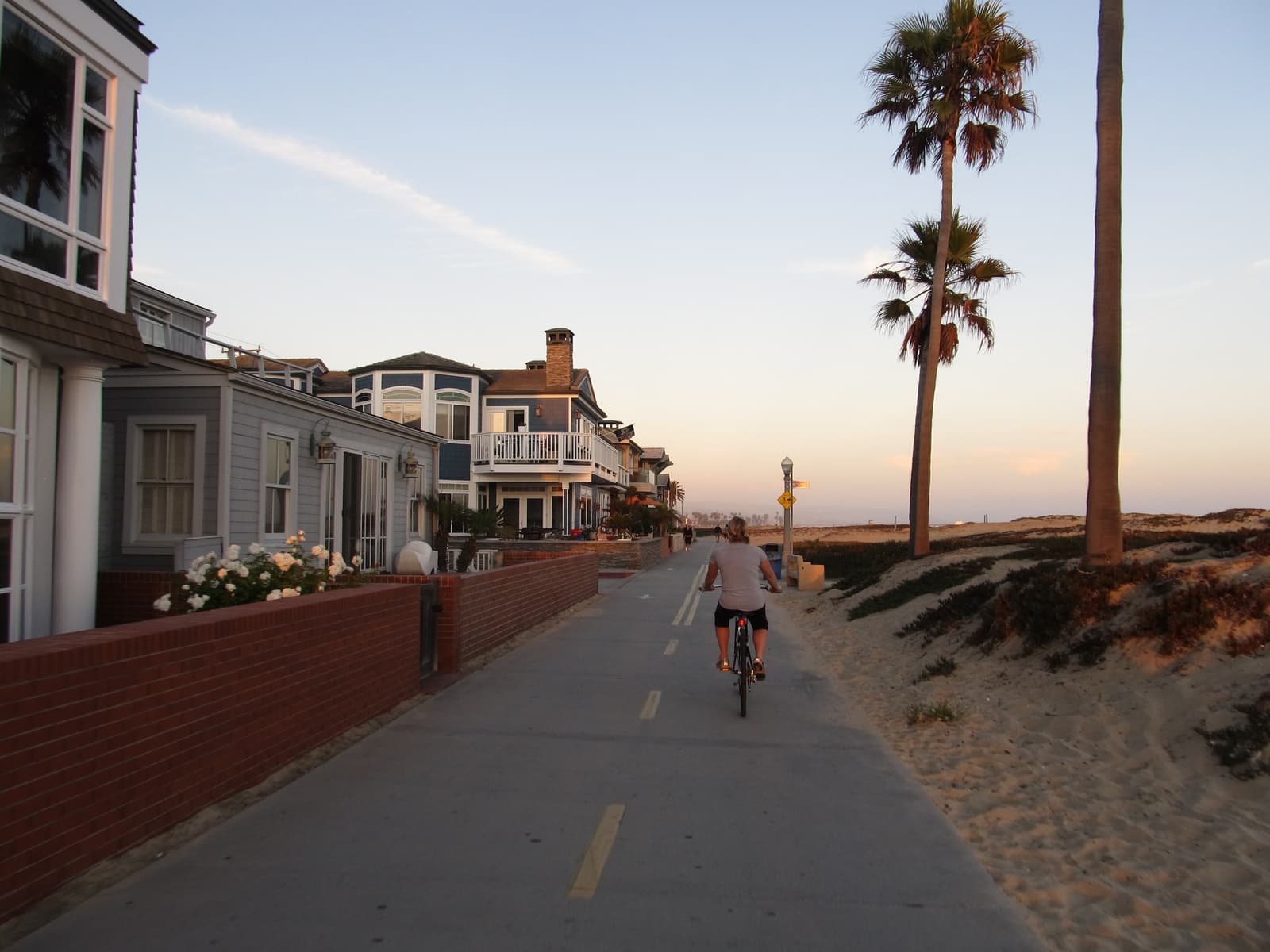
- Evening light on the Oceanfront boardwalk and its beach housesKen Lund, CC BY-SA 2.0
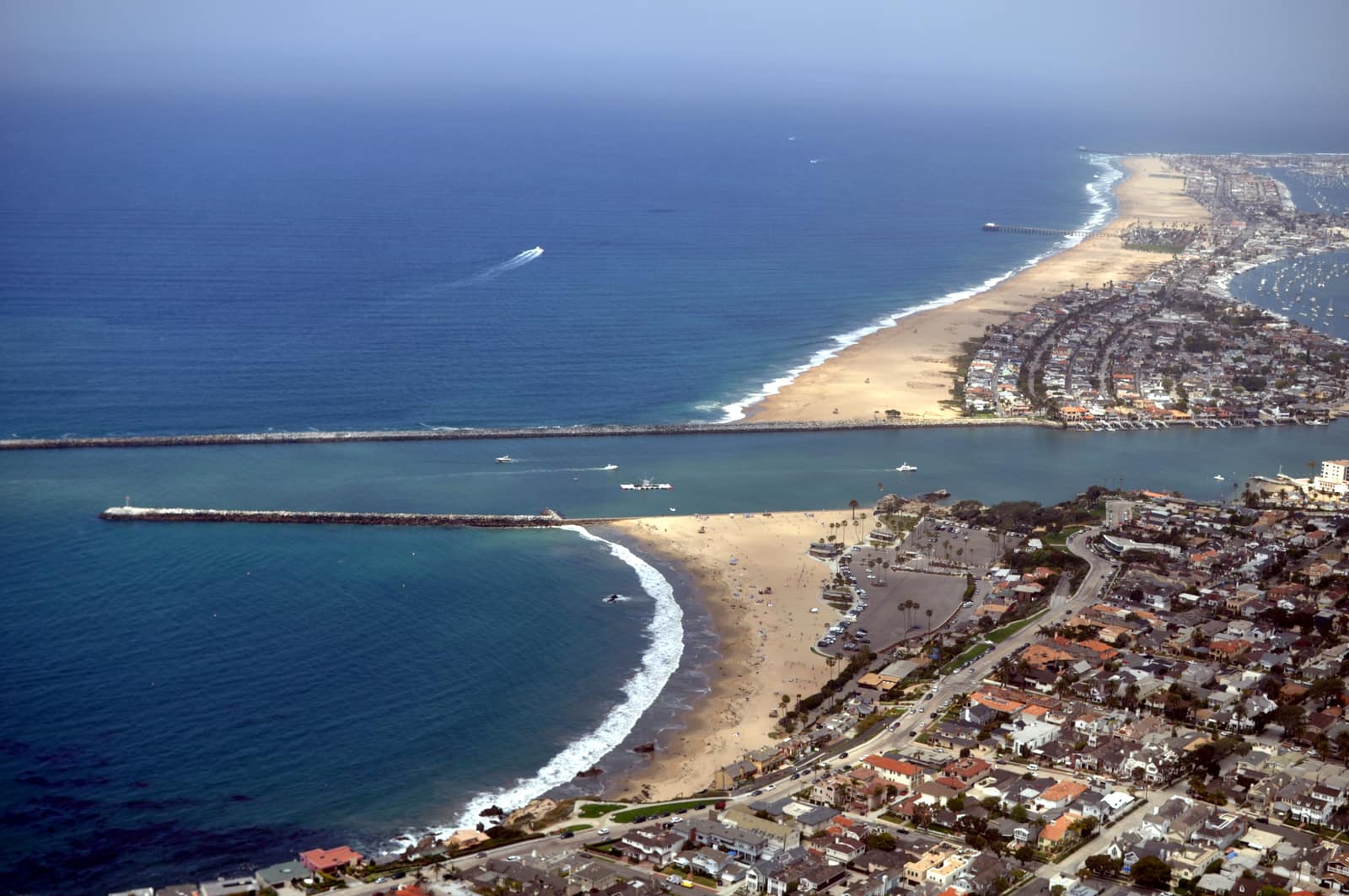
- Evening light on the rocks and bluff homes at Big Corona beachSergei Gussev, CC BY 2.0