

All of Irvine$1.6M
- Orchard Hills$2.9M
- Turtle Rock$2.3M
- Portola Springs$1.87M
- Great Park$1.65M
- University Park$1.62M
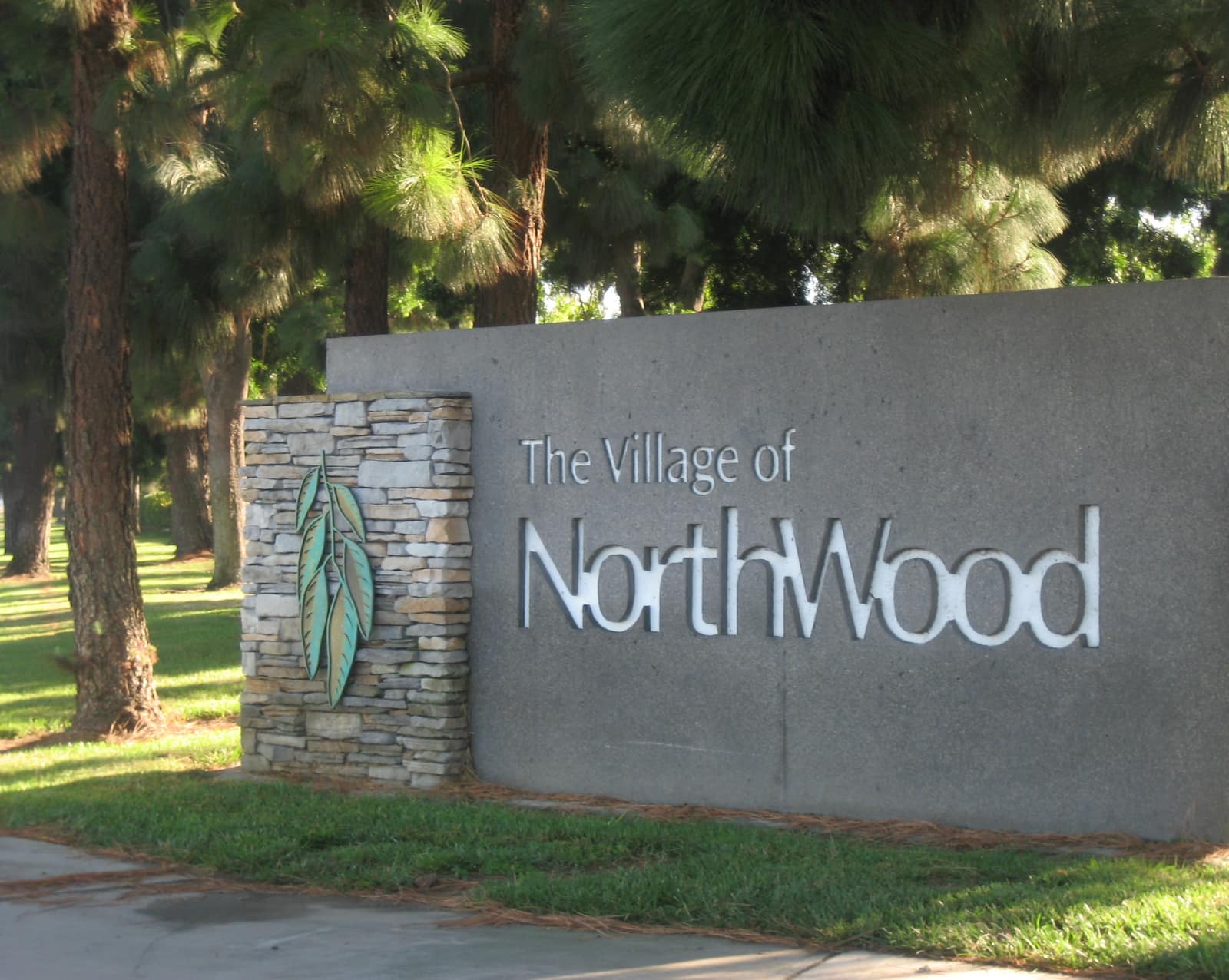
- Northwood$1.61M
- All of Irvine$1.6M
- Quail Hill$1.4M
- Woodbridge$1.1M
Which Irvine villages carry Mello-Roos, and how to check the exact house on its tax bill before you offer

Yes, much of Irvine has Mello-Roos, but not all of it, and the split mostly follows a village's age. The oldest villages, University Park, Turtle Rock, Northwood and Woodbridge, were started before the 1982 Mello-Roos Act and aren't on the City of Irvine's list of special tax and assessment districts. Most villages opened since the mid-1990s, Quail Hill, Woodbury, Portola Springs and Orchard Hills among them, sit in a city assessment district, which is billed like Mello-Roos, and many of their homes also pay a school district's Mello-Roos tax. The Great Park Neighborhoods pay the city's own Mello-Roos district, CFD 2013-3, and part of it never ends: once its bonds are repaid, typically after about 40 years, the charge drops by roughly 65 to 82 percent and the rest keeps paying for park maintenance. A village name only tells you what to expect. The Orange County tax bill for the exact parcel lists each of these charges with a phone number, and that's the document I read before an offer.
Much of it does. The oldest villages mostly don't, and the tax bill settles it for any one house.
Mello-Roos is a special tax that pays for the streets, parks, storm drains and schools a new neighborhood needs before anyone lives in it. California passed the law in 1982, in response to Proposition 13, to give cities and school districts a way to pay for that growth. The legal name is a Community Facilities District, or CFD. A CFD sells bonds to build things up front, and the homes inside it repay them through a special tax on the county property tax bill every year.
In Irvine you'll run into three kinds of these charges. The city has three true Mello-Roos districts, and the largest by far is CFD 2013-3 in the Great Park. The city also has assessment districts under the state's 1913 and 1915 improvement acts, which is how most villages since the mid-1990s financed their streets and utilities, usually at the Irvine Company's request as the landowner. Irvine Unified and Tustin Unified run their own Mello-Roos districts for schools in newer neighborhoods. All of them land on the same tax bill, and most people call every one of them Mello-Roos.
So the real answer depends on the village, and in the newer villages on the tract. The oldest villages mostly carry none of these charges. A home in Woodbury or Quail Hill can carry a city assessment and a school tax at the same time.
Getting ready

Start with the life the home is for: who'll live there, where you work, the schools, how much room you need. Then we pick a few parts of town that fit.

Cash or a loan? If it's a loan, get preapproved first. A lender looks at your income and savings and tells you how much they're ready to lend, and sellers take an offer with that letter more seriously.

Call or write, and we'll go through your plans together. Before we tour homes, we sign a short buyer agreement, as the rules ask, so it's clear how we'll work together.

I send you the homes that fit, and the new ones as they come up. Before you fall for one, we check its fire, flood and earthquake zones.
The offer and escrow

We see the homes you like in person, or on video if you're not in town yet.

When you find the one, we write the offer together: the price, the deposit, the time you'll need to check the home, and the closing date.

Once the seller says yes, your deposit usually goes to escrow within 3 business days. Escrow is a neutral company that holds the money and the papers until everything's done.

The seller gives you everything they know about the home, usually within 7 days. You get 17 days by default to inspect it and make sure it can be insured.
Closing

With a loan, the lender orders an appraisal and finishes the paperwork. A cash purchase usually skips this step.

When the inspections, the loan and the appraisal check out, you remove the contingencies in writing. I keep the calendar so no deadline slips by.

In the last days before closing you walk through the home once more and sign the loan and escrow papers. Your lender sends the final loan terms at least 3 business days before.

The county records the deed and the home is yours. Watch the mail after that: the supplemental tax bill comes to you, not to your lender.
Asking prices for homes on the market right now inside each mapped area, not sale prices. Updated October 17, 2026
1098 active listings in the mapped area
I’m a Realtor based in Long Beach, and Irvine is one of the cities I work most. Tell me what you’re after and I’ll help you get there.
Slava Ploshkin · DRE #02323623English and Russian · How I work in Irvine
The first villages went up before the 1982 law, and the city's list doesn't name any of them.
The Irvine Company's own village guide, the Irvine Standard, dates the first villages like this: University Park 1966, Turtle Rock 1967, El Camino Real and Northwood 1970, Rancho San Joaquin 1972 and Woodbridge 1975. All of them were started before Mello-Roos existed, and the City of Irvine's current list of special tax and assessment districts doesn't name any of them. On a typical resale here I don't expect a Mello-Roos or city assessment line, but I still read the bill.
One school tax you'll see on older-village bills inside Irvine Unified is Measure E, the $319 million bond voters approved in June 2016 to improve 28 of the district's aging schools. It's charged on assessed value inside the district's School Facilities Improvement District, and Irvine Unified's estimate before the vote was $29 per $100,000 of assessed value a year. The district left out the newer neighborhoods that already pay school Mello-Roos. Measure E is an ordinary voter-approved tax, not Mello-Roos.
Two cautions in this group. Irvine Unified has a school Mello-Roos district named for Northwood, CFD 04-1, which first sold bonds in 2006, so some Northwood parcels do pay a special tax. And Turtle Ridge, the newer village next to Turtle Rock, is on the city's list, so don't let the similar names mix you up.
From the 1990s on, the city's list names a district for almost every new village.
From the 1990s on, most new Irvine villages had their streets and utilities financed through city assessment districts. The city describes the process plainly: the Irvine Company, as the landowner about to develop a village, typically asked for a district to cover the upfront costs. Bonds sold to investors paid for the work, and each lot repays its share through a yearly assessment on the county tax bill. The city's current list pairs each district with its village.
Many of these homes also pay Irvine Unified a school Mello-Roos tax on a separate line. Its CFD 01-1, which the district's state filings call South Irvine Communities, covers Quail Hill, Shady Canyon and Turtle Ridge, and its bonds are scheduled to be paid off on September 1, 2038. When the school board refinanced them in 2024, it kept that date and didn't extend the levy. Woodbury pays CFD 04-2, split into two improvement areas, whose bonds were first sold in 2006 and now run through September 2036.
Some older assessment groups have already been paid off, and a district's bonds were often sold in groups as each phase was built. That's why two streets in one village can stop paying in different years, and why I don't trust a village-wide answer about the end date.

Each one has a city district, and school Mello-Roos is common here too.
Every Irvine Company village opened since 2006 is on the city's list, some as reassessment districts. A reassessment district is just an assessment district whose bonds the city has refinanced. The districts came first: the city formed Portola Springs' district in April 2005 and Orchard Hills' on May 9, 2006, both at the Irvine Company's request and before either village opened.
On the school side, Irvine Unified's CFD 06-1 carries the Portola Springs name. The district's largest, CFD 09-1, was formed in 2009 for district land north of the 405, where the Irvine Company was the biggest taxpayer in 2019; its 2017 bonds paid for a K-8 school in Portola Springs, and its bonds run into the 2050s. Read the bill to see which of the two a Portola Springs home pays. In Orchard Hills, Tustin Unified levies its CFDs 07-1 and 14-1 on the homes in its part of the village.
A few end dates are on record. In May 2025 city staff brought the council a refinancing of the bonds for Stonegate's three groups, one Portola Springs group and part of Laguna Altura, about 2,120 homes in all, into a new Reassessment District 25-1 with bonds maturing in September 2042. The last Portola Springs group, approved in 2019, runs to September 2048. When Tustin Unified refinanced its Orchard Hills districts in July 2024, it took six years off the debt, and its parcel lookup shows each home's final tax year.
The city's own Mello-Roos district, and the part of it that never ends.
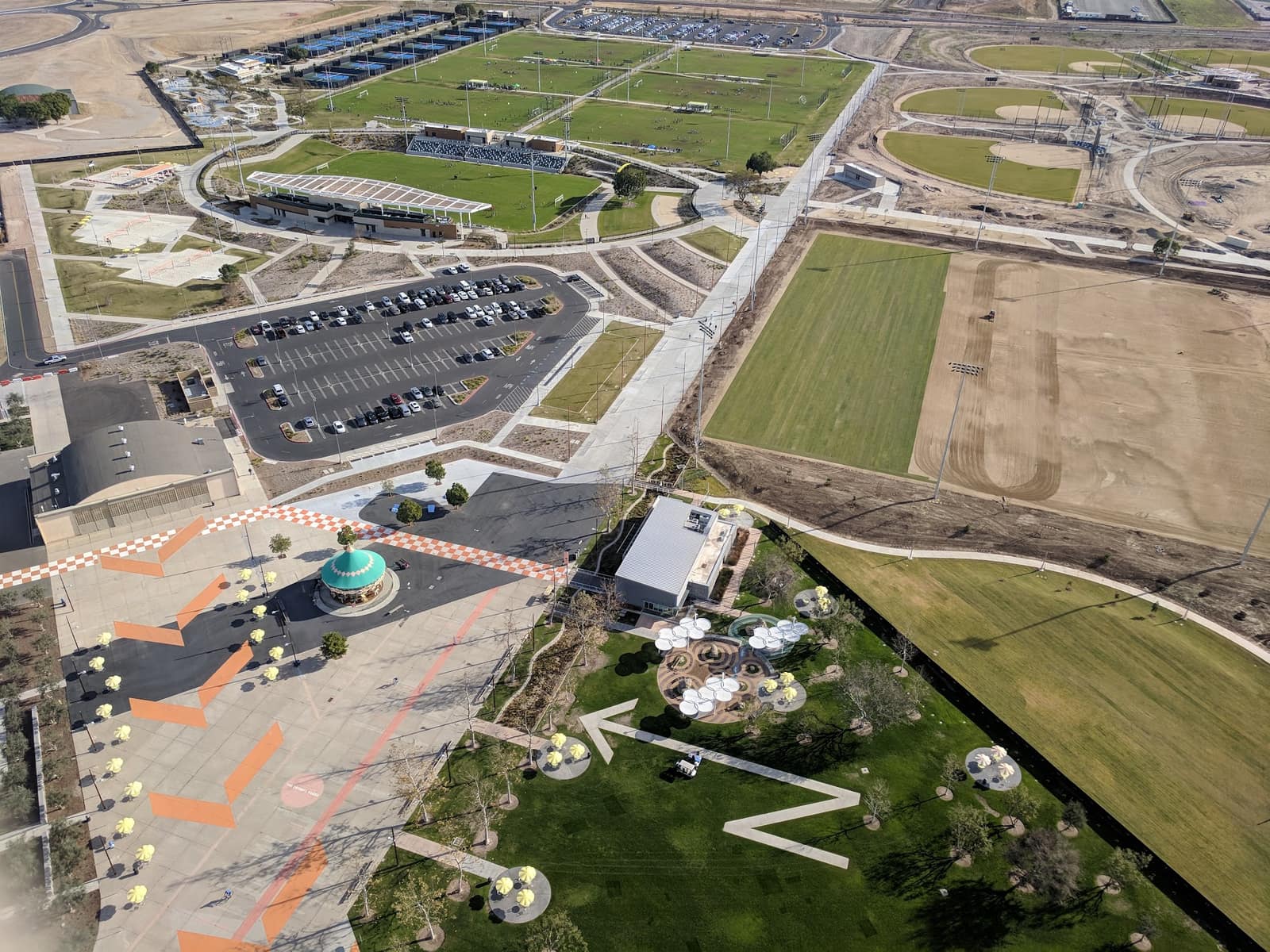
Homes in the Great Park Neighborhoods, built on the former El Toro Marine Corps air station, pay the special tax of Community Facilities District 2013-3. The city formed it in 2013 with the master developer, Heritage Fields El Toro, to pay for backbone streets, utilities, storm drains, parks and trails, along with building and maintaining the Great Park itself. Affordable units are exempt, and residents get priority access and discounts at park facilities because they pay into the district.
The district is split into improvement areas, each with its own rates and bonds, and the neighborhoods have their own: Pavilion Park is Improvement Area 1, Beacon Park is 4 and Parasol Park is 8. In Parasol Park the tax follows the home's size and type, not its value. For scale, the 2018 bond papers there listed 2018-19 special taxes from about $4,600 a year for an attached home of 1,200 to 1,399 square feet up to about $9,200 for a detached house of 2,950 to 3,199 square feet. The maximum can go up by as much as 2 percent a year.
Then there's the part that never ends. The city says the bonds typically take 40 years to repay, after which the charge drops by roughly 65 to 82 percent and the rest continues in perpetuity for maintenance. In Parasol Park the 2 percent increases run through fiscal 2058-59. After that about three quarters of the tax ends, and the services part that stays can rise 3 percent a year. Only the part that ends can be paid off early.
Dates can move. In 2024 the city refinanced Pavilion Park's 2014 bonds and raised about $20 million for projects in the district, partly by moving the final maturity from 2049 to 2054. The city has said future bond sales won't raise the charge. On school taxes, the overlapping debt table in the 2018 Parasol Park bond papers lists water district bonds and no school Mello-Roos district.
The city's two smaller Mello-Roos districts.
Besides the Great Park, the City of Irvine runs two Mello-Roos districts of its own. CFD 2004-1, called Central Park, was set up to pay for road and circulation work in the Irvine Business Complex, including a turn lane on Jamboree Road, a wider Michelson Drive and a pedestrian bridge over Jamboree if the city builds it. CFD 2005-2, Columbus Grove, was set up for streets, parks and the Warner Avenue and Peters Canyon Channel bike and hiking trails.
Both are small next to the Great Park. In fiscal 2024-25 they collected about $952,000 and $1.1 million in special taxes, against $62.8 million for CFD 2013-3, and nearly all of their money went to bond payments.
They sit next to each other on the bill and follow different rules.
A Mello-Roos tax is voted in before most homes are sold. When fewer than 12 people have been registered to vote inside a proposed district, which is normal on raw land, the landowners vote instead, with one vote per acre, and the tax needs two thirds of the votes cast. In practice the developer approves it and every later owner inherits it, because the tax is secured by a lien recorded against the property.
The amount isn't tied to what the house is worth. State law calls it a special tax rather than an assessment and lets the district split it by any reasonable formula. For a home, the maximum can rise by no more than 2 percent a year, and the part that pays for facilities needs a last tax year, set when the district is formed. A tax for ongoing services can be set to run with no end date.
A city assessment works differently. Under the 1913 and 1915 acts, each lot carries a fixed lien for its share of the improvements, and the state constitution limits that share to the special benefit the lot actually gets. The lot repays it in yearly installments on the tax bill until the bonds are repaid, and then the line drops off.
Not every extra line on an Irvine bill is one of these. Measure E is a voter-approved school bond charged on assessed value, and the 2018 Great Park bond papers also show Irvine Ranch Water District taxes there that are based on the value of the land. Neither is Mello-Roos.

Each district has its own date, and some charges never fully end.
There's no citywide expiration date. The facilities part of a Mello-Roos tax is levied until the facilities are built and the bonds are repaid, but never past the final tax year printed on the state's Notice of Special Tax. An assessment is collected every year until its bonds are repaid, and its notice doesn't print a date at all.
Refinancing can move a date in either direction. When Tustin Unified refinanced its Orchard Hills districts in 2024, it took six years off the debt. The city went the other way for Pavilion Park the same year and moved the final bond date from 2049 to 2054.
These are the dates I could confirm from public filings. A bond date is a good guide, but for a specific parcel I go by its notice.
The tax bill comes first, then the official notices.
Start with the current bill, which you can pull up at taxbill.octreasurer.gov. Mello-Roos taxes and assessments sit under Special Assessment Charges, where Orange County now prints the actual name of the district's bond, and the bill lists a phone number for each agency that levies one.
For a map, use the county's OC Tax Map at taxmap.octreasurer.gov. You can search by address or click around the map, and it shows the base levy and every special charge on a parcel, Mello-Roos included, with the agency's number. For CFDs it can also show the original year, the bond term and what the district pays for. I don't know of an official Mello-Roos map for Irvine alone: the city lists its districts by village name and the school districts keep their own records, so this parcel-by-parcel county map is the closest thing.
Then ask for the official notices. On a resale the seller has to make a good-faith effort to get one from every agency that levies a Mello-Roos tax or a 1915 Act assessment on the home. The agency has five working days to send it and can charge up to $15 for a Mello-Roos notice or $10 for an assessment notice. The Mello-Roos notice gives the maximum tax, how fast it can grow and the last tax year for facilities, plus any services tax that can run forever. The state's forms also say a buyer can cancel the contract within three days of receiving the notice in person, or five days after it's mailed. On a new home, the builder has to give you the notice to sign before you sign the purchase contract.
Two gaps to know about. An assessment notice doesn't give an end date, so for a city district I call the city at 949-724-6000, ask for Fiscal Services and find out when that parcel's bonds are paid off. And the disclosure law doesn't require the agents to discover a district they didn't know about, which is why I pull the bill myself instead of waiting for the disclosure package. In Tustin Unified's part of north Irvine, the lookup at specialdistricttransparency.com/tusd gives a parcel's current tax, its CFD number and the final year of the tax.

I put every special line next to the mortgage before we compare prices.
Before I compare two Irvine homes for a client, I pull both tax bills and write each special line next to the mortgage payment and the association dues. A house in an older village and one in a newer village at a similar price can end up with very different monthly costs, and the bill is where that difference shows up.
Early in escrow I ask for the notices and read the last tax year on each Mello-Roos line. For a city assessment I call the city, because the notice won't give a date. If you plan to keep the house for a long time, I also look at how much of a charge is bond money that ends and how much is maintenance that doesn't. That matters most in the Great Park.
If you're buying from abroad, I'll go through the bill and the notices with you in Russian, line by line, before you commit.
Yes, much of Irvine has Mello-Roos or a city assessment billed the same way, but the oldest villages mostly don't. University Park, Turtle Rock, Northwood and Woodbridge were started before the 1982 Mello-Roos Act, and the City of Irvine's list of special tax and assessment districts doesn't name them. Most villages opened since the mid-1990s are on that list, and many of their homes also pay a school Mello-Roos tax to Irvine Unified or Tustin Unified. The Great Park Neighborhoods pay the city's own Mello-Roos district, CFD 2013-3. For any one house, the Orange County tax bill for that parcel is the answer.
Village years come from the Irvine Company's village guide. Districts, dates and amounts come from the city, the two school districts, Orange County and the state code listed here. Bond papers describe the bonds, and the bill and notice for a specific parcel decide what that house pays.