




Hancock Park asks 2.3 times as much as Los Angeles does as a whole.
Los Angeles, California · Neighborhood guide
Hancock Park
The 1920s neighborhood laid out around the Wilshire Country Club, where Revival houses sit 50 feet back from the street and the HPOZ keeps them that way
Median askingHancock Park$2.72M32 for sale
See homesHancock Park, in short.
Hancock Park is a 1920s neighborhood in the City of Los Angeles, from Highland to Rossmore avenues and Melrose Avenue to Wilshire Boulevard, laid out by G. Allan Hancock around the Wilshire Country Club, whose course opened in 1920. Its Tudor, Spanish Colonial, Mediterranean, Monterey and Colonial Revival houses sit about 50 feet back from the street, and the city's survey rated 1,113 of its 1,282 parcels, about 86 percent, as historic. It has been a Historic Preservation Overlay Zone since 2008, so street-visible exterior work needs review. As of September 2026 most houses asked about $3 million to $7 million. Larchmont Village is a block east, and the Wilshire/La Brea D Line station opened in May 2026.
Hancock Park by the numbers.
- 10,768Population
- 46%Homeowner-occupiedoccupied homes
- 68%Bachelor's degree or higherage 25+
- $14,750/moMedian asking rentCurrent MLS listings
- $133,105Median household income
- 42.9Median age
Sources: U.S. Census Bureau, ACS 5-year 2019–2023; neighborhood facts compiled by The Slava House.
A 1920s neighborhood that's still mostly intact
Revival houses on deep setbacks around a private golf course, protected by an HPOZ.
Hancock Park is the neighborhood from both sides of Highland Avenue to both sides of Rossmore Avenue, and from Melrose Avenue south to Wilshire Boulevard, in the City of Los Angeles. That is the homeowners association's definition and the one the Historic Preservation Overlay Zone follows. The Los Angeles Times' Mapping L.A. project draws a wider box, half a mile further west to La Brea Avenue and one block east to Arden Boulevard, about 1.59 square miles in all.
The Wilshire Country Club sits at the center, and the neighborhood was laid out around it in the 1920s by G. Allan Hancock on land his family had held since the 1860s. The plan required deep 50-foot setbacks, and the houses that filled it were Tudor Revival, English Revival, Spanish Colonial Revival, Mediterranean Revival, Monterey Revival, and American Colonial Revival. Most of them are still there. The City Council made the area a Historic Preservation Overlay Zone in 2008, and the city's survey rated 1,113 of its 1,282 parcels, about 86 percent, as contributing historic buildings.
What surrounds it matters as much. Larchmont Village, the walkable shopping street, is one block east of Rossmore. Windsor Square, the 1911 neighborhood with the mayor's official residence, lies beyond it. Wilshire Boulevard's pre-war towers and the Ebell club mark the south edge, and the D Line subway reached Wilshire and La Brea in May 2026. A large Orthodox Jewish community lives here too, drawn by the big houses and the walk to the synagogues along La Brea; in the early 2000s the Jewish Journal estimated it at about 20 percent of residents.
Live from the MLS
Hancock Park compared with all of Los Angeles.
A square foot in Hancock Park costs 30% more than across Los Angeles.
Hancock Park$861
All of Los Angeles$660
Listings in Hancock Park have been on the market 9 fewer days than across Los Angeles.
What’s for sale
59% of the homes for sale in Hancock Park are single-family houses.
- Single-family59%19 homes
- Condo34%11 homes
- Townhouse6%2 homes
Homes for sale in Hancock Park are 51% bigger than across Los Angeles.
Hancock Park2,791 sq ft
All of Los Angeles1,850 sq ft
Each card sets the median in Hancock Park against all of Los Angeles. The arrow on a card lists every Los Angeles neighborhood we cover. Asking prices for homes on the market right now inside each mapped area, not sale prices. Updated October 3, 2026, 5:00 PM PT
Homes for sale in Hancock Park
32 active listings in the mapped area
$18,000,000
Single-Family8 bd8 ba9,316 sqft
365 S June Street
$2,699,900
Single-Family4 bd4 ba2,123 sqft
642 N Cahuenga
$465,000
Condo1 bd1 ba659 sqft
532 N Rossmore Avenue 108
$949,000
Townhouse2 bd3 ba1,365 sqft
640 Wilcox Avenue
$2,995,000
Single-Family3 bd3 ba2,451 sqft
531 N June Street
$485,000
Condo1 bd1 ba709 sqft
532 N Rossmore Avenue 306
$2,595,000
Single-Family3 bd3 ba2,277 sqft
624 N Highland Avenue
$11,995,000
Single-Family6 bd10 ba9,050 sqft
460 S Las Palmas Avenue
$3,325,000
Single-Family5 bd4 ba4,603 sqft
462 S McCadden Place
$6,995,000
Single-Family6 bd6 ba6,547 sqft
401 S Las Palmas Avenue
$16,900,000
Single-Family5 bd9 ba9,475 sqft
402 S Las Palmas Avenue
$1,049,000
Condo2 bd2 ba1,556 sqft
531 N Rossmore Avenue 204
$695,000
Condo2 bd2 ba1,547 sqft
531 N Rossmore 206
$6,950,000
Single-Family7 bd9 ba6,865 sqft
305 S June Street
$6,295,000
Single-Family7 bd5 ba5,942 sqft
441 S Muirfield Road
$5,399,000
Single-Family5 bd6 ba5,320 sqft
166 N Mccadden Place

Still deciding? Ask me.
I’m a Realtor based in Long Beach, and Los Angeles is one of the cities I work most. Tell me what you’re after in Hancock Park and I’ll help you get there.
Slava Ploshkin · DRE #02323623English and Russian · How I work in Los Angeles
Where to eat, shop, and explore in Hancock Park
The restaurants, cafes, shops, parks, and landmarks that give Hancock Park its everyday character, most within a short walk.
12 places
Pick one and I’ll show you where it is.
Recreation10 min walk
The private club the neighborhood was built around, founded in 1919 with a Norman Macbeth course that opened in 1920. Beverly Boulevard cuts it in two; a tunnel joins the nines.
Private; the houses backing onto the fairways are the neighborhood's quietest lots.
Shopping · Nearby10 min walk
The village street one block east of Rossmore, a streetcar-era strip of cafes, shops and a bookstore between Beverly and First. Glenwood became Larchmont in 1912.
Park once; the boulevard's diagonal spaces fill on weekend mornings.
Shopping · Nearby10 min walk
The oldest independent bookstore in Los Angeles, on Larchmont Boulevard.
Coffee · Nearby10 min walk
The Larchmont coffee bar with the sidewalk line on weekend mornings.
Restaurant · Nearby10 min walk
The neighborhood pizza counter on Larchmont, a family dinner default.
Shopping · Nearby10 min walk
The weekly farmers market in the lot at 209 North Larchmont.
Landmark10 min walk
The 1929 apartment tower at 450 North Rossmore, Historic-Cultural Monument No. 309, one of the pre-war high-rises on the club's east side, along with the 1930 Ravenswood.
Landmark · Nearby20 min walk
The women's club and 1,238-seat theater at Wilshire and Lucerne, built in 1927 by Sumner Hunt. Historic-Cultural Monument No. 250; Amelia Earhart spoke here last in 1937.
Landmark5 min walk
The private girls' school at 250 South Rossmore, founded in 1889 and on this corner since 1916. The Hancock Park HPOZ board meets here.
Landmark5 min walk
The LAUSD elementary school at 201 South June Street, in the middle of the neighborhood.
Landmark · Nearby20 min walk
The official residence of the mayor of Los Angeles, a 1921 Tudor on Irving Boulevard in Windsor Square. Getty Oil bought it in 1959 and offered it to the city in 1975; Tom Bradley moved in in 1977.
Park · Nearby20 min walk
The pocket park at Van Ness and Beverly, one of the nearest public greens to a neighborhood whose open space is a private golf course.
How the Hancocks' oil land became Hancock Park
From Rancho La Brea to the Hancock family's subdivision.
The land was Rancho La Brea, a 4,439-acre grant made in 1828 to Antonio José Rocha and Nemesio Domínguez. In the early 1860s the Rocha family deeded it to Henry Hancock, a lawyer and surveyor who paid $20,000 and dug tar from the pits along Wilshire (the deed is dated 1860; City Planning gives 1863). His son G. Allan Hancock struck oil on it, ran the Rancho La Brea Oil Company, and in 1924 gave 23 acres of the tar pits to Los Angeles County to protect their fossils.
The neighborhood came from the same land. The Wilshire Country Club was founded in 1919, and its Norman Macbeth course opened in 1920 at 301 North Rossmore. Development began that year along Rossmore beside the club and moved west toward Highland. A Los Angeles Times advertisement of June 5, 1921 offered the lots. Hancock insisted on the 50-foot setbacks, and the architects of the day built to them: the Wallace Neff house of 1928 that has served as the British consul general's residence since 1957 is one. A 1928 planting of queen palms and Mexican fan palms on a median strip is itself a city monument, Historic-Cultural Monument No. 94 since 1972.
Two apartment towers went up on Rossmore as the decade closed, the El Royale in 1929 and the Ravenswood in 1930, both now Historic-Cultural Monuments. In 1948 Nat King Cole bought a Tudor house in the neighborhood, the first Black family to do so, and faced organized harassment from neighbors. The Hancock Park Homeowners Association dates from the same year. Residents later fought a subway under Wilshire, and in the 1980s Congressman Henry Waxman won a federal ban on building it through the area. He had softened his stance by 2004, and the line finally opened at Wilshire and La Brea on May 8, 2026.
- Rancho La Brea (1828); Henry Hancock bought it in 1860; oil under G. Allan Hancock
- Club founded 1919, course opened 1920; lots advertised June 5, 1921
- El Royale 1929 and Ravenswood 1930 on Rossmore; Nat King Cole's 1948 purchase; the 1980s subway fight
Six Revival styles on deep lots
Most of the 1920s houses are intact, and the fairway lots cost the most.
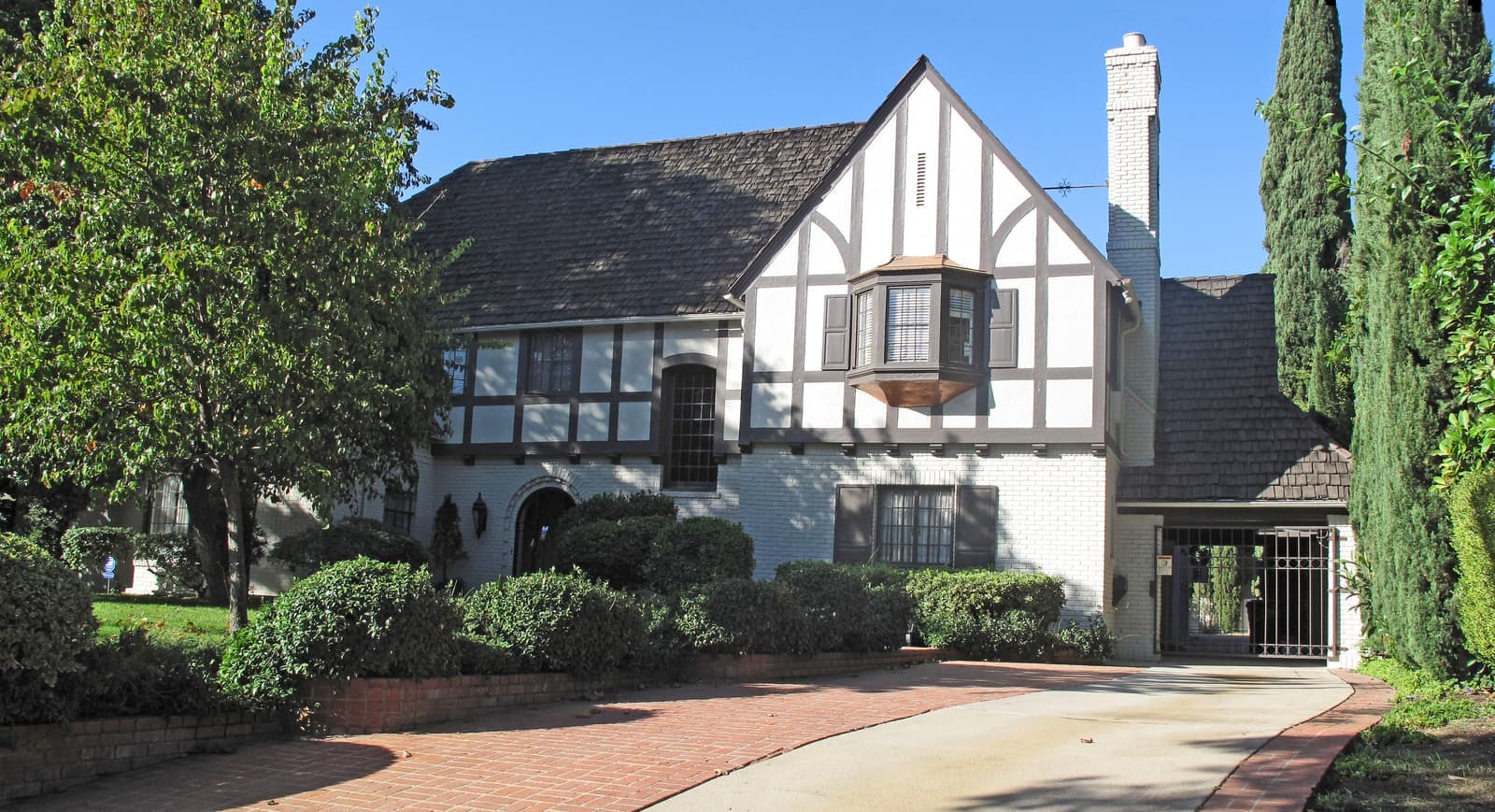
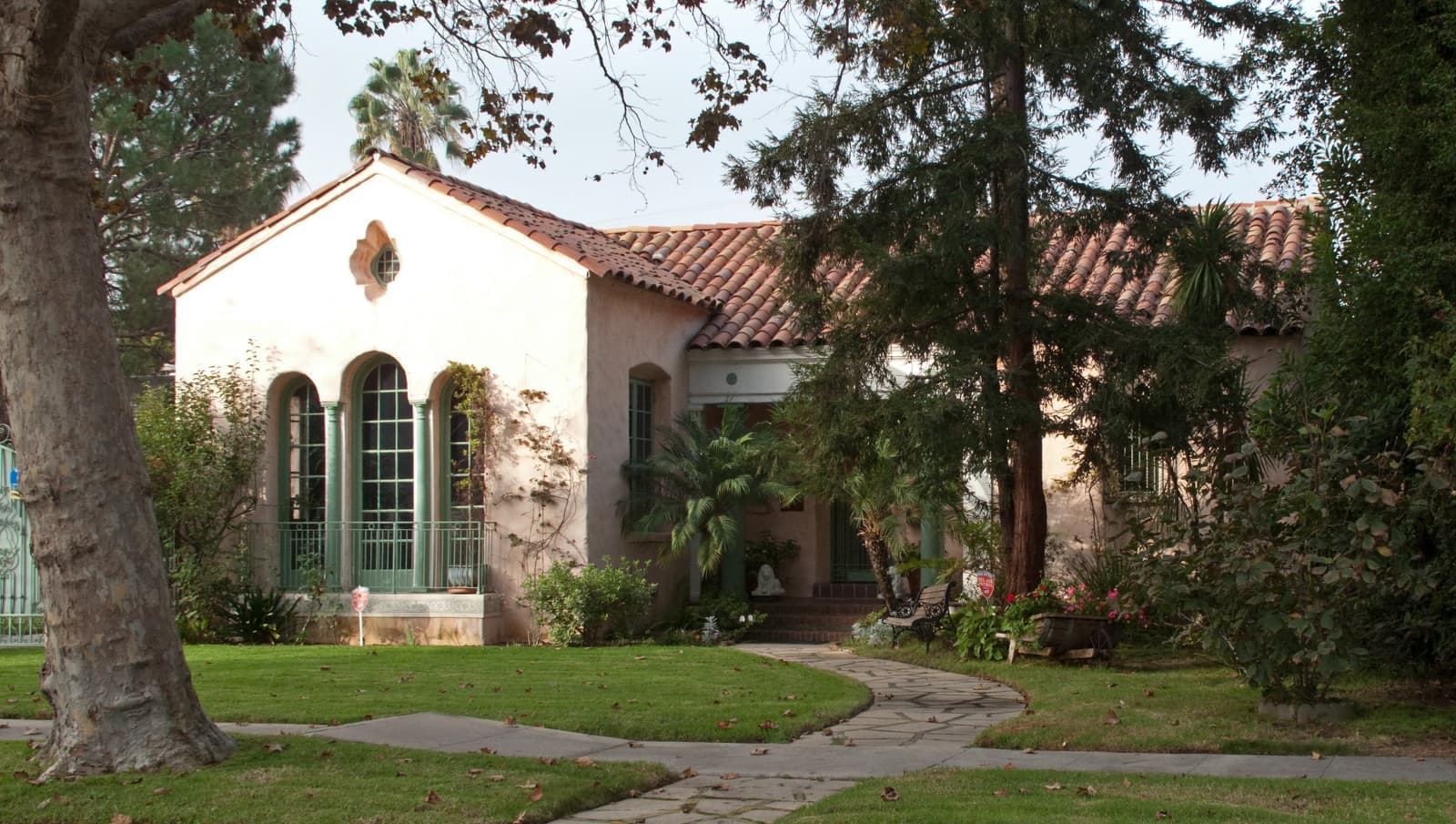
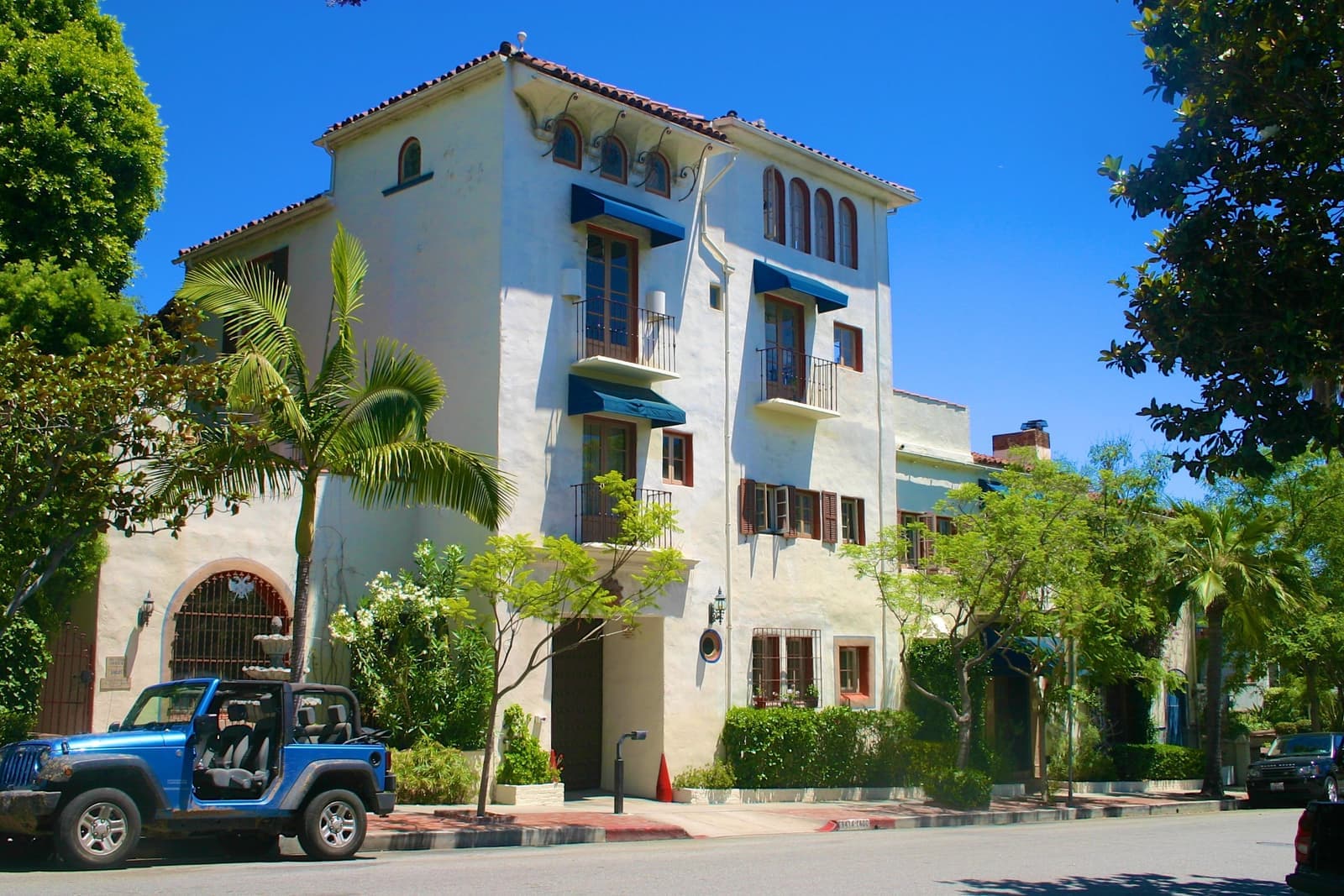
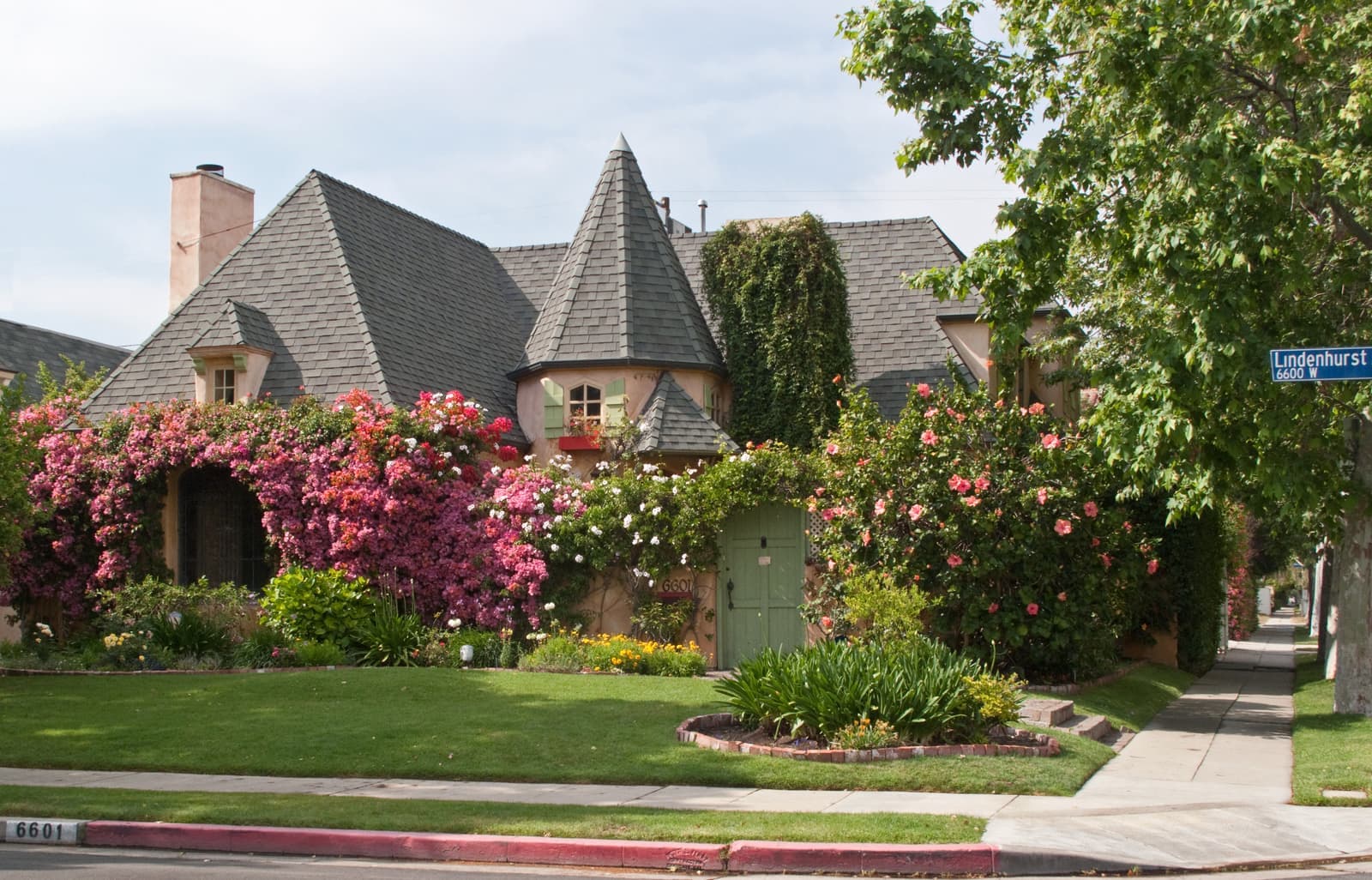
Hancock Park's houses are the reason for the HPOZ. The streets hold Tudor and English Revival houses with steep slate roofs and half-timbering, and Spanish Colonial and Mediterranean houses with tile roofs and courtyards. Monterey Revival houses carry long second-floor balconies, and brick American Colonial Revival houses stand behind white walls and clipped hedges. Most of it went up between 1922 and the mid-1950s, the period the city's survey treats as historic, behind the 50-foot front setbacks that give the streets their lawns.
Lots are large and flat, and the tree canopy is mature. The premium sits on the streets that back onto the Wilshire Country Club, where a rear fence looks over a fairway instead of a neighbor. Because the neighborhood was built to one standard in one decade, condition and originality drive price more than style. A house with its original windows, plaster, and floor plan competes with one that was gutted, and the HPOZ makes the first kind harder to replace.
The entry point is on the edges. Rossmore Avenue carries the pre-war apartment towers, the El Royale and the Ravenswood among them, and condominiums and apartments sit along Wilshire Boulevard. These are outside the single-family core, and the city left the apartment-zoned lots along Rossmore and the commercial lots on Wilshire and Melrose out of the HPOZ. So a Rossmore condo and a June Street Tudor sit under different rules.
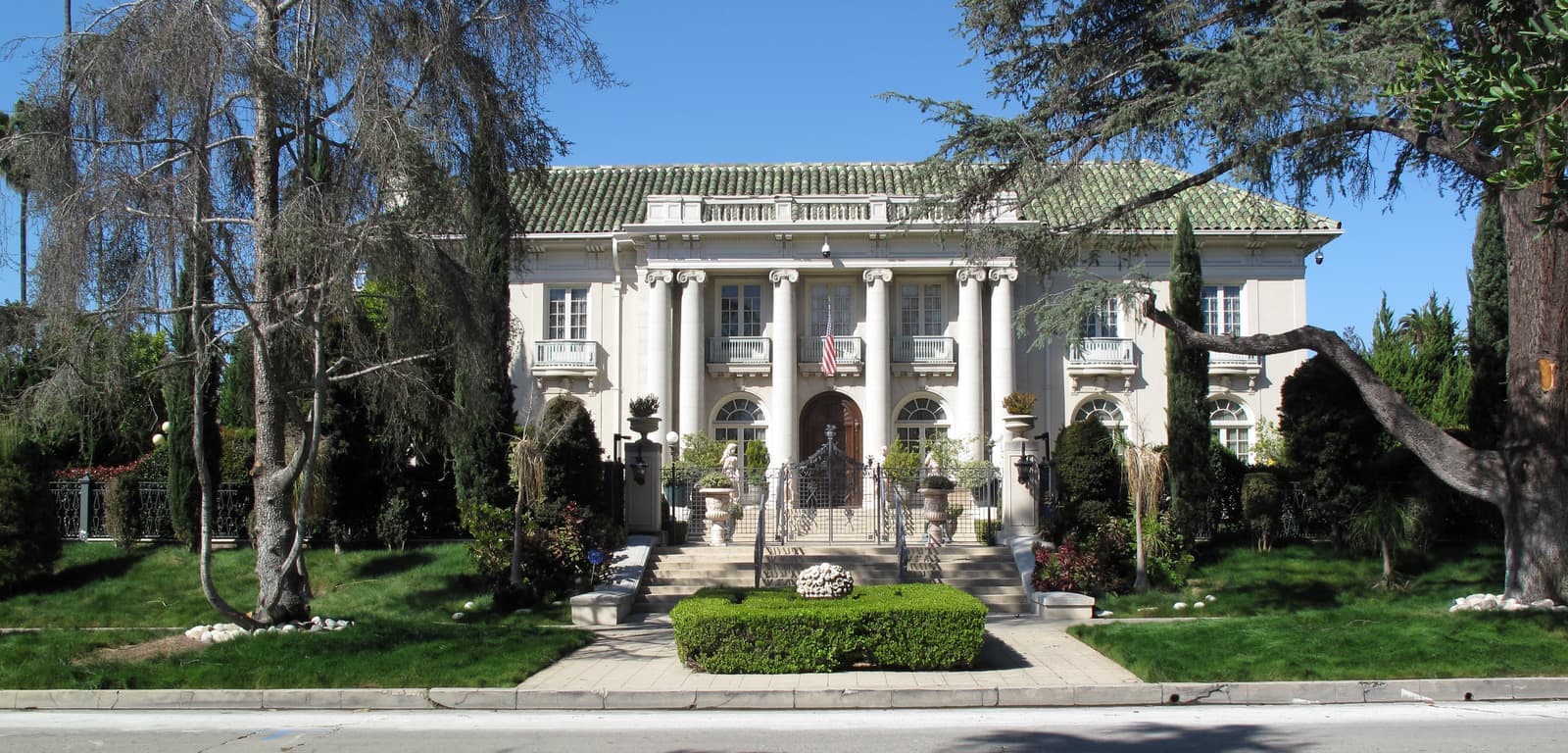
- Tudor, English, Spanish, Mediterranean, Monterey, and Colonial Revival, mostly 1922 to the 1950s
- Large flat lots, 50-foot setbacks, mature trees; fairway lots at the top
- Rossmore towers and Wilshire condos are the entry point and sit outside the HPOZ
Living inside a Historic Preservation Overlay Zone
What the HPOZ reviews, and what it does not.
A Historic Preservation Overlay Zone is the City of Los Angeles' zoning tool for neighborhoods of architectural and historical significance. The ordinance dates from 1979, Angelino Heights became the first HPOZ in 1983, and by 2023 there were 35. Each has its own five-member board and a preservation plan, and exterior work, including landscaping, alterations, additions, and new construction, goes through review. Hancock Park's preservation plan is dated November 8, 2007, and the City Council adopted the zone in 2008. Its board meets on the second and fourth Wednesday of each month at Marlborough School.
In practice the test is visibility. Additions, changes to the street-facing facade, the roofline and roof materials, visible windows and doors, and front-yard fences and walls go to review against the Hancock Park Preservation Plan, which City Planning publishes. The plan exempts more than people expect: interiors, paint color, front-yard planting, rear and side fences and hedges, rear pools and decks, work on the rear facade, and changes to less than 30 percent of the square footage that don't touch the street-visible facade.
Read the plan before you design anything. It's why the neighborhood looks the way it does: 86 percent of the parcels still count as historic contributors. What it costs you is time and a shorter list of exterior changes, and a house with unpermitted alterations can carry a correction order into escrow. Ask City Planning for the property's HPOZ file, and get the permit history on every visible change.

- HPOZ program since 1979; five-member boards; 35 zones by 2023
- Hancock Park adopted 2008; street-visible work is reviewed, paint and interiors are exempt
- Read the Preservation Plan and pull the permit history before writing an offer
Larchmont Village and the neighborhoods next door
The walkable shopping street is one block east of Rossmore, and Windsor Square lies beyond it.
Hancock Park has no shopping street of its own; Larchmont Boulevard, one block east of Rossmore, is where it walks to. The strip between Beverly Boulevard and First Street grew as a streetcar suburb under developer Julius LaBonte, and the name Glenwood became Larchmont in 1912. Chevalier's Books, the oldest independent bookstore in Los Angeles, is there, along with Go Get Em Tiger for coffee, Village Pizzeria, and a weekly farmers market in the lot at 209 North Larchmont. Mapping L.A. treats Larchmont as its own neighborhood, 0.49 square miles from Arden Boulevard east to Western Avenue between Melrose and Beverly.
Windsor Square is the other neighbor. Laid out in 1911 by Robert A. Rowan, it runs from Beverly Boulevard to Wilshire and from Arden Boulevard to Van Ness Avenue, about 1,100 houses in Tudor, Italian Renaissance, and Dutch Colonial Revival by architects including Paul Williams and A.C. Martin. Getty House on Irving Boulevard, a 1921 Tudor that Getty Oil bought in 1959 and offered to the city in 1975, is the official residence of the mayor of Los Angeles. Robert Burns Park at Van Ness and Beverly is the pocket park nearest to Hancock Park's northeast corner.
South of Wilshire, the Ebell of Los Angeles at Lucerne is the landmark: a 1927 Italian Renaissance clubhouse and 1,238-seat theater by Sumner Hunt, Historic-Cultural Monument No. 250, where Amelia Earhart gave her last public speech in 1937. Wilshire Boulevard itself is the boundary with the mid-Wilshire office and apartment corridor and, since May 2026, the D Line subway.
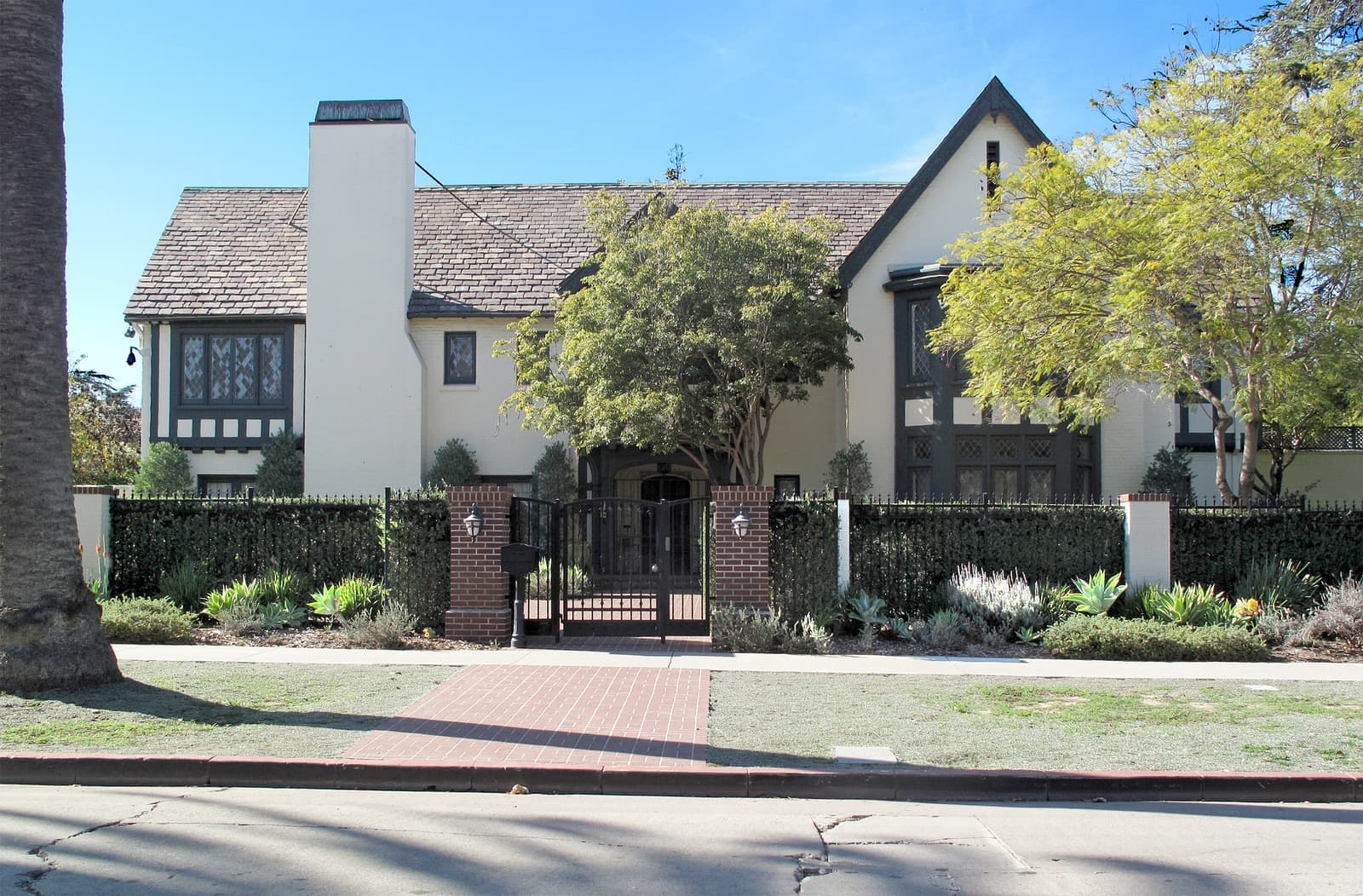
- Larchmont Boulevard: Chevalier's Books, coffee, pizza, farmers market, one block east
- Windsor Square (1911): about 1,100 houses, the mayor's Getty House
- The Ebell (1927) at Wilshire and Lucerne across the southern boundary
What sets prices in Hancock Park
The fairway lots lead, and the HPOZ rewards an original house.
As of September 2026 the middle half of Hancock Park house listings asked about $3 million to $7 million, with a median near $5.8 million, and condos in the Rossmore and Wilshire buildings asked mostly $490,000 to $1.05 million. Inside that range, lot and location set the price. The streets backing onto the Wilshire Country Club lead. The interior blocks between Highland and Rossmore follow, with the larger Tudor and Spanish houses on June, Muirfield, Hudson, and McCadden at the top. Condos and apartments in the Rossmore towers and along Wilshire are the entry point and trade in a different market.
The HPOZ shapes value in both directions. It guarantees that the street a buyer pays for will still look that way, which supports prices across the zone. It also makes a fully original house scarce and a gutted one hard to justify, so period condition carries a premium here that it does not in unprotected neighborhoods. Permitted, reviewed additions add value; unreviewed ones subtract it.
Past the HPOZ file and the permits, I look at the age of the roof and systems on a century-old house, and at whether the lot touches the club.
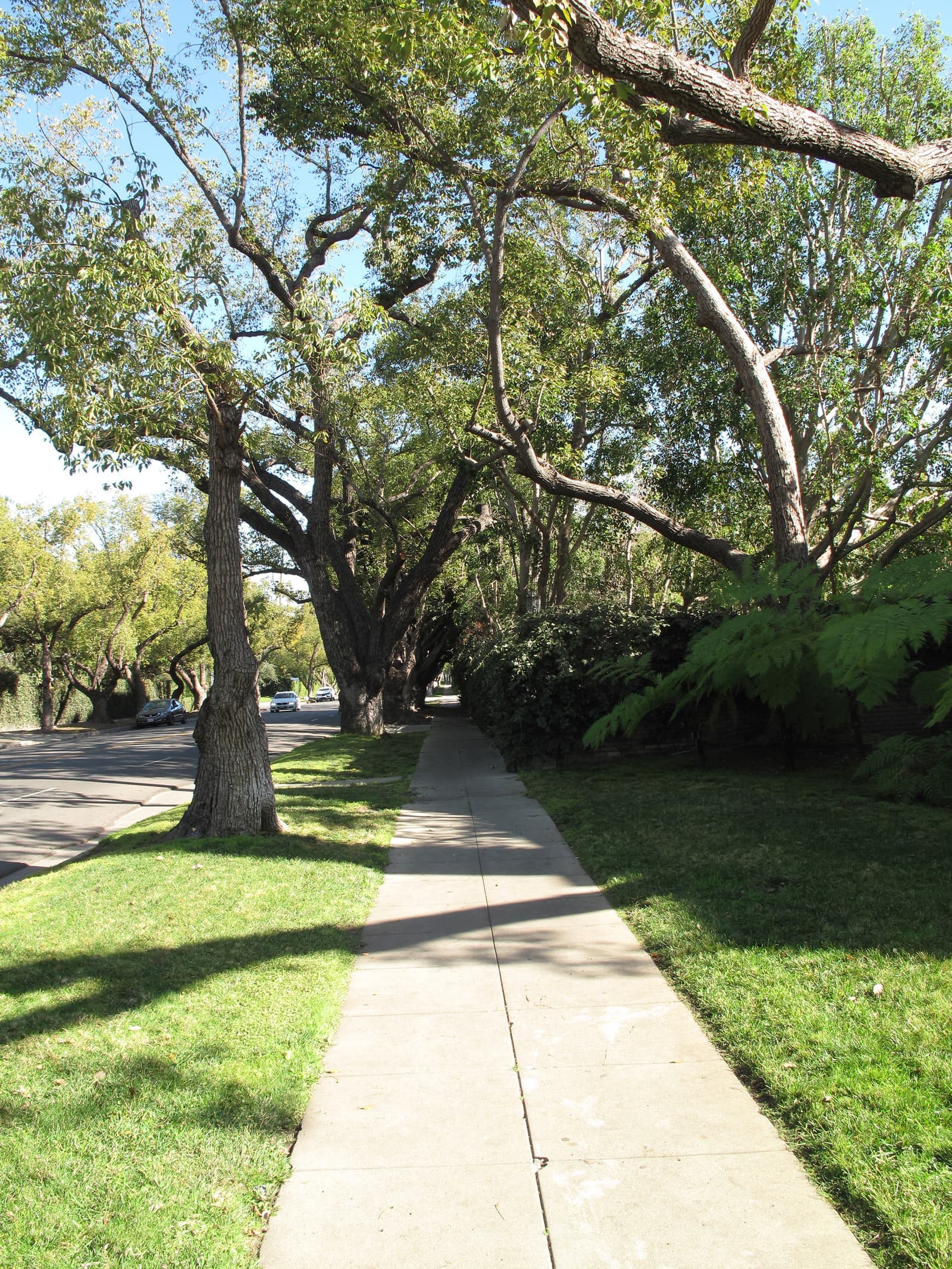
- Houses mostly $3M to $7M asking as of September 2026; fairway lots lead; condos are the entry
- HPOZ supports prices and rewards original condition
- Underwrite the permit history and the systems on a 1920s house
Getting around Hancock Park
Larchmont on foot, and a subway station at the corner since May 2026.
Hancock Park is flat and central. Larchmont Boulevard is a walk from the east side and a short bike ride from the west. Beverly Boulevard, Third Street, Wilshire Boulevard, and Melrose Avenue carry the east-west traffic, and Highland Avenue and Rossmore run north to Hollywood and south toward Koreatown. Street parking on the residential blocks is generally easy; Larchmont's spaces are the tight ones.
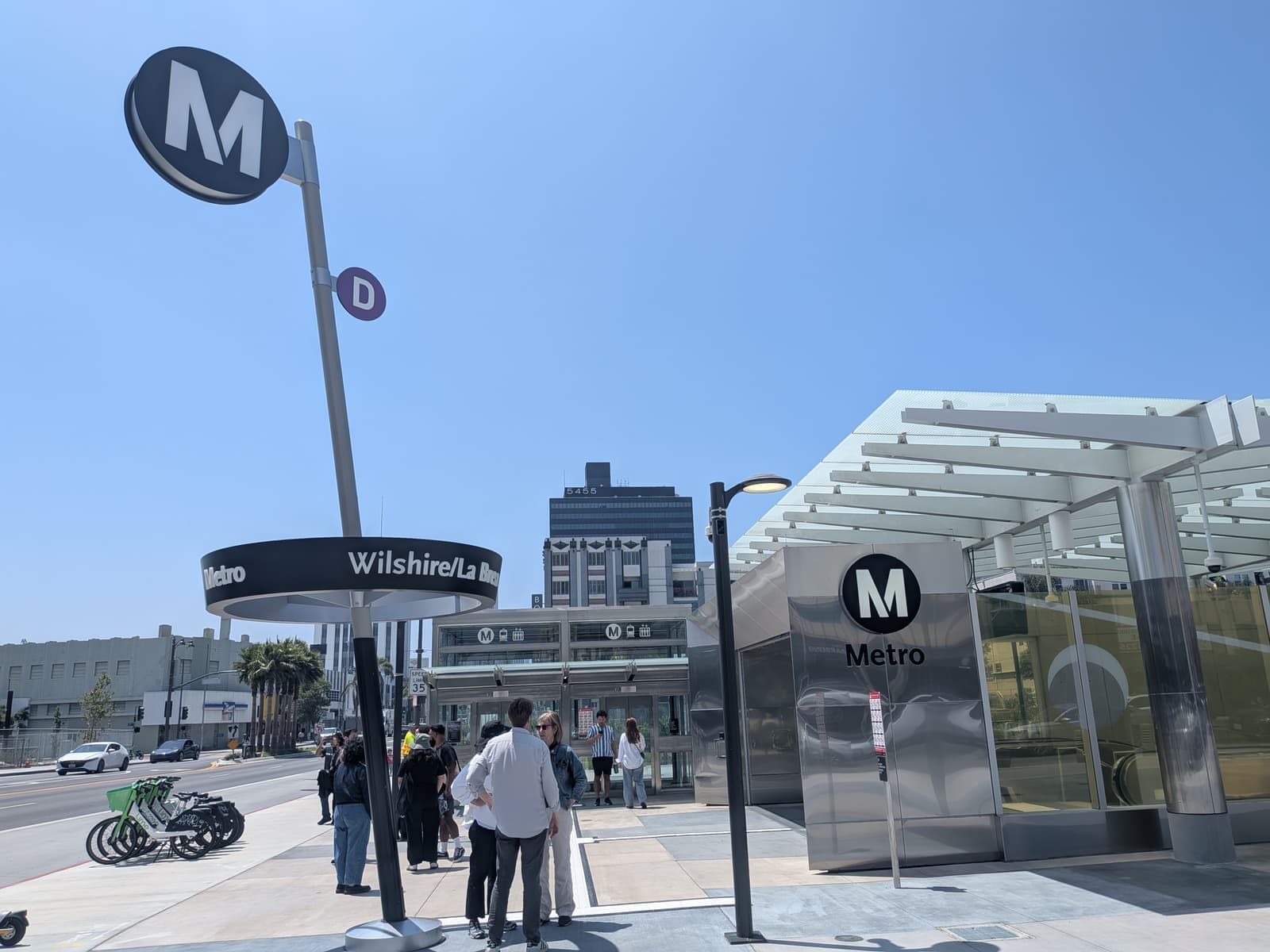
The subway arrived in 2026. The Wilshire/La Brea D Line station at the neighborhood's southwest corner opened on May 8, 2026, the first station west of the line's former terminus at Wilshire/Western. Wilshire/Fairfax and Wilshire/La Cienega opened the same day, trains run every 10 minutes at peak, and Downtown and Koreatown are a direct ride east. The next sections west, to Century City and Westwood, are still under construction.
- Walk or bike to Larchmont; easy residential parking
- Beverly, Third, Wilshire, and Melrose east-west; Highland and Rossmore north-south
- Wilshire/La Brea D Line station open since May 8, 2026
More Hancock Park facts
- 1920Country clubFounded 1919; course by Norman Macbeth
- 1920sSubdividedAdvertised in the Times on June 5, 1921
- 2008HPOZAdopted by the City Council; plan dated Nov 8, 2007
- 86%Historic contributors1,113 of 1,282 parcels in the city's survey
- 50 ftSetbacksRequired from the street in the 1920s plan
- 90004ZIP codeLos Angeles






Rentals in Hancock Park
14 active rentals in the mapped area
$21,000/mo
Single-Family5 bd5 ba3,959 sqft
555 Wilcox Avenue
$8,500/mo
Single-Family4 bd5 ba2,756 sqft
620 N Cherokee Avenue
$15,000/mo
Single-Family4 bd4 ba3,130 sqft
644 N Cherokee Avenue
$25,000/mo
Single-Family5 bd6 ba5,320 sqft
166 N Mccadden Place
$4,300/mo
Condo3 bd3 ba1,779 sqft
4477 Wilshire Blvd #104
$25,000/mo
Single-Family5 bd5 ba4,471 sqft
115 S June Street
$13,700/mo
Single-Family5 bd4 ba3,500 sqft
537 N June Street
$14,500/mo
Single-Family5 bd5 ba3,390 sqft
635 Seward Street
$3,500/mo
Condo1 bd1 ba700 sqft
585 N Rossmore Avenue 506
$15,500/mo
Single-Family4 bd4 ba4,140 sqft
414 N Las Palmas Avenue
$19,846/mo
Condo3 bd3 ba3,000 sqft
450 N Rossmore Avenue 1002
$4,850/mo
Condo1 bd1 ba1,000 sqft
450 N Rossmore Avenue A
$55,000/mo
Single-Family7 bd11 ba11,565 sqft
501 S Hudson Avenue
$4,500/mo
Condo3 bd3 ba1,725 sqft
4477 Wilshire Boulevard 306

Questions & answers
Yes, if you want a large 1920s house on a flat, central street and can live with preservation review. The Tudor, Spanish, Mediterranean, Monterey and Colonial Revival houses sit on deep lots around the Wilshire Country Club, Larchmont Village's shops are one block east, and the Wilshire/La Brea subway station opened at the corner in May 2026. The catch is HPOZ review of street-visible exterior work. There's also no public park inside the boundaries, and houses run mostly $3 million to $7 million as of September 2026. It is outside CAL FIRE's fire hazard zones, and FEMA maps it as minimal flood risk.
Explore near Hancock Park
2.3 mi away · West HollywoodWest HollywoodA 1.89-square-mile city since 1984, wedged between Beverly Hills and Hollywood, where buyers mostly find condos and the east side around Plummer Park is Russian-speakingRead the guide ›2.5 mi awayBeverly GroveThe flat Los Angeles blocks between the Beverly Hills line and Fairfax Avenue, where most of what sells is a boulevard condo or a 1920s duplexRead the guide ›3.4 mi awayHollywood HillsThe canyons and ridges above Sunset, from Laurel Canyon across the Cahuenga Pass to the Hollywood Sign, where every view comes with fire-zone fine printRead the guide ›3.6 mi awayLos FelizThe 1920s hills and flats under Griffith Park, where Frank Lloyd Wright and Richard Neutra built on the slope and the village streets sit belowRead the guide ›4.0 mi awaySilver Lake1920s hillside streets around a city reservoir, between Los Feliz and Echo ParkRead the guide ›4.1 mi away · Beverly HillsTrousdale EstatesMidcentury houses on graded hillside pads above Sunset, held to 14 feet so the views stay openRead the guide ›


Where we check the facts
The facts in this guide (districts, zones, rules) come from the official records below. We re-check them before property tours.
- Los Angeles City Planning: Hancock Park Historic Preservation Overlay Zoneplanning.lacity.govHPOZ boundaries, board, and review process
- Los Angeles City Planning: Hancock Park Historic Resources Survey summary (in the Preservation Plan)planning.lacity.gov1,282 parcels, 1,113 contributors, exemptions list
- Los Angeles City Planning: Hancock Park Preservation Planplanning.lacity.govdesign guidelines for exterior changes
- Hancock Park Homeowners Association: HPOZhancockparkhomeownersassociation.orgdesignation year, house count, visibility rule
- Los Angeles Unified School Districtlausd.orgschool assignments and attendance boundaries
- CAL FIRE Fire Hazard Severity Zones (LRA 2025), LAFD map servicefiregis.lafd.orgno fire hazard zone at sampled points
Show all 10 sourcesShow fewer
- FEMA Flood Map Service Centermsc.fema.govflood zones by address
- Los Angeles Metro: D Linemetro.netWilshire/La Brea station service
- Wikipedia: Hancock Park, Los Angelesen.wikipedia.orgNat King Cole, the Wilshire subway fight, Orthodox community, monuments
- CRMLSgo.crmls.orglisting and market data
Photo credits (8)
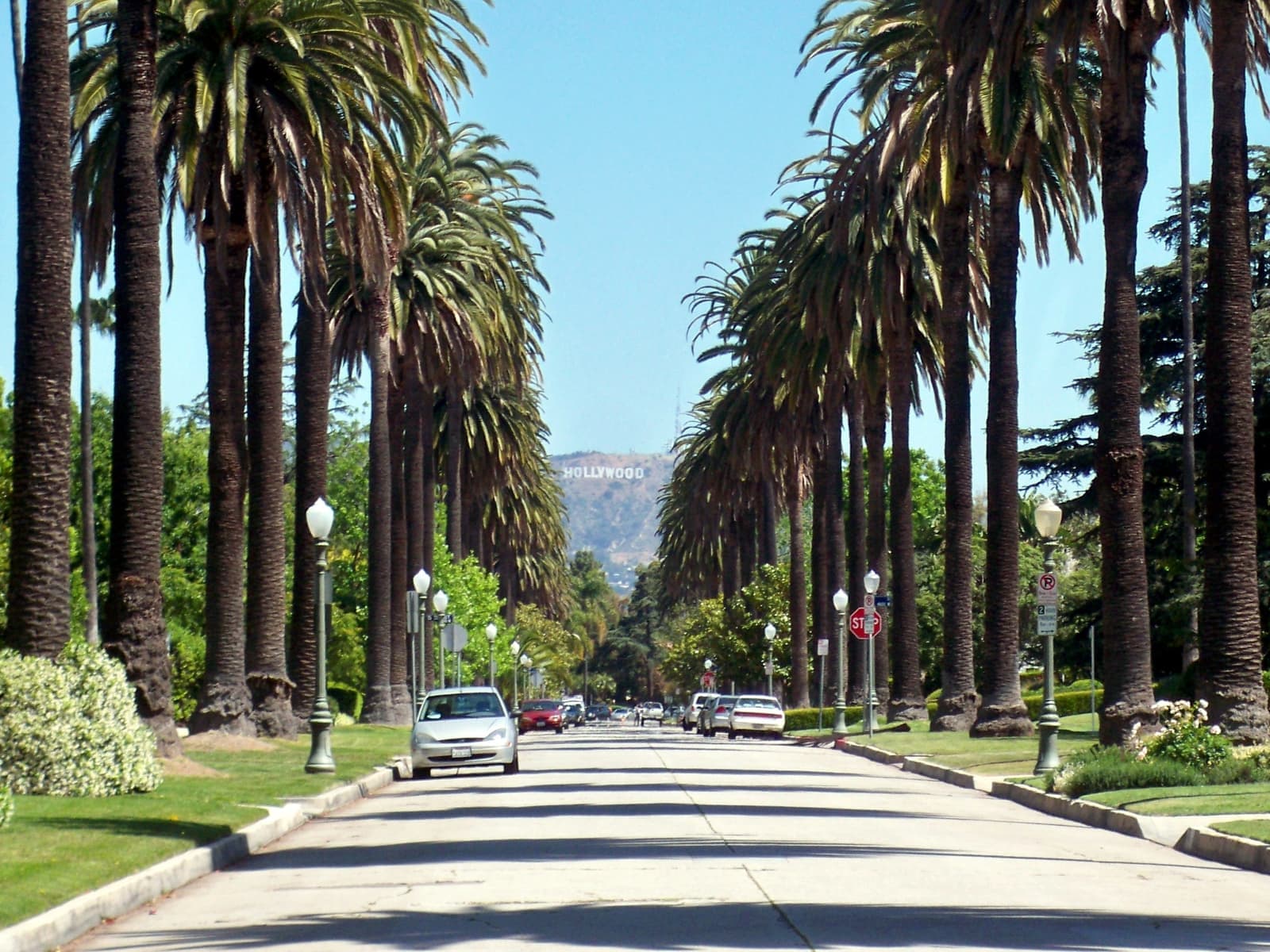
- Palms on Windsor Boulevard in Windsor Square next door, with the Hollywood Sign aheadJoseph Plotz, CC BY-SA 3.0
- A Tudor Revival house set back behind hedges on North June StreetDowntowngal, CC BY-SA 4.0
- A Spanish Revival house with arched windows at the north end of Wilcox AvenueDowntowngal, CC BY-SA 3.0
- The Chandler estate on Lorraine Boulevard in Windsor Square, next doorDowntowngal, CC BY-SA 4.0
- A Spanish Revival house on North Las Palmas Avenue in Hancock ParkJengod, CC BY-SA 4.0
- Getty House, the mayor's official residence, in Windsor Square next doorDowntowngal, CC BY-SA 4.0
- Camphor trees shading the sidewalk along Sixth Street in Hancock ParkDowntowngal, CC BY-SA 4.0
- The Wilshire/La Brea subway entrance near Hancock Park's southwest cornerECTran71, CC BY-SA 4.0