




Sherman Oaks asks 65% more than Los Angeles as a whole.
Los Angeles, California · Neighborhood guide
Sherman Oaks
Hills south of Ventura Boulevard, ranch-house flats north of it, and the 405 down the west side

Median askingSherman Oaks$1.98M155 for sale
See homesSherman Oaks, in short.
Sherman Oaks is a San Fernando Valley neighborhood in the City of Los Angeles, about 9 square miles between the 405 and Coldwater Canyon, from Mulholland Drive north to Burbank Boulevard. Moses Sherman began subdividing his 1,000 acres here in 1927. Ventura Boulevard splits it in two. The hills to the south are almost all single-family houses on lots around 9,700 square feet, and nearly all of them fall in CAL FIRE's 2025 Very High fire hazard zone. The flats to the north are mostly 1940s and 1950s houses on lots around 6,800 square feet, with condo buildings along the bigger streets. As of September 2026, most houses for sale asked about $2 million to $3.65 million.
Sherman Oaks by the numbers.
- 40%Homeowner-occupiedoccupied homes
- 64%Bachelor's degree or higherage 25+
- $6,995/moMedian asking rentCurrent MLS listings
- $115,840Median household income
- 40.5Median age
- 1927Sherman's land subdividedFrom his 1,000 acres of the 1909 purchase
Sources: U.S. Census Bureau, ACS 5-year 2019–2023; neighborhood facts compiled by The Slava House.
A Valley neighborhood split by Ventura Boulevard
Where Sherman Oaks starts and stops, and how it got its name.
Sherman Oaks is in the City of Los Angeles, in the southern San Fernando Valley. The Sherman Oaks Neighborhood Council describes it as Mulholland Drive on the south, Burbank Boulevard on the north, the 405 on the west, and Coldwater Canyon on the east up to the 101. The Los Angeles Times' Mapping L.A. project puts it at 9.15 square miles, with 61,166 residents in the 2000 census, and notes that its density is among the lowest in the city.
The name comes from Moses H. Sherman. In 1909 a syndicate called the Los Angeles Suburban Homes Company, with Sherman on its board, bought 47,500 acres of the Valley. Sherman kept about 1,000 acres around what's now Ventura and Sepulveda boulevards, and that land was subdivided starting in 1927. The Valley had already voted to join Los Angeles in 1915 to get aqueduct water. Hazeltine Avenue is named for Sherman's daughter.
The borders have moved since. The city's SurveyLA report notes that parts of Van Nuys were re-identified as Sherman Oaks in 1991 and 2009. Neighbors are Studio City to the east, Encino to the west across the 405, Van Nuys to the north, and Bel Air and Beverly Crest over the hill.
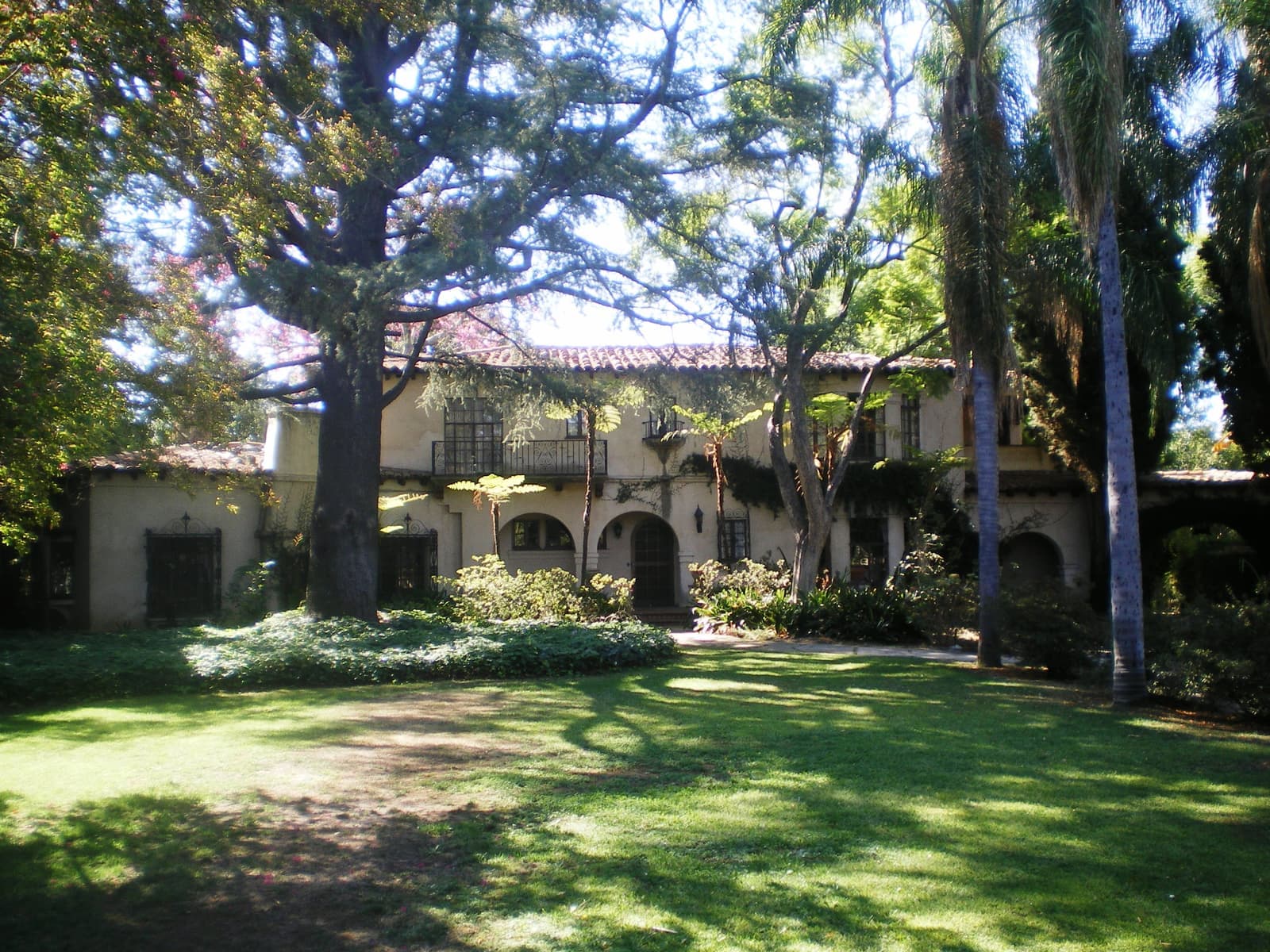
- About 9 square miles from Mulholland to Burbank Boulevard, the 405 to Coldwater
- Named for Moses Sherman; his land was subdivided starting in 1927
- Parts of Van Nuys became Sherman Oaks in 1991 and 2009
Live from the MLS
Sherman Oaks compared with all of Los Angeles.
A square foot in Sherman Oaks costs 12% more than across Los Angeles.
Sherman Oaks$742
All of Los Angeles$660
Listings in Sherman Oaks have been on the market about as long as across Los Angeles.
What’s for sale
59% of the homes for sale in Sherman Oaks are single-family houses.
- Single-family59%91 homes
- Condo34%52 homes
- Multi-unit5%8 homes
- Townhouse3%4 homes
Homes for sale in Sherman Oaks are 24% bigger than across Los Angeles.
Sherman Oaks2,301 sq ft
All of Los Angeles1,856 sq ft
Each card sets the median in Sherman Oaks against all of Los Angeles. The arrow on a card lists every Los Angeles neighborhood we cover. Asking prices for homes on the market right now inside each mapped area, not sale prices. Updated October 4, 2026, 1:00 AM PT
Homes for sale in Sherman Oaks
155 active listings in the mapped area
$2,195,000
Single-Family3 bd2 ba2,082 sqft
15337 Stonewood Terrace
$5,750,000
Single-Family3 bd3 ba5,451 sqft
3681 Alomar Drive
$2,795,000
Single-Family4 bd3 ba2,491 sqft
3617 Cody Road
$1,300,000
Single-Family2 bd2 ba1,131 sqft
4480 Colbath Avenue
$769,000
Condo2 bd2 ba1,700 sqft
15150 Dickens 203
$2,395,000
Single-Family3 bd2 ba2,301 sqft
3523 Beverly Ridge Drive
$2,249,000
Single-Family4 bd4 ba2,862 sqft
4755 Burnet
$3,595,000
Single-Family5 bd5 ba4,674 sqft
14985 Valley Vista Boulevard
$2,699,000
Single-Family4 bd3 ba3,000 sqft
3430 Loadstone Drive
$3,275,000
Single-Family6 bd7 ba3,719 sqft
4437 Calhoun Avenue
$3,745,000
Single-Family6 bd7 ba4,700 sqft
4273 Murietta Avenue
$2,299,000
Single-Family3 bd3 ba2,384 sqft
13201 Cheltenham
$7,490,000
Multi-Family19 bd30 ba20,182 sqft
14065 Moorpark Street
$3,250,000
Single-Family4 bd3 ba3,396 sqft
3851 Beverly Ridge Drive
$375,000
Condo1 bd1 ba630 sqft
4401 Sepulveda Boulevard 104
$1,649,000
Multi-Family5 bd3 ba2,484 sqft
14525 Dickens Street

Still deciding? Ask me.
I’m a Realtor based in Long Beach, and Los Angeles is one of the cities I work most. Tell me what you’re after in Sherman Oaks and I’ll help you get there.
Slava Ploshkin · DRE #02323623English and Russian · How I work in Los Angeles
Where to eat, shop, and explore in Sherman Oaks
The restaurants, cafes, shops, parks, and landmarks that give Sherman Oaks its everyday character, most within a short walk.
8 places
Pick one and I’ll show you where it is.
Shopping40 min walk
The open-air center at Ventura and Sepulveda, with a Regal cinema, restaurants, and offices. The mall scenes in Fast Times at Ridgemont High were shot here after hours.
Shopping25 min walk
The mall on Riverside Drive, opened in 1962 as one of the Valley's first shopping centers.
Restaurant25 min walk
The Mexican restaurant at 13301 Ventura Boulevard, open since 1956, under a sign that dates from 1958.
Park35 min walk
The big city park at 14201 Huston Street, with a public pool, lighted tennis courts, and pickleball.
Recreation50 min walk
The city-run mini golf, arcade, and batting cages at 4989 Sepulveda Boulevard, next to the 405.
Landmark15 min walk
The public library branch at 14245 Moorpark Street, near Van Nuys Boulevard.
Park25 min walk
A 20-acre open-space preserve in the hills at the top of Dixie Canyon.
Park20 min walk
A small public overlook on Mulholland Drive above the Sherman Oaks hills, looking north across the Valley.
Hillside homes and postwar ranch houses
About 4,800 houses sit south of Ventura and 6,800 north of it, and they're two different housing markets.
Ventura Boulevard is the line. North of it the land is flat and laid out on a grid, and south of it the streets start to curve and climb into the foothills of the Santa Monica Mountains. The city's historic survey says the hills and canyons south of Ventura are developed almost exclusively with single-family houses, while the courtyard apartments and stucco boxes sit along the major streets in the flats. The concrete channel of the Los Angeles River cuts through the flats too.
In the county parcel records for our Sherman Oaks outline, about 4,800 houses sit south of Ventura and about 6,800 north of it. The hill lots are bigger, with a median around 9,700 square feet, and the survey lists hillside houses by Richard Neutra, R.M. Schindler, John Lautner, Edward Fickett, and Ray Kappe. The flats are more uniform: a median lot of about 6,800 square feet, and about 70% of those houses have a recorded build year between 1940 and 1959. Builders like Mellenthin and Weinstock put up whole tracts of ranch houses here in the 1950s.
The survey also singled out a few streets for their history. A stand of oak trees still screens Ventura Boulevard from the houses between Fulton and Van Noord avenues. The 1930s houses along Stansbury Avenue and the 1948 to 1950 houses on Nagle, Varna, and Sarah were flagged as possible historic districts. After the 1994 Northridge earthquake, rebuilt chimneys became common across north Sherman Oaks, so ask about the chimney and the foundation on any older house.
There are also about 3,800 condo units, most of them in the flats, and about 1,160 apartment parcels holding roughly 15,000 units. About three-quarters of those apartment buildings have a recorded build year of 1978 or earlier, which matters for rent stabilization if you buy one.
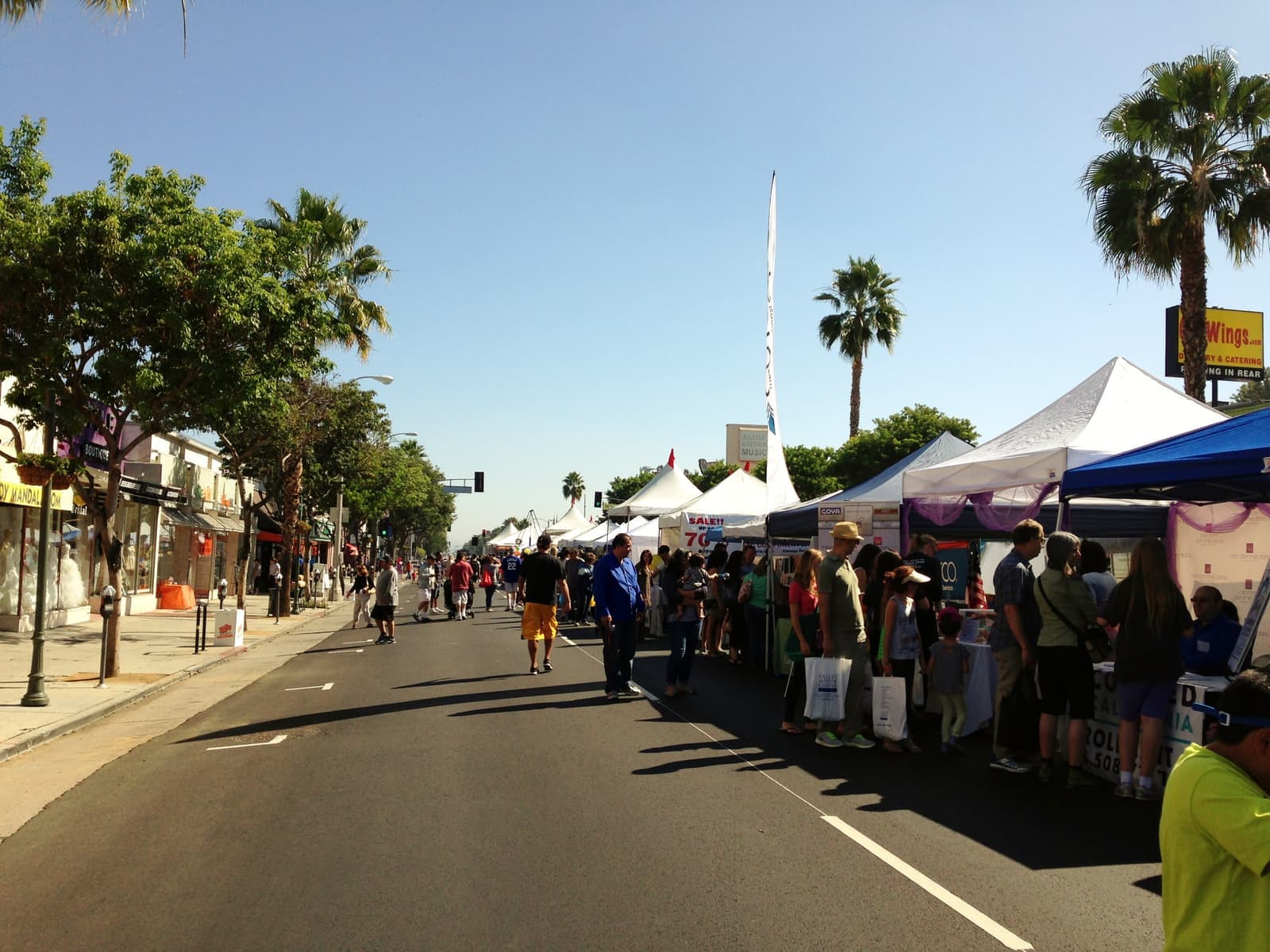
- Hills: about 4,800 houses, median lot about 9,700 square feet
- Flats: about 6,800 houses, mostly 1940 to 1959, median lot about 6,800 square feet
- Condos and apartments line the bigger streets north of Ventura
Living next to the 405 and the 101
What the interchange means for your commute, and the train that's planned.
The 405 and the 101 meet at the northwest corner of Sherman Oaks, and the numbers are large. Caltrans' 2023 counts show about 282,000 vehicles a day on the 405 just south of the junction and about 223,000 just north of it, and about 267,000 to 279,000 a day on the 101 at Van Nuys Boulevard. A 2015 national study by the American Highway Users Alliance ranked the 101 from Sepulveda to Laurel Canyon as the seventh-worst bottleneck in the country, and the 405 from Burbank to Ventura boulevards as 29th.
The Sepulveda Pass is the other half of the story. Metro says more than 400,000 trips cross the pass each day and that a typical commuter loses 59 hours a year to delay there. The state and Metro spent about $1 billion widening the 405 through the pass, including the 53-hour Carmageddon closure in July 2011, and the new 10-mile carpool lane opened on May 23, 2014.
A rail line is planned but not close. On January 22, 2026, Metro's board picked an underground heavy-rail line through the Sepulveda Pass, running from the Van Nuys Metrolink station to the E Line on the Westside. Metro estimates the cost at $24.2 billion in 2023 dollars, Valley station locations are still being refined, and there's no construction timeline yet.
In practice, where you live inside Sherman Oaks decides how much of this you feel. Blocks near the on-ramps can see cut-through traffic at rush hour, and houses right along the freeways hear them. If you work on the Westside, drive your commute at the hour you'd actually do it before you buy.
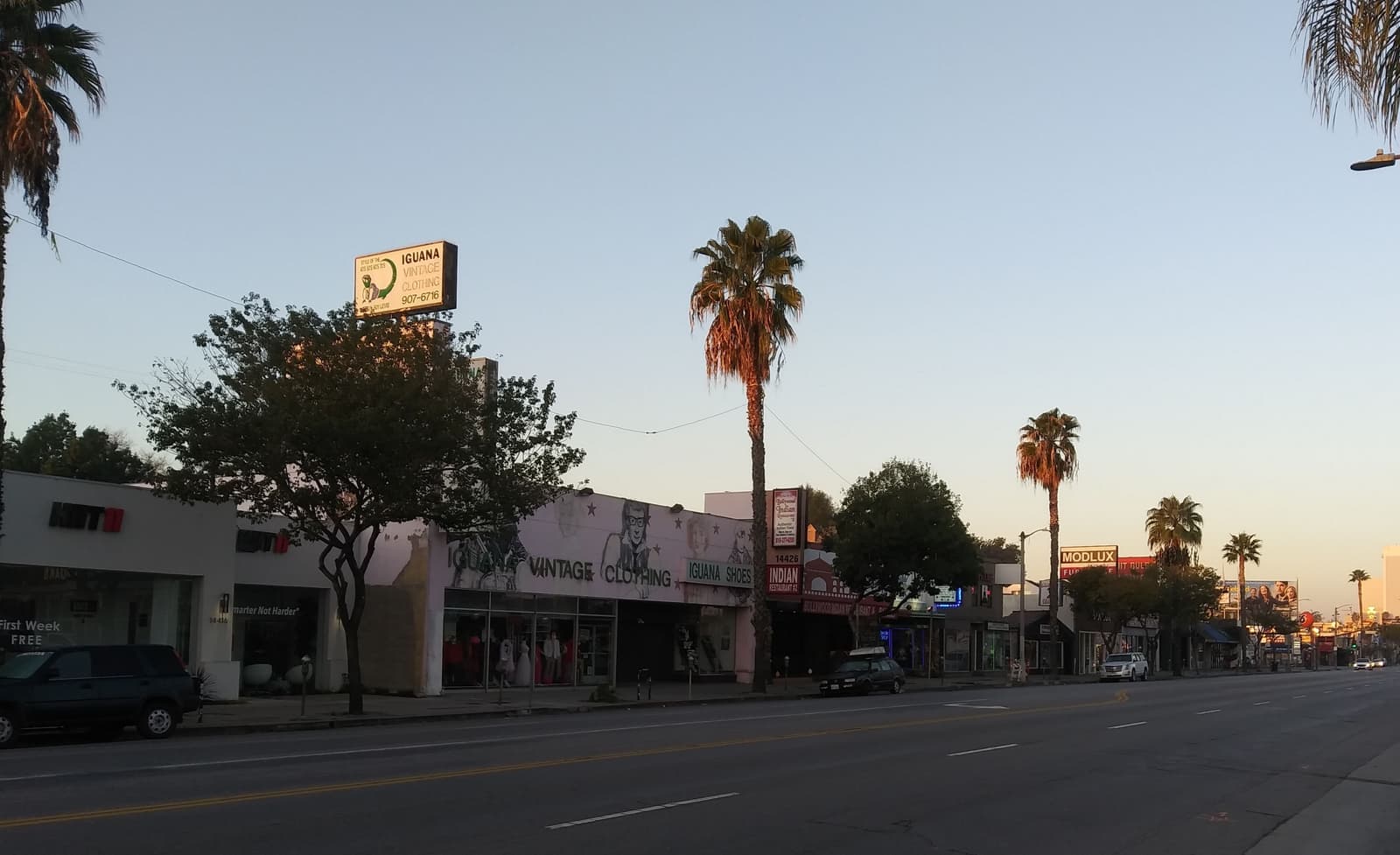
- About 282,000 vehicles a day on the 405 just south of the 101 (Caltrans, 2023)
- More than 400,000 daily trips over the Sepulveda Pass
- Metro chose an underground rail line in January 2026; no timeline yet
Ventura Boulevard and the parks
Most errands and dinners happen on Ventura, and the Sepulveda Basin across the 405 has room to run.
Ventura Boulevard is the main street, and the rules for what gets built on it just changed. The Ventura/Cahuenga Boulevard Corridor Specific Plan dates from 1991, and the city adopted an updated plan, with its own Sherman Oaks section, that took effect on March 14, 2026.
The Sherman Oaks Galleria at Ventura and Sepulveda is now an open-air center with offices, restaurants, and a 16-screen Regal cinema that took over the old ArcLight in 2021. The mall scenes in Fast Times at Ridgemont High were filmed there after hours. Westfield Fashion Square on Riverside Drive opened in 1962 as one of the Valley's first malls. Casa Vega has served Mexican food on Ventura since 1956, under a sign that dates from 1958.
For open space, Van Nuys Sherman Oaks Park on Huston Street has a public pool, lighted tennis courts, and pickleball, and Sherman Oaks Castle Park on Sepulveda has mini golf and batting cages. Dixie Canyon Park is a 20-acre preserve in the hills, and the Sepulveda Basin, with Lake Balboa, is just across the 405.

- A new Ventura Boulevard specific plan took effect March 14, 2026
- Casa Vega since 1956, Fashion Square since 1962
- A public pool at Van Nuys Sherman Oaks Park, and Lake Balboa across the 405
Which schools serve Sherman Oaks
One school with Sherman Oaks in its name isn't here, and magnet seats run on points.
Sherman Oaks is in the Los Angeles Unified School District, and several of its neighborhood schools are affiliated charters. That means they're district schools that follow district policy with some extra flexibility. Dixie Canyon Community Charter, Riverside Drive Charter, and Sherman Oaks Elementary Charter are the elementary schools, and Louis Armstrong Middle School on Sunnyslope Avenue, which the board renamed from Millikan in February 2022, is an affiliated charter with performing arts and social and gender equity magnets. Independent charters are separate and aren't part of the district's Choices application.
Nearby magnets draw a lot of Sherman Oaks families. Van Nuys High has medical, science and math, and performing arts magnets, and Kester Avenue Elementary, a Richard Neutra design from 1951, has a gifted magnet for grades 1 to 5. One name confuses people: Sherman Oaks Center for Enriched Studies, grades 4 to 12, is actually on Erwin Street in Reseda, about 6 miles west.
Magnet seats run on points. LAUSD gives 12 points for moving up from a magnet in the same program, 4 points a year on a waiting list up to 12, 4 points if your resident school is predominantly Hispanic, Black, Asian, and other non-Anglo, 4 if it's overcrowded, and 3 points for a sibling. If you turn down a magnet offer, you lose all your waiting-list points. The on-time window for the 2027-28 school year runs October 1 to November 6, 2026.
Private options inside Sherman Oaks include the Buckley School on Stansbury Avenue and Notre Dame High School on Riverside Drive. Assignments change, so run the address through LAUSD's school finder before you buy.
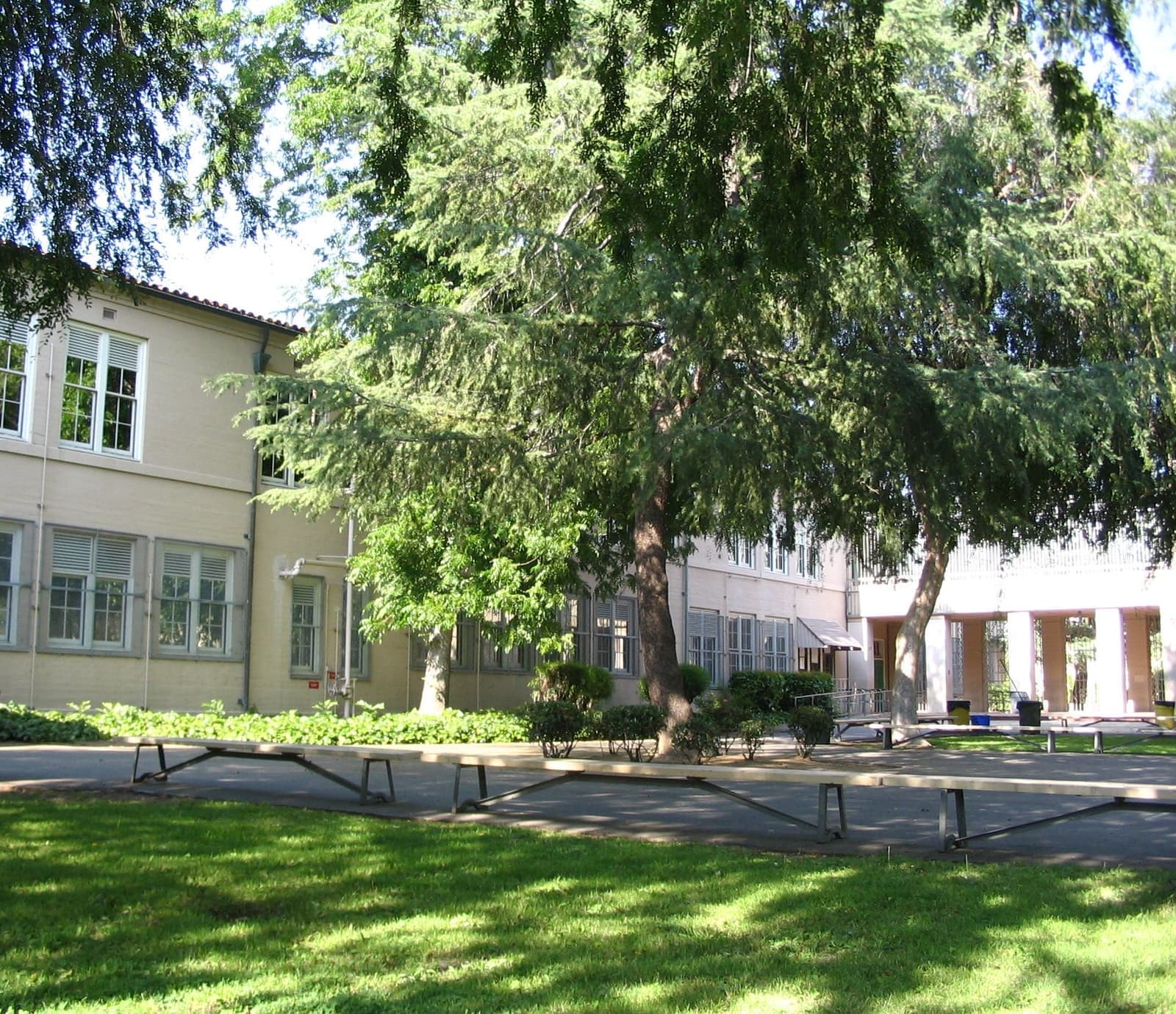
- Dixie Canyon, Riverside Drive, and Sherman Oaks Elementary are affiliated charters
- Millikan is now Louis Armstrong Middle School; SOCES is in Reseda, not Sherman Oaks
- 2027-28 magnet applications are due between October 1 and November 6, 2026
Brush clearance and hillside rules
What owning above Ventura Boulevard asks of you every year.
The fire map follows the Boulevard. In our count, about 4,100 of Sherman Oaks' roughly 11,600 houses sit in the city's current Very High Fire Hazard Severity Zone. CAL FIRE's 2025 map, which the city has to adopt and isn't allowed to lower, raises that to about 4,800. That's nearly every house south of Ventura. The flats stay outside it, apart from a thin strip of Moderate and High blocks just north of the boulevard.
In that zone, the Los Angeles Fire Department requires brush clearance within 200 feet of any structure and within 10 feet of combustible fences and roadways. Its 2026 inspections began on May 1, and the city charges a $31 fee per parcel. On Red Flag days, parking is banned on posted hillside streets and cars get towed. State law also now calls for an ember-resistant zone within 5 feet of the house, with details set by the Board of Forestry, so ask where those rules stand when you're pricing a remodel.
Building in the hills has its own rules. Lots the city maps as Hillside Area fall under the Baseline Hillside Ordinance from 2011, updated in 2017, which limits floor area, height, and grading by slope. Near the top, the Mulholland Scenic Parkway Specific Plan, adopted in 1992, covers an inner corridor 500 feet from the road and an outer corridor out to half a mile, and additions over 900 square feet in its area go to a design review board.
Then there's insurance. The California FAIR Plan, the state's insurer of last resort, covers fire only, caps a home at $3 million, and was approved for an average 29.1% rate increase starting October 15, 2026. South of Ventura, I want a written quote on the exact address before we write anything.

- About 4,800 houses, nearly all south of Ventura, in CAL FIRE's 2025 Very High zone
- Brush clearance within 200 feet; 2026 inspections started May 1
- Baseline Hillside Ordinance and the Mulholland plan shape what you can build
What to check before you buy in Sherman Oaks
September 2026 asking prices, north and south of Ventura.
On September 25, 2026, our Sherman Oaks outline had 245 active listings. South of Ventura, the 73 houses for sale mostly asked between about $2.1 million and $4.3 million, and the top tenth asked more than $7.9 million. North of Ventura, the 64 houses mostly asked between about $1.8 million and $3.3 million, topping out near $5 million. The 86 condos were the entry point, most of them asking between about $460,000 and $830,000.
In the hills I start with fire and slope. That means the fire zone on the city and CAL FIRE maps, brush clearance history, a written insurance quote, and the permit history for any additions, retaining walls, and pools, because unpermitted hillside work is expensive to fix. I also check whether the lot falls under the Mulholland plan.
In the flats I look at the house itself: foundation and chimney work after 1994, the roof and the original plumbing on a 1950s ranch, and how close the lot sits to the 405, the 101, or the Van Nuys and Sepulveda on-ramps. On any condo I read the HOA's budget and reserve study.

- Hills: most houses asked about $2.1 million to $4.3 million (September 25, 2026)
- Flats: most houses asked about $1.8 million to $3.3 million
- Condos: most asked about $460,000 to $830,000
More Sherman Oaks facts
- 9.15 sq miAreaMapping L.A. boundaries
- ~9,700 sq ftTypical lot, hillsCounty parcel median south of Ventura
- ~6,800 sq ftTypical lot, flatsCounty parcel median north of Ventura
- ~4,800Houses in CAL FIRE's 2025 Very High zoneNearly every house south of Ventura
- 282,000Daily traffic, 405 at the 101Caltrans 2023 count, south of the junction



Rentals in Sherman Oaks
86 active rentals in the mapped area
$2,300/mo
Apartment1 bd1 ba600 sqft
13503 Moorpark
$19,995/mo
Single-Family6 bd7 ba5,622 sqft
14806 Sutton Street
$1,590/mo
Apartment1 ba500 sqft
4277 1/2 Colbath Avenue
$2,500/mo
Apartment2 bd1 ba860 sqft
4555 HAZELTINE Avenue 4
$2,950/mo
Single-Family1 bd1 ba847 sqft
4615 1/2 Saloma Avenue
$4,500/mo
Townhouse3 bd3 ba1,410 sqft
4442 Vista Del Monte Avenue 4
$3,500/mo
Condo2 bd2 ba1,261 sqft
14144 Dickens Street 117
$25,000/mo
Single-Family6 bd8 ba8,970 sqft
14465 MULHOLLAND Drive
$25,000/mo
Single-Family6 bd9 ba8,000 sqft
14475 Mulholland Dr. Drive
$9,800/mo
Single-Family2 bd3 ba2,036 sqft
3944 Cody Road
$3,550/mo
Condo2 bd2 ba1,100 sqft
4724 Kester Ave #308
$17,000/mo
Single-Family3 bd3 ba2,012 sqft
13016 Greenleaf Street
$3,795/mo
Condo2 bd3 ba1,480 sqft
4533 Vista Del Monte 104
$15,950/mo
Single-Family2 bd3 ba2,052 sqft
14513 Mulholland Drive
$2,950/mo
Condo2 bd2 ba1,177 sqft
4637 Willis Avenue 108
$8,499/mo
Single-Family5 bd4 ba2,507 sqft
4712 Burnet Avenue
Questions & answers
Sherman Oaks is in the southern San Fernando Valley, inside the City of Los Angeles. It runs from Mulholland Drive north to Burbank Boulevard, and from the 405 east to Coldwater Canyon. The Los Angeles Times' Mapping L.A. project puts it at 9.15 square miles, with Studio City to the east, Encino to the west, and Van Nuys to the north.
Explore near Sherman Oaks
4.0 mi away · Beverly HillsTrousdale EstatesMidcentury houses on graded hillside pads above Sunset, held to 14 feet so the views stay openRead the guide ›5.0 mi awayBrentwoodCanyon houses above Sunset and big-lot streets below it, on the west side of the 405Read the guide ›5.1 mi away · Beverly HillsThe Beverly Hills FlatsCurving 1906 streets between Santa Monica Boulevard and Sunset, each planted with its own kind of treeRead the guide ›5.5 mi awayHollywood HillsThe canyons and ridges above Sunset, from Laurel Canyon across the Cahuenga Pass to the Hollywood Sign, where every view comes with fire-zone fine printRead the guide ›5.7 mi away · West HollywoodWest HollywoodA 1.89-square-mile city since 1984, wedged between Beverly Hills and Hollywood, where buyers mostly find condos and the east side around Plummer Park is Russian-speakingRead the guide ›6.2 mi awayBeverly GroveThe flat Los Angeles blocks between the Beverly Hills line and Fairfax Avenue, where most of what sells is a boulevard condo or a 1920s duplexRead the guide ›


Where we check the facts
The facts in this guide (districts, zones, rules) come from the official records below. We re-check them before property tours.
- LA City Planning: SurveyLA, Van Nuys and North Sherman Oaksplanning.lacity.gov1909 purchase, 1927 subdivision, flats housing, boundary changes
- LA City Planning: SurveyLA, Sherman Oaks and Studio Cityplanning.lacity.govhills vs flats, architects, oak buffer, Casa Vega sign
- Sherman Oaks Neighborhood Councilshermanoaksnc.orgboundaries
- Los Angeles Times: Mapping L.A., Sherman Oaksmaps.latimes.comarea, population, density
- Caltrans: traffic volumes (AADT)caltrans-gis.dot.ca.gov2023 daily traffic on the 405 and 101
- American Highway Users Alliance: Unclogging America's Arteries (2015)highways.orgbottleneck rankings
Show all 29 sourcesShow fewer
- Metro: Sepulveda Transit Corridor board reportdatamade-metro-pdf-merger.s3.amazonaws.compreferred alternative, cost, Sepulveda Pass trips
- Metro: Sepulveda Transit Corridor projectmetro.netstatus and timeline
- FHWA: I-405 Sepulveda Pass carpool lane opens (2014)fhwa.dot.govproject cost and opening
- LA City Planning: updated Ventura/Cahuenga Boulevard Corridor Specific Plan (2026)planning.lacity.goveffective March 14, 2026
- Sherman Oaks Galleriashermanoaksgalleria.comlocation and tenants
- AFI Catalog: Fast Times at Ridgemont Highcatalog.afi.comGalleria filming
- Regal: Sherman Oaks Galleria lease (2023)prnewswire.comcinema
- LAUSD Choices brochure, 2027-28choices.lausd.netcharters, magnets, school addresses
- LAUSD Choices: magnet pointschoices.lausd.netpriority points
- LAUSD Choices: FAQchoices.lausd.netapplication window, affiliated charters
- LAFD: brush clearance requirementslafd.org200-foot rule
- LAFD: 2026 brush clearance noticelafd.orginspection date and fee
- LAFD: Red Flag parking restrictionslafd.orgposted streets and towing
- LAFD: 2025 CAL FIRE hazard map recommendationlafd.orgadoption requirement
- CAL FIRE Fire Hazard Severity Zones (LRA 2025), LAFD map servicefiregis.lafd.orgfire hazard zone by parcel
- California Government Code 51182leginfo.legislature.ca.govdefensible space and ember-resistant zone
- LA City Planning: Mulholland Scenic Parkway Specific Planplanning.lacity.govcorridors and design review
- LA City Clerk: Baseline Hillside Ordinance 181,624cityclerk.lacity.orghillside floor area and grading limits
- California Department of Insurance: FAIR Planinsurance.ca.govcoverage limits
- KQED: FAIR Plan 29.1% rate increasekqed.orgaverage increase and effective date
- LA Recreation and Parks: Van Nuys Sherman Oaks poolrecreation.parks.lacity.govpark facilities
- Los Angeles County Assessorportal.assessor.lacounty.govlot sizes, unit counts, and recorded build years
- CRMLSgo.crmls.orgactive listings
Photo credits (8)
- A ranch house behind a weeping tree on Magnolia Boulevard, north of VenturaClotee Pridgen Allochuku, CC BY-SA 3.0
- The Magnolia, a Spanish Revival building behind a big lawn on Magnolia BoulevardLos Angeles (Wikimedia Commons user), CC BY-SA 3.0
- Booths and strollers fill Ventura Boulevard at the Sherman Oaks Street FairClotee Pridgen Allochuku, CC BY-SA 3.0
- Early morning light on the shops and palms of Ventura BoulevardKriddl, CC BY-SA 4.0
- Cherry blossoms at Lake Balboa, across the 405 from Sherman OaksNandaro, CC BY-SA 3.0
- A shaded lawn and classroom building at Van Nuys Middle School in Sherman OaksJimclem3, CC BY-SA 3.0
- Brush-covered hills below Mulholland Drive, looking south into Stone CanyonDocFreeman24, CC BY-SA 4.0
- Bougainvillea and cypress around a stucco building just south of Ventura BoulevardSony 1992, CC0