Buying a house in Los Angeles
Which part of the city fits you, and how a California purchase works from preapproval to closing.
Buying in Los Angeles, in short.
Los Angeles County has 88 cities, and the City of Los Angeles is only one of them, so when someone tells me they want a house in LA, I first ask which part. Prices depend on the neighborhood more than on anything else, so this guide gives no single number. The median asking price and every home for sale are live on our city pages, and each neighborhood guide shows its own market. The purchase runs through escrow. You make an offer with a deposit, get 17 days by default to inspect the home, and close on the date in the contract. Property tax starts at 1% of the assessed value, and you don't need US citizenship to buy.
Buying in Los Angeles by the numbers.
- 88Cities in Los Angeles CountyThe City of Los Angeles is one of them
- 17 daysTo inspect the homeThe default in the standard California contract
- 3 daysTo check your final loan termsThe Closing Disclosure comes at least 3 business days before closing
- 1%Base property tax rateOf assessed value, plus bonds and direct assessments
- $3 millionFAIR Plan limit for a homeCalifornia's last-resort fire policy, when regular insurers say no
- 2%Yearly cap on the assessed valueUntil the next sale or new construction

Which Los Angeles you're buying in
Los Angeles County has 88 cities and more than 120 unincorporated communities. The City of Los Angeles is one of those cities, and Venice, Brentwood, Silver Lake, Hollywood and Sherman Oaks are all part of it. Santa Monica, Beverly Hills, West Hollywood, Burbank, Pasadena, Glendale and Long Beach are separate cities. Some places, like Marina del Rey, aren't in any city at all, and the county runs them.
It matters which one a house is in. Cities set their own rules on rentals, fire zones and building work, and some, like the City of LA, add their own transfer tax on a sale. So before we talk about price, I check which city actually governs the lot.
I'm Slava Ploshkin, a Realtor based in Long Beach. I work across Los Angeles and Orange County with my broker, Joe Goodman, and this guide goes through a purchase here in the order we'd talk it through together.
The purchase, step by step.
Getting ready

Step 1: Know what you want
Start with the life the home is for: who'll live there, where you work, the schools, how much room you need. Then we pick a few parts of town that fit.

Step 2: Decide how you'll pay
Cash or a loan? If it's a loan, get preapproved first. A lender looks at your income and savings and tells you how much they're ready to lend, and sellers take an offer with that letter more seriously.

Step 3: Talk to us
Call or write, and we'll go through your plans together. Before we tour homes, we sign a short buyer agreement, as the rules ask, so it's clear how we'll work together.

Step 4: The search
I send you the homes that fit, and the new ones as they come up. Before you fall for one, we check its fire, flood and earthquake zones.
The offer and escrow

Step 5: Tours
We see the homes you like in person, or on video if you're not in town yet.

Step 6: The offer
When you find the one, we write the offer together: the price, the deposit, the time you'll need to check the home, and the closing date.

Step 7: Escrow opens
Once the seller says yes, your deposit usually goes to escrow within 3 business days. Escrow is a neutral company that holds the money and the papers until everything's done.

Step 8: Disclosures and inspections
The seller gives you everything they know about the home, usually within 7 days. You get 17 days by default to inspect it and make sure it can be insured.
Closing

Step 9: Appraisal and the loan
With a loan, the lender orders an appraisal and finishes the paperwork. A cash purchase usually skips this step.

Step 10: Removing contingencies
When the inspections, the loan and the appraisal check out, you remove the contingencies in writing. I keep the calendar so no deadline slips by.

Step 11: The walk-through and signing
In the last days before closing you walk through the home once more and sign the loan and escrow papers. Your lender sends the final loan terms at least 3 business days before.

Step 12: The keys
The county records the deed and the home is yours. Watch the mail after that: the supplemental tax bill comes to you, not to your lender.

Still deciding? Ask me.
I'm a Realtor based in Long Beach and I help buyers all over Los Angeles, from the Westside to the Valley. Tell me the part of the city you like and your budget, and I'll send you homes that fit.
Slava Ploshkin · DRE #02323623English and Russian
What a house in Los Angeles costs in 2026
I don't give one price for LA in this guide. A single average would mix Downtown condos with houses in the hills, and it would go out of date fast. The live numbers are on this site instead. Our Los Angeles page shows how many homes are for sale in the city, the median asking price, the price per square foot and the share of homes listed below an earlier price. Every city page does the same for its own city, and each neighborhood guide shows the live market and the homes for sale in its area.
Our market page puts the Los Angeles and Orange County cities we cover in one table, with the days on the market and the share of price cuts in each.
These are asking prices, meaning what sellers want today. A home can sell for more or less than its asking price, so for a house you're serious about, I look at recent sales on the same streets before we decide what to offer.
In my experience, the price follows the city and the school district first, then the lot, the view and how much work the house needs. To put two neighborhoods next to each other, use our compare tool.
Los Angeles homes for saleThe market, city by cityCompare two neighborhoods
How the area splits up, and who each part suits
These are the names buyers and listings use. They aren't official districts, and their borders are loose.
The Westside runs from Santa Monica and Venice inland through Brentwood to Beverly Hills, with Malibu farther up the coast. People who want the ocean nearby, or who work on the Westside, usually start here. Santa Monica, Beverly Hills and Malibu are separate cities, while Venice and Brentwood are part of the City of LA. We have guides to Venice, Brentwood, three Santa Monica neighborhoods (North of Montana, Ocean Park and Sunset Park), the Beverly Hills flats, Trousdale Estates, Point Dume, Carbon Beach and Malibu Colony.
VeniceBrentwoodSanta Monica guidesBeverly Hills guidesMalibu guides
In the middle of the city are the Hollywood Hills, Hancock Park, Beverly Grove and West Hollywood, which is its own city. It works well if you want to live between the Westside and Downtown. Each of the four has a guide, and in the hills I check the fire zone and the insurance before anything else.
Hollywood HillsHancock ParkBeverly GroveWest Hollywood
The Eastside, the way listings use the word, means Silver Lake, Los Feliz and Echo Park, and farther out Highland Park and Eagle Rock. The LA Times' neighborhood map is stricter. It files Silver Lake and Los Feliz under Central LA and keeps the Eastside name for Boyle Heights, Lincoln Heights and El Sereno. If you like older houses on hillside streets close to Downtown, this is where I'd look. We have guides to Silver Lake and Los Feliz, and to neighborhoods in Glendale and Pasadena just north, which are separate cities.
Silver LakeLos FelizGlendale guidesPasadena guides
The Valley is the San Fernando Valley, north over the hills. Sherman Oaks, Studio City and Encino along Ventura Boulevard are part of the City of LA, and Burbank next door is a separate city. When a yard and a quieter street matter more to you than the beach, the Valley is the first place I'd show you. We have a Sherman Oaks guide, and Studio City and Encino have their own pages with every home for sale. Joe, my broker, grew up in the Valley.
Sherman OaksStudio City homes for saleEncino homes for sale
Downtown, what you buy is a condo or a loft, in a newer tower or in an older building turned into homes. It suits you if you want to walk to work and to restaurants and you don't need a yard. With a condo, the HOA documents matter as much as the unit, and I explain them further down.
The South Bay is the beach cities (Manhattan, Hermosa and Redondo Beach), Torrance and the cities of the Palos Verdes Peninsula, all of them separate cities. Buyers who want the beach in a smaller city tend to like it here. We have guides to the Sand, Tree and Hill Sections of Manhattan Beach, to three Torrance neighborhoods and to neighborhoods in Palos Verdes Estates and Rancho Palos Verdes. Long Beach, where I'm based, is next door and has its own buyer guide.
Manhattan Beach guidesTorrance guidesPalos Verdes Estates guidesRancho Palos Verdes guidesBuying in Long Beach
Schools are assigned by address, so for every home you like I check the assigned schools in the district's own lookup, such as LAUSD's Resident School Identifier.
How the deal works, in plain words
In California the purchase contract also serves as the escrow instructions, and its deadlines count from the day the seller accepts. The standard contract gives you 3 days to get the deposit to escrow, 17 days to inspect and investigate the home, and typically 17 days to remove the loan and appraisal contingencies. A contingency is a condition of the deal. If the inspection, the loan or the appraisal doesn't work out in time, you can cancel on the contract's terms.
Escrow is a neutral company that holds your deposit, the loan money and the documents, and it releases them only when every condition in the instructions is met. The escrow officer doesn't negotiate for either side. Joe and I negotiate for you. In Southern California the escrow company and the title company are usually two different companies.
There's no standard length. The contract names the closing date, and with a loan the lender's work usually sets the pace. ICE Mortgage Technology found that in March 2026 the average US purchase loan took 36.8 days from application to closing, so with a loan I'd plan on a month or a little more. A cash purchase can close sooner.
The seller typically has 7 days to give you the disclosures. You'll read two of them most closely. In the Transfer Disclosure Statement the seller describes the condition of the home and the problems they know about. The Natural Hazard Disclosure says whether the lot is in a flood zone, a high or very high fire hazard zone, an earthquake fault zone, or a landslide or liquefaction zone. For a house built before 1960 you also get the state's Homeowner's Guide to Earthquake Safety. For one built before 1978 you get a lead paint disclosure and 10 days to test for lead, unless you agree on a different period.
If a disclosure reaches you after you've signed, you have 3 days after it's handed to you, or 5 days after it's mailed, to cancel in writing. Within 5 days before closing you walk through the home once more to confirm it's in the same condition and the agreed repairs are done.

What you pay on top of the price
Closing costs are what you pay beyond the price and the down payment. For a buyer in LA they usually include the lender's fees and the appraisal, the escrow fee or your share of it, title insurance, recording fees, and prepaid items such as property tax, homeowners insurance and the interest until your first mortgage payment.
Who pays which cost is written into the contract. By custom in Southern California the seller pays for title insurance and the county's transfer tax, and the two sides split the escrow fee, but all of it can be negotiated.
Inside the City of Los Angeles a sale also carries the city's own transfer tax of 0.45% of the price. Above $5.4 million, Measure ULA adds 4%, and from $10.9 million it adds 5.5%. Those thresholds apply to sales that close after June 30, 2026, and they're adjusted for inflation every year. The contract says who pays these taxes too.
Ask for the numbers early. The lender has to send you a Loan Estimate within 3 business days of your application, and escrow can give you an estimated closing statement at the start. I go through both with you line by line, and again when the Closing Disclosure arrives.

Property tax, the supplemental bill and Mello-Roos
Under Proposition 13 the general property tax is 1% of the assessed value. Voter-approved bonds and direct assessments come on top, and they depend on the address, so I read the current tax bill of every house you're serious about. When you buy, the county reassesses the home at its market value as of the sale. After that, the assessed value can rise by no more than 2% a year unless there's new construction.
Direct assessments are flat charges per parcel for things like street lighting, sewers or flood control. They can also include Mello-Roos, a special tax that a community facilities district levies to pay for public facilities and services, usually by paying off bonds. Playa Vista is an example in the City of LA: the city's Community Facilities District No. 4 is on the tax bills there. When a house is in a Mello-Roos district, the seller has to make a good-faith effort to get you the district's notice about the tax.
The county mails the yearly bill in October, and you pay it in two halves. The first is due November 1 and late after December 10. The second is due February 1 and late after April 10. Each late half costs a 10% penalty. In your first year that bill may still go to the previous owner, so I'll show you how to look it up on the county's site.
After the sale you'll also get one or two supplemental bills for the difference between the old and the new assessed value. They go straight to you, not to the impound account your lender may use to pay your taxes, so watch the mail. If the house is your main home on January 1, file for the homeowners' exemption. It takes $7,000 off the assessed value, which saves about $70 a year, and new owners get the claim form automatically.
Condos, HOAs and buildings with tenants
Condos and many townhomes come with a homeowners association (HOA), which runs the property and charges monthly dues. The seller has to give you the association's governing documents, a statement of the current dues and any special assessments, increases the board has already approved, unresolved violation notices, and any rule that bans renting the unit out. I read the budget and the reserves with you while your contingency is still open.
In the City of LA, the mandatory soft-story retrofit program covers wood-frame buildings of two or more stories, built under codes from before 1978, with parking or other open space on the ground floor. Buildings with three units or fewer are left out. For a condo in a building like that, I ask the HOA for proof the retrofit is done.
If you're buying a duplex or a small building with tenants in the City of LA, check the Rent Stabilization Ordinance. It generally covers rentals in buildings first built on or before October 1, 1978, duplexes and ADUs included, and it limits rent increases and the reasons for an eviction. Santa Monica and West Hollywood have their own rent control, and our guides there explain it.
Insurance, fire zones and earthquakes
If you buy with a loan, the lender requires homeowners insurance. I ask for a written quote on the exact address during the inspection period, because the standard contract lets you check in those 17 days whether the home can be insured.
The state rates fire hazard as Moderate, High or Very High. On March 24, 2025, CAL FIRE issued new recommended maps for Southern California, the City of LA included, and the city has to adopt them by ordinance. The Natural Hazard Disclosure tells you the zone, and the form itself warns that these hazards may limit your ability to get insurance. If regular insurers turn you down, there's the California FAIR Plan, a limited policy, mostly for fire, up to $3 million for a home. Water damage, theft and liability get added with a separate Difference in Conditions policy.
A standard homeowners policy doesn't cover earthquake damage, except for a fire that follows a quake. Your insurer has to offer you earthquake coverage, and whether you buy it is up to you. To see whether an address is in a mapped fault zone or a landslide or liquefaction zone, look it up on the state's EQ Zapp map.
Buying with a foreign income or from abroad
You don't need US citizenship, a green card or a visa to buy here, because California's constitution gives noncitizens the same property rights as citizens. A purchase doesn't get you a visa or any status, though. The EB-5 investor green card needs an investment in a business that creates 10 jobs, and a home you live in doesn't qualify.
The loan is the harder part. Fannie Mae buys loans made to non-citizens only when the borrower lives in the US legally, and since May 25, 2025 FHA loans have been open only to citizens and green card holders. If you live abroad, you're looking at foreign national loans from individual lenders, each with its own terms, or at paying cash.
If you live in the US but a foreign employer pays you in another currency, Fannie Mae can count that income when two years of your signed US tax returns show it. Documents in another language need an English translation, and the income is converted to dollars.
Wiring the money safely, signing at a US consulate, FIRPTA when you sell, and taxes on rent are all in our separate guide, Buying a home in California from abroad, in English and in Russian.
How Joe and I work with buyers in Los Angeles
I came to the US at 20 speaking almost no English and passed the California license exam in English on my first try. Today I work in English and Russian every day, and I still remember how strange American contracts looked to me at first. That's why I explain every document in plain words before you sign it.
My broker, Joe Goodman of Hayden & Bach, grew up in the San Fernando Valley and has worked on California deals for more than 25 years. He runs every deal together with me. I keep the calendar with the lender, escrow, title and the inspectors, and you can check my license, DRE #02323623, on the California Department of Real Estate's website.
Questions & answers
It depends on the neighborhood more than on anything else, so I point people to live numbers instead of one average. Our Los Angeles page shows the median asking price of the homes for sale in the city, updated from the MLS, and every city page and neighborhood guide shows its own. Those are asking prices, and a home can sell above or below them.
Neighborhood guides by city.
All guides
Where we check the facts
The facts in this guide come from the official sources below. Rules change, so we check them again before every deal.
- LA County: By the Numberslacounty.gov88 cities and more than 120 unincorporated communities
- LA County: LA County Citieslacounty.govThe list of the county's cities: Santa Monica, Beverly Hills, West Hollywood, Burbank, Pasadena, Glendale, Malibu, Long Beach and the rest
- Los Angeles Times, Mapping L.A.: Westsidemaps.latimes.comVenice and Brentwood in the City of LA; Santa Monica and Beverly Hills as cities; Marina del Rey unincorporated
- Los Angeles Times, Mapping L.A.: Central L.A.maps.latimes.comSilver Lake, Los Feliz, Echo Park, Hollywood Hills, Hancock Park, Beverly Grove and Downtown; West Hollywood as a city
- Los Angeles Times, Mapping L.A.: Eastsidemaps.latimes.comBoyle Heights, Lincoln Heights, El Sereno and East Los Angeles
- Los Angeles Times, Mapping L.A.: San Fernando Valleymaps.latimes.comSherman Oaks, Studio City and Encino in the City of LA; Burbank as a city
Show all 41 sourcesShow fewer
- Los Angeles Times, Mapping L.A.: South Baymaps.latimes.comManhattan Beach, Hermosa Beach, Redondo Beach, Torrance and the Palos Verdes cities
- LAUSD: Resident School Identifierrsi.lausd.netAssigned schools by address
- California Civil Code § 1670.50leginfo.legislature.ca.govWritten buyer agreement no later than the offer; pay, services, when pay is due, termination; three months at most; in force since January 1, 2025
- CFPB: What's the difference between a prequalification letter and a preapproval letter?consumerfinance.govHow much a lender is generally willing to lend; not a guaranteed loan offer; sellers take it seriously
- C.A.R.: The Transaction from End to Endcar.orgPre-approved buyers have an advantage; the deposit; the appraisal protects the lender
- CA DRE Reference Book, Chapter 20: Contract Provisions and Disclosuresdre.ca.govContract as joint escrow instructions; 3 business days for the deposit; 7 days for disclosures; 17 days to inspect and for loan and appraisal contingencies; written removal; final walk-through within 5 days; 3 or 5 days to cancel after late disclosures; disclosures, the earthquake guide, lead paint, Mello-Roos notice, HOA documents
- CA DRE: Surviving the Real Estate Escrow Process in Californiadre.ca.govEscrow as a neutral third party that doesn't negotiate; separate escrow and title companies in Southern California; who customarily pays what; closing costs; estimated closing statement; length set by the parties
- ICE Mortgage Technology: May 2026 Mortgage Monitormortgagetech.ice.comThe average purchase loan closed in 36.8 days in March 2026
- California Civil Code § 1103.2leginfo.legislature.ca.govThe Natural Hazard Disclosure form: flood, fire hazard, earthquake fault, landslide and liquefaction zones; its warning about insurance
- CFPB: What is a Loan Estimate?consumerfinance.govWithin three business days of your application
- CFPB: What is a Closing Disclosure?consumerfinance.govFinal loan terms at least three business days before closing
- California Government Code § 27287leginfo.legislature.ca.govA document must be acknowledged before it can be recorded
- CFPB: What fees or charges are paid when closing on a mortgage and who pays them?consumerfinance.govAppraisal, title insurance, government taxes, prepaid property tax, insurance and interest
- City of Los Angeles Office of Finance: Real Property Transfer Tax and Measure ULA FAQfinance.lacity.gov0.45% city transfer tax; ULA 4% above $5.4 million and 5.5% from $10.9 million for sales closing after June 30, 2026; thresholds adjusted yearly
- LA County Assessor: Real Property Assessmentassessor.lacounty.gov1% plus bonds and direct assessments; reassessment at a sale; 2% yearly cap; supplemental bills go to the owner, not the impound account
- LA County Auditor-Controller: 2025-26 Taxpayers' Guideauditor.lacounty.govTax rate areas; direct assessments such as lighting, sewer and flood control; City of LA CFD No. 4 (Playa Vista)
- LA County Treasurer and Tax Collector: Secured Property Taxes FAQttc.lacounty.govDirect assessments include Mello-Roos; a new owner's first annual bill may go to the previous owner
- LA County Treasurer and Tax Collector: Secured Property Taxes General Informationttc.lacounty.govBills mailed in October; due November 1 and February 1; late after December 10 and April 10; 10% penalty
- LA County Assessor: Homeowners' Exemptionassessor.lacounty.gov$7,000 off the assessed value of your main home, about $70 a year; the form goes to new owners
- California Civil Code § 4525leginfo.legislature.ca.govThe HOA documents a seller must give a buyer
- LADBS: Soft-Story Retrofit Programdbs.lacity.govTwo or more wood-frame stories, pre-1978 codes, open ground floor; three units or fewer exempt
- LA Housing Department: RSO Overviewhousing.lacity.govRentals first built on or before October 1, 1978, duplexes and ADUs included; rent increases and evictions
- City of Santa Monica: Maximum Lawful Rentsantamonica.govSanta Monica's rent control
- City of West Hollywood: Rent Stabilizationweho.orgWest Hollywood's rent stabilization
- California Department of Insurance: Earthquake Insuranceinsurance.ca.govRequired with a mortgage; earthquakes not covered except fire; insurers must offer a quake policy
- Office of the State Fire Marshal: Fire Hazard Severity Zonesosfm.fire.ca.govModerate, High and Very High; the state's map viewer
- LAFD: 2025 CAL FIRE Fire Hazard Severity Zones Map Recommendationlafd.orgMaps issued March 24, 2025, the City of LA included; the city must adopt them by ordinance
- California Department of Insurance: California FAIR Planinsurance.ca.govFor owners regular insurers turn down; limited fire policy; $3 million for a home; DIC policies
- California Geological Survey: EQ Zappconservation.ca.govEarthquake fault, landslide and liquefaction zones by address
- California Constitution, Article I, Section 20leginfo.legislature.ca.govNoncitizens have the same property rights as citizens
- USCIS: EB-5 Immigrant Investor Programuscis.govEB-5: investment in a commercial enterprise and 10 permanent jobs
- Fannie Mae Selling Guide B2-2-02, Non-U.S. Citizen Borrower Eligibilityselling-guide.fanniemae.comLoans to non-citizens only for lawful US residents
- HUD Mortgagee Letter 2025-09 (March 26, 2025)hud.govFHA open only to citizens and green card holders from May 25, 2025
- Fannie Mae Selling Guide B3-3.2-02, Standards for Employment-Related Income (March 4, 2026)selling-guide.fanniemae.comForeign income: two years of signed US tax returns, English translations, income in dollars
- California DRE: License lookupdre.ca.govCheck any agent's license
Photo credits (10)
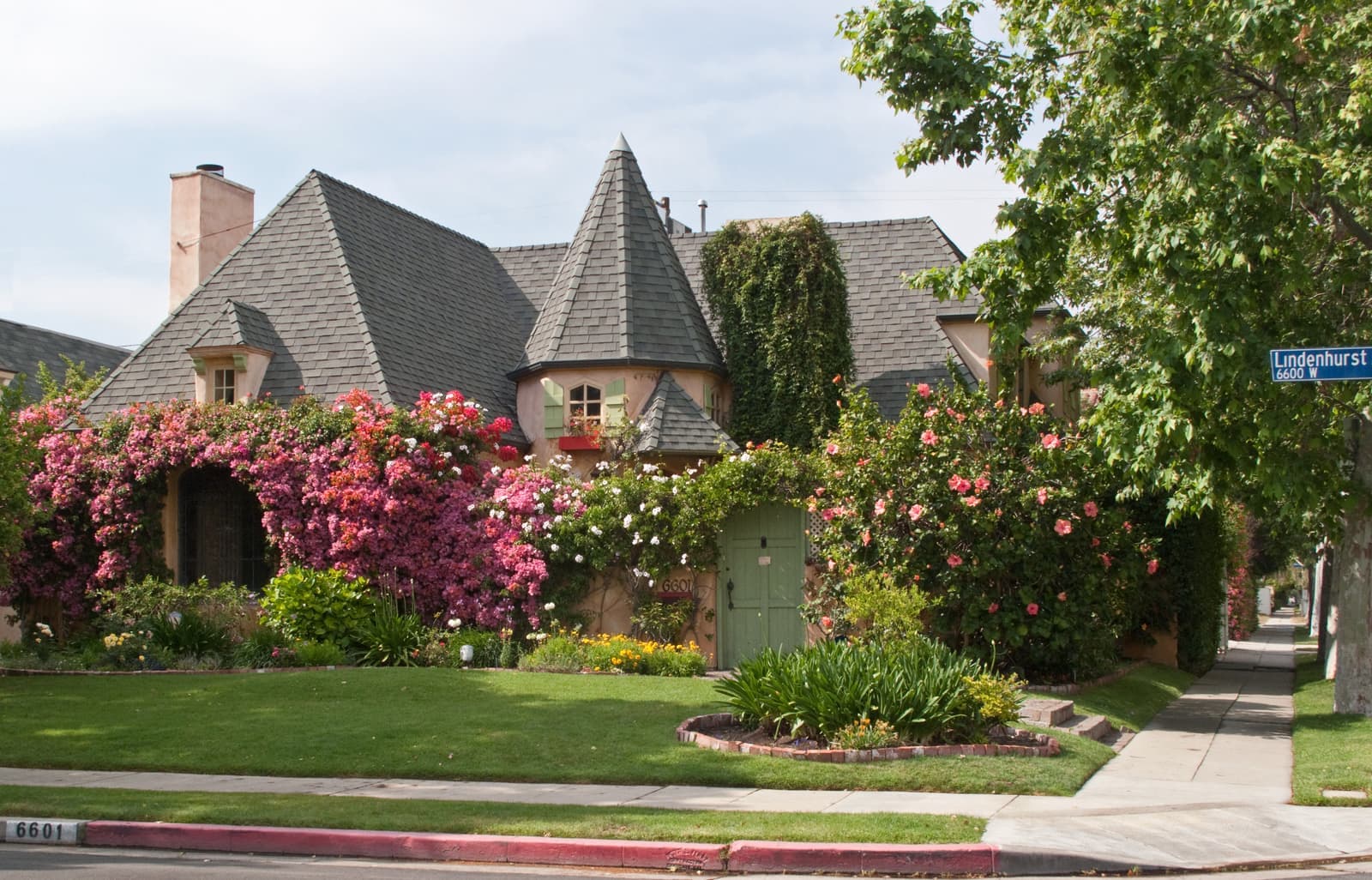
- A storybook house wrapped in bougainvillea on Lindenhurst AvenueDowntowngal, CC BY-SA 3.0
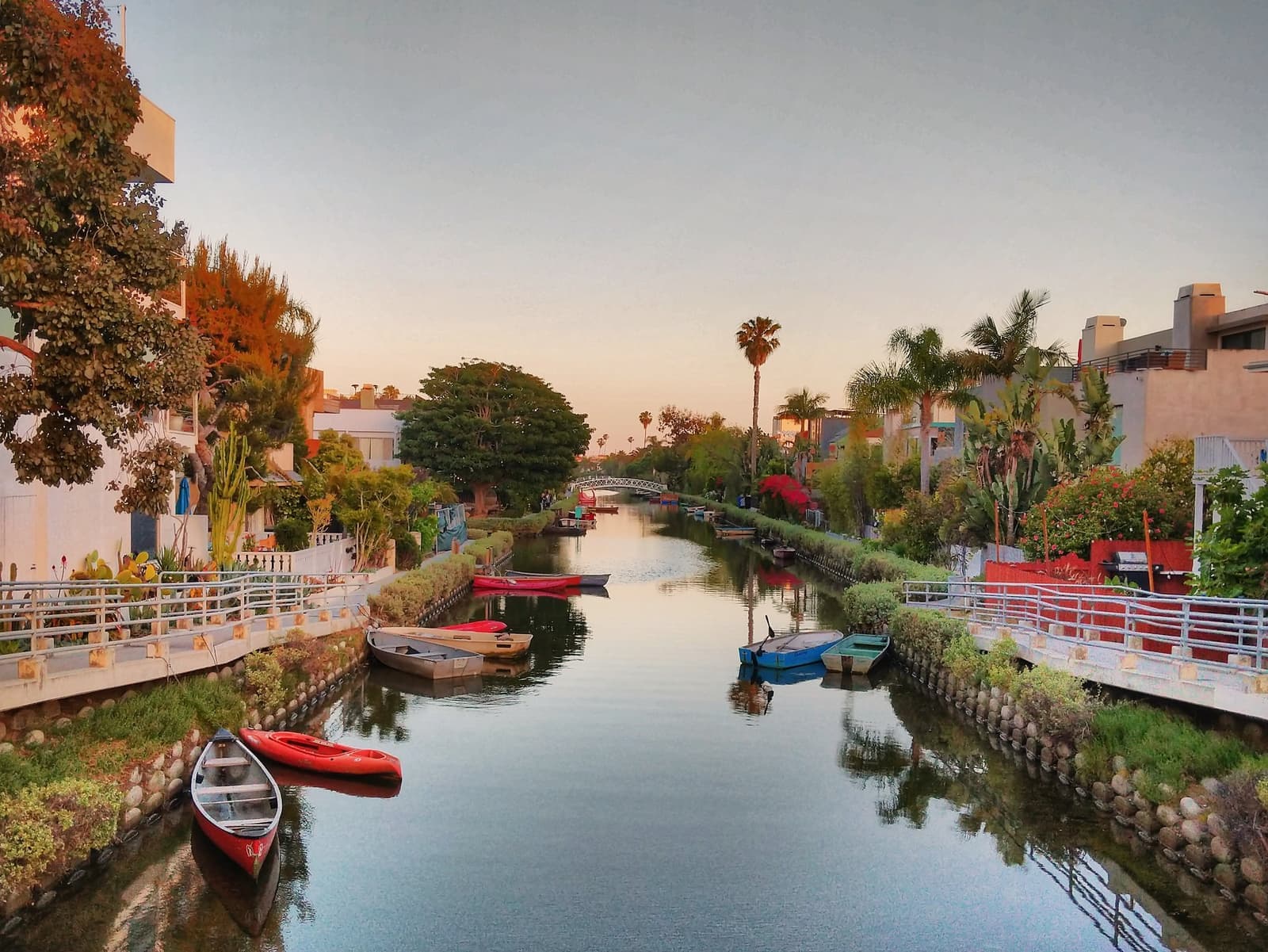
- The canals at sunset, looking down one of the east-west channelsknorby, CC BY 2.0
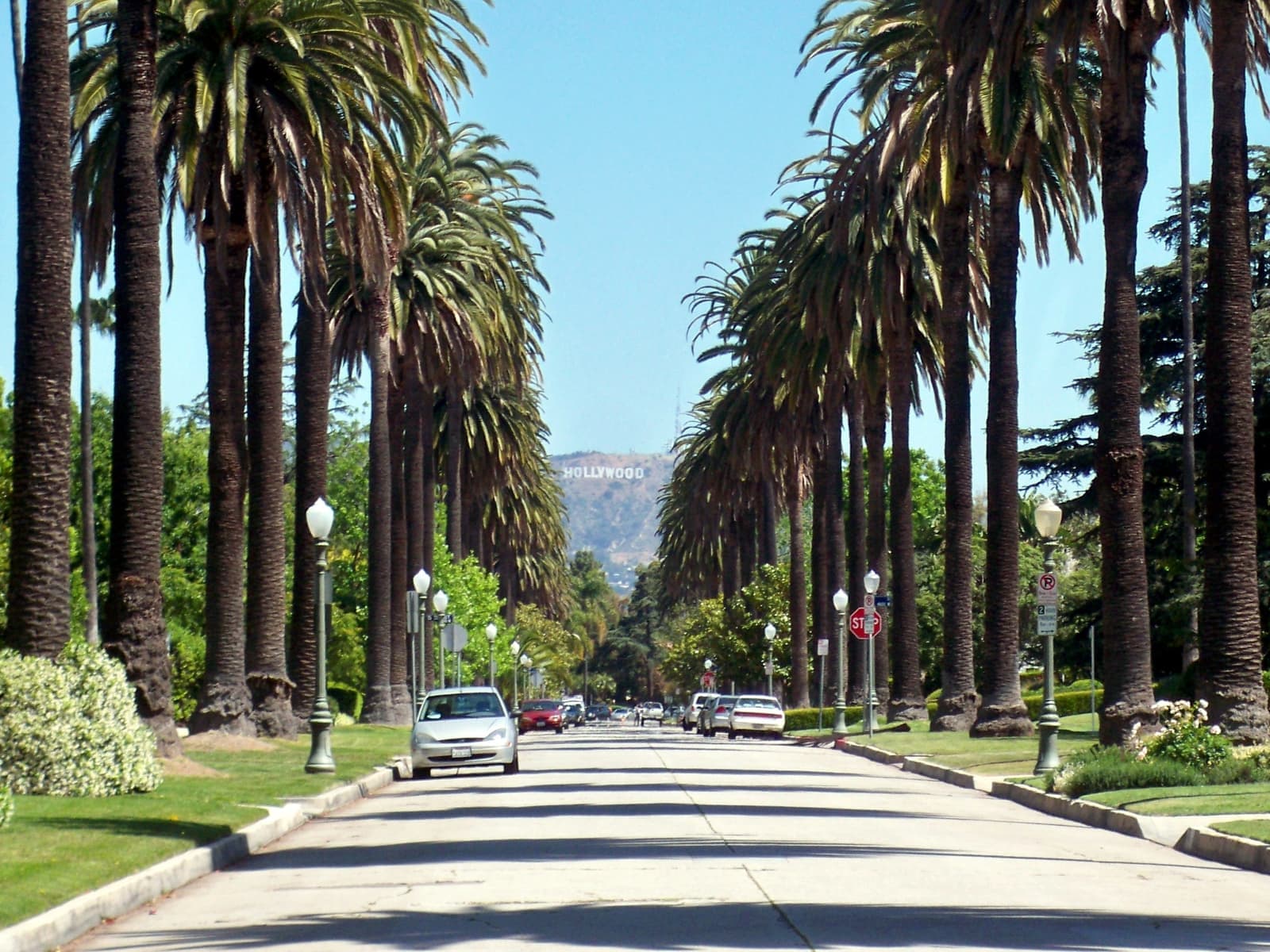
- Palms on Windsor Boulevard in Windsor Square next door, with the Hollywood Sign aheadJoseph Plotz, CC BY-SA 3.0
- Sunset light on Mount Lee and the Hollywood Sign, seen from Mulholland DriveGabe Shore, CC BY 2.0
- A ranch house behind a weeping tree on Magnolia Boulevard, north of VenturaClotee Pridgen Allochuku, CC BY-SA 3.0
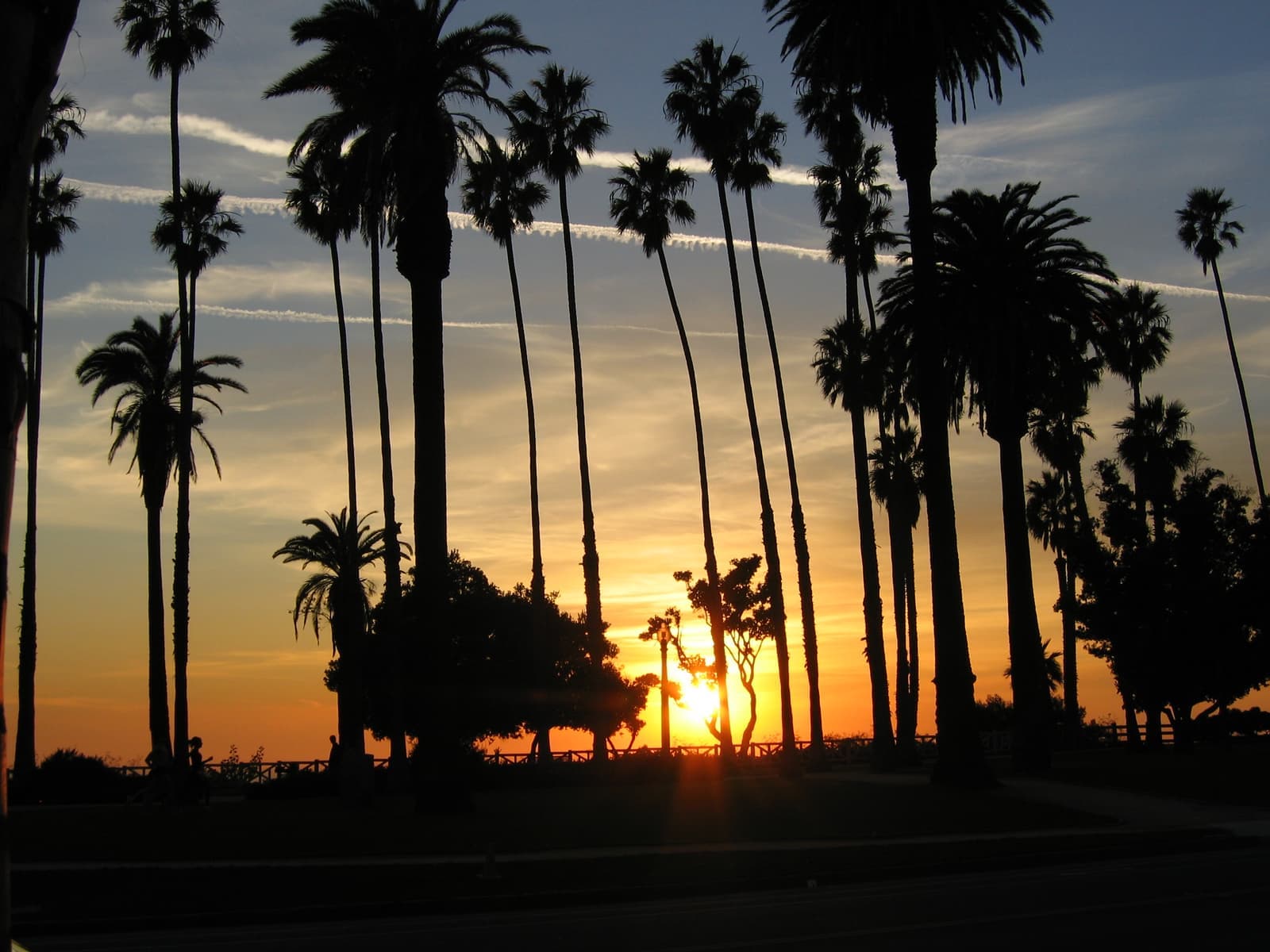
- Sunset through the palms of Palisades Park near Ocean Avenue and San Vicente BoulevardSpikebrennan, CC BY 2.5
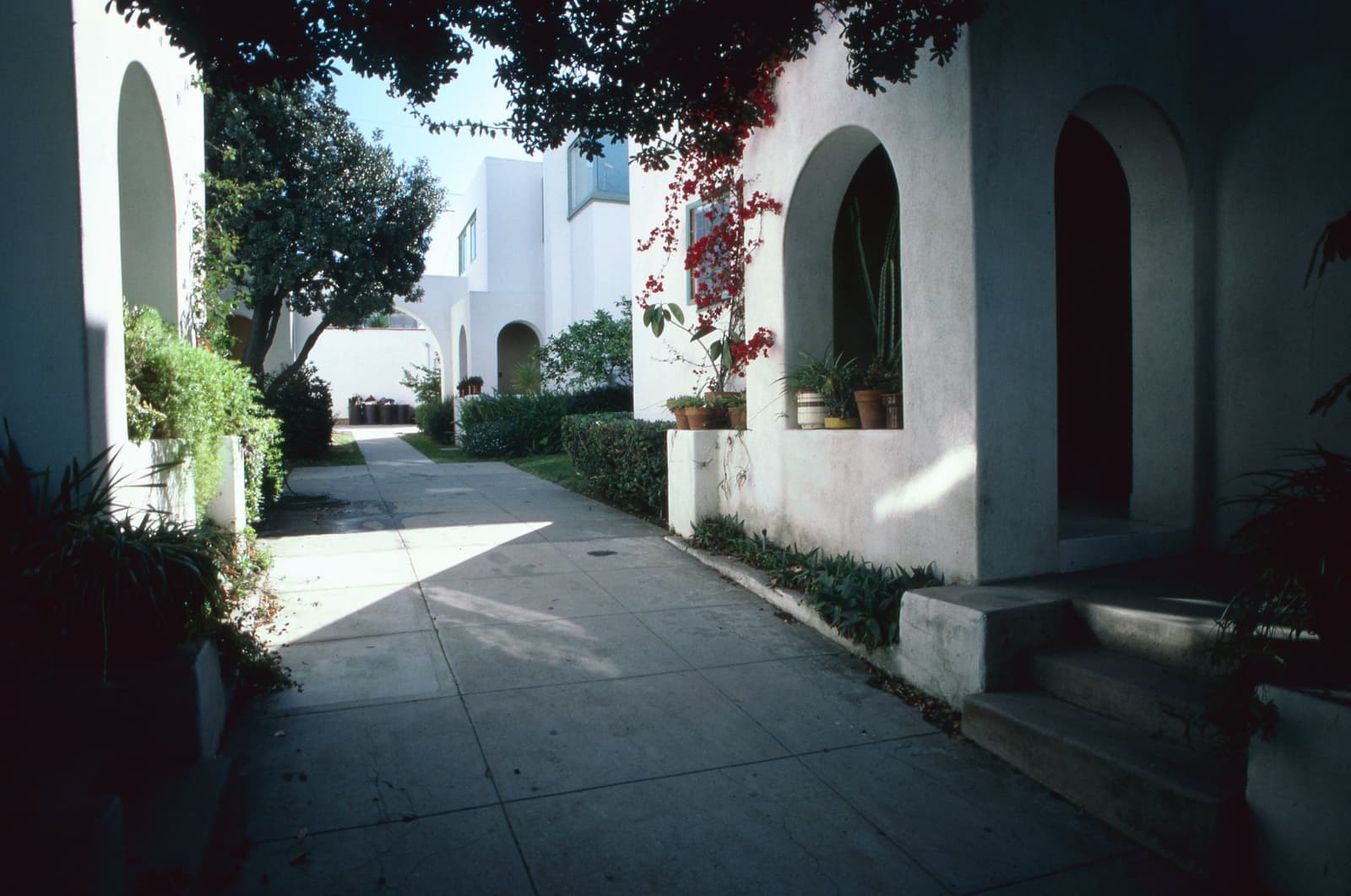
- The courtyard walk at Horatio West Court on Hollister Avenue, Irving Gill's apartments from about 1921André Corboz (Accademia di architettura di Mendrisio), CC BY-SA 4.0
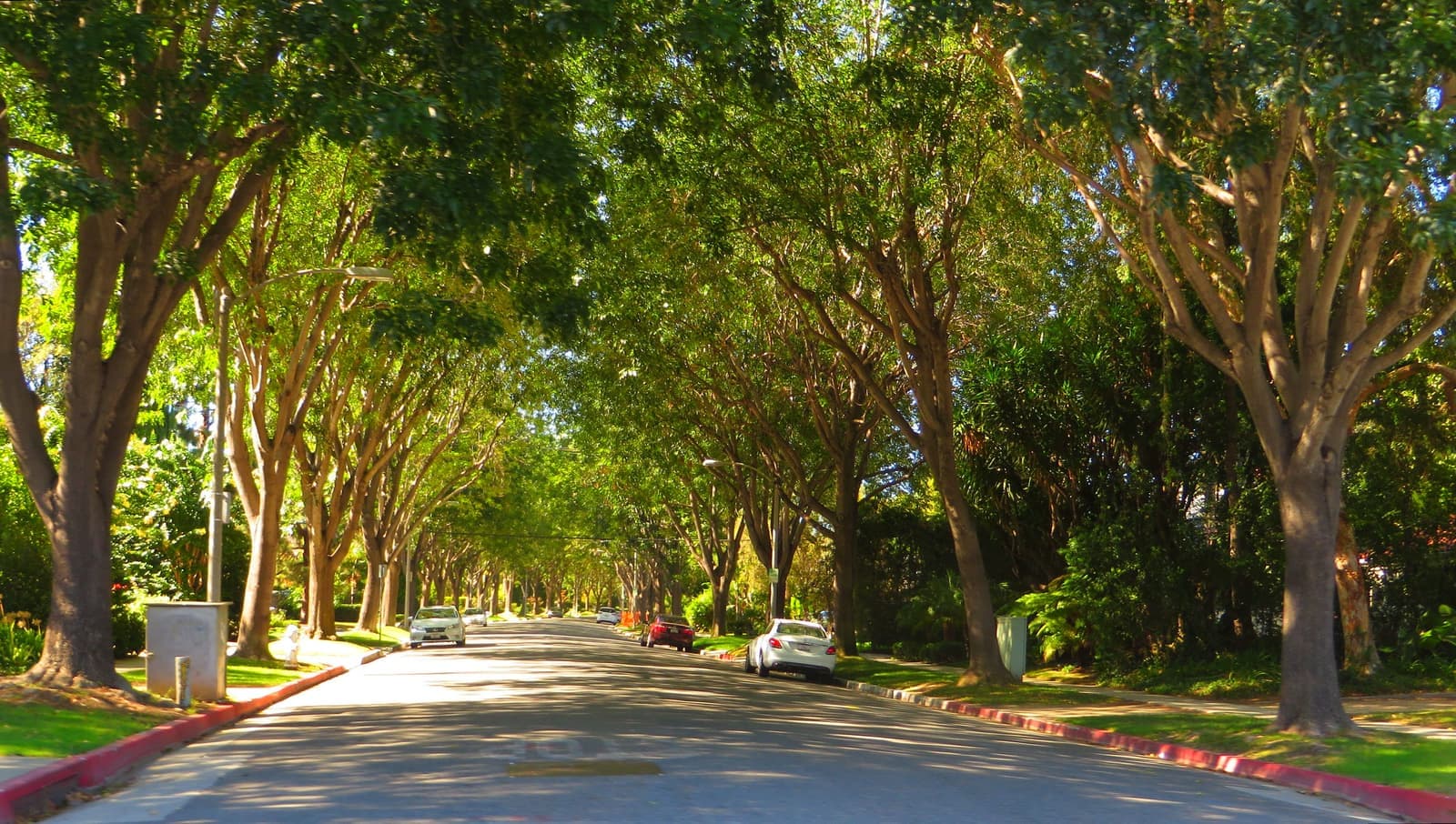
- Street trees arch over a quiet residential block in the flatsKen Lund, CC BY-SA 2.0
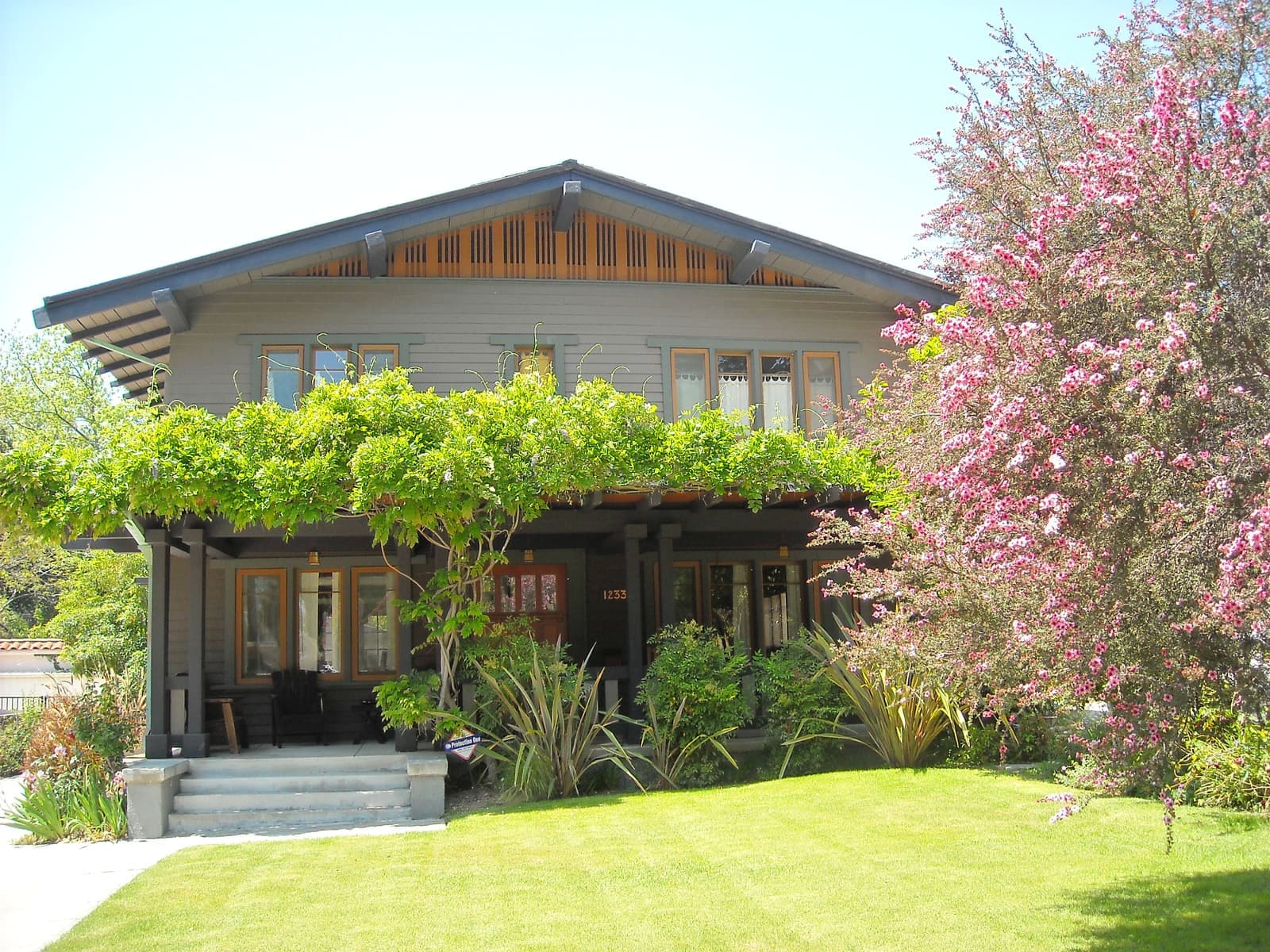
- Wisteria over the porch of a Craftsman house in Bungalow Heavenmiss_curse_10, CC BY-SA 2.0
- Lawns and a curving walk in Sara-Thel Court, a 1921 bungalow court on South MarengoBrianyoungramirez, CC BY-SA 3.0